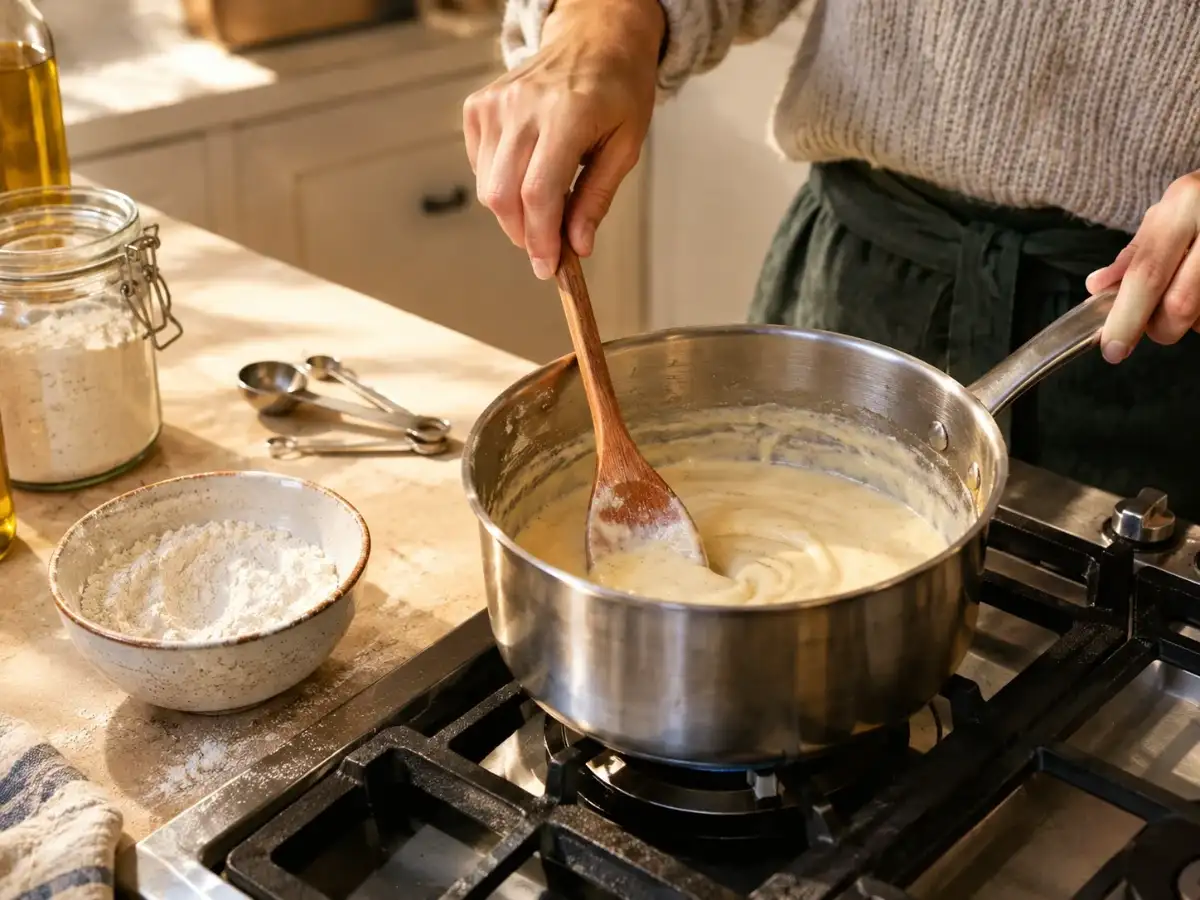
Running out of cornstarch mid-recipe is a common enough kitchen problem that most cooks have a rough instinct for how to handle it: reach for flour instead. That instinct is correct, and it's backed by a specific ratio and a specific piece of food chemistry. According to a food-science review, "Starch gelatinization," published in the journal Advances in Food and Nutrition Research by researchers at the University of Nebraska-Lincoln, the thickening ability of both flour and cornstarch comes down to one mechanism: starch gelatinization, which occurs when starch granules swell, absorb water, and eventually burst as they're heated. Once you understand that a single reaction is doing the job in both cases, the swap stops being guesswork. Why cornstarch is the overachiever of the pantry
Cornstarch has some notable properties. Nearly 100% starch, no protein, fat, or fiber like wheat flour. According to an Institute of Food Science and Technology article, starch granules begin to swell at about 140°F, absorb about five times their own volume of liquid when the pot reaches 185°F, and break apart, releasing molecules that are responsible for thickening a sauce. Flour experiences the same kind of swell and burst, but has to be used about roughly twice as much because of the protein and fibre used to break down the flour. That's why the classic swap is made up of 2 tablespoons of flour and 1 tablespoon of cornstarch.
The 2:1 rule, decoded
A 2022 “7 Cornstarch Substitutes You Might Already Have in Your Kitchen,” guide from America's Test Kitchen states that mixing flour and cornstarch in a ratio of 2:1 is the best way to replace flour in soups and gravies, and warns that no flour should be added to a hot pot of food or it will clump into lumps almost immediately. Instead, add it to a small amount of cold water or fat, and then add the slurry to it, little by little, as it simmers.