Get all your news in one place.
100's of premium titles.
One app.
Start reading
Medical Daily
Medical Daily
Cole Mercer

The Share of Newborns Leaving Hospitals Without a Vitamin K Shot Rose 57 Percent Since January

The share of U.S. newborns leaving the hospital without a vitamin K shot rose more than 57 percent between January and June, according to a review of health records covering more than 1 million births by the health data company Truveta. Reuters reported the findings first. In Truveta's published summary, the rate of newborns with no documented vitamin K administration climbed from 5.2 percent in January to 8.1 percent in June.

That works out to roughly one in twelve newborns by June, up from about one in nineteen six months earlier. The analysis identified 1,026,375 infants born to 825,599 mothers between January 2019 and June 2026.
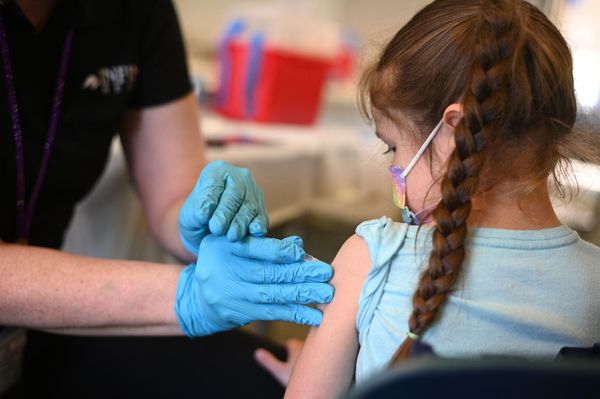
The practical meaning for families is immediate. A baby who does not receive the injection remains vulnerable to a bleeding disorder for roughly six months, not six days. Parents who declined the shot in January, March, or May are still inside that window now.

Truveta reported that the first half of 2026 ran about 2.5 times the average non-receipt rate from 2019 through 2024, and roughly 1.4 times the 2025 rate. These comparisons come from hospital records rather than a federal reporting system, because no agency formally tracks vitamin K refusal.


Inside the Newest Six-Month Numbers

The Truveta analysis measured whether newborns had a documented vitamin K administration within a day of birth. It is a preliminary industry analysis rather than a peer-reviewed study, and that distinction matters. It also measures non-receipt, which includes parental refusal but is not identical to it.

What gives the finding weight is the peer-reviewed baseline underneath it. A national study published in JAMA analyzed more than 5 million births at 403 hospitals across all 50 states and the District of Columbia between 2017 and 2024. As described in a National Institutes of Health research summary, non-receipt rose from 2.92 percent in 2017 to 5.18 percent in 2024, a 77 percent increase over eight years.

Set against that, a 57 percent move within six months is a change in slope rather than a continuation of one. The JAMA research letter also found non-receipt was most common among non-Hispanic white newborns, at 4.3 percent.

Kristan Scott, the neonatologist at Children's Hospital of Philadelphia who led that study, told NBC News that a rise was not surprising, but the size of it "did catch me off guard." Ivan Hand, director of neonatology at NYC Health and Hospitals Kings County in Brooklyn and a co-author of the 2022 American Academy of Pediatrics policy statement on vitamin K refusal, has attributed the pattern to broad mistrust of institutions rather than to any new safety finding.


Families Whose Babies Already Went Home Without the Shot

This is the group the new numbers actually describe.

Vitamin K deficiency bleeding has a late-onset form that can appear between two weeks and six months of age, often in babies who looked entirely healthy at discharge. Because the bleeding can occur inside the intestines or around the brain, there may be no visible bruise or external blood at all.

Parents in this situation should not substitute an over-the-counter supplement without clinical guidance. Two steps are reasonable. The first is telling the pediatrician that the baby did not receive vitamin K at birth, because that single fact changes how a clinician evaluates unexplained sleepiness, poor feeding, or vomiting. The second is asking whether a catch-up dose or an oral regimen is appropriate. Research in Sweden found that oral vitamin K, used in fewer than 10 percent of infants whose parents declined the injection, was associated with greater bleeding risk than the intramuscular dose.

The Association of Women's Health, Obstetric and Neonatal Nurses issued a practice alert for perinatal nurses in April, citing the JAMA findings and urging clinicians to state plainly that the intramuscular shot is standard newborn care and the most effective way to prevent this type of bleeding.


The Bleeding Risk Doctors Are Actually Watching For

The Centers for Disease Control and Prevention estimates that infants who do not receive the injection are 81 times more likely to develop late vitamin K deficiency bleeding than those who do. The agency continues to recommend the shot for all newborns.

Warning signs that warrant a same-day call to a clinician include unusual bruising, bleeding from the nose or gums, blood in stool or vomit, a yellow tint to the skin that deepens after the first weeks, or persistent poor feeding. Signs that warrant emergency evaluation include a bulging soft spot, repeated vomiting, seizure-like movements, unresponsiveness, or weakness on one side of the body.

A Swedish cohort study in JAMA Pediatrics covering 2,020,302 live births, published in July, found that infants with no record of the injection had 1.54-fold higher odds of any bleeding and 3.18-fold higher odds of bleeding in the brain during infancy.


Where the Evidence Is Firm and Where It Is Still Thin

Three things are firmly established. Vitamin K is a nutrient supplement, not a vaccine. Newborns are born with low levels of it because little crosses the placenta, breast milk contains very little, and an infant gut has not yet developed the bacteria that make it. Routine administration has been standard U.S. practice since 1961.

Three things remain unresolved. The Truveta figures have not been peer-reviewed. Deaths directly attributed to vitamin K deficiency bleeding are difficult to count, because such deaths are often certified under a more immediate cause such as bleeding in the brain. And no federal system tracks refusals, so the national rate is estimated rather than measured.

MedicalDaily previously reported on the rise in parental refusals and the misinformation behind it, based on the 2017 through 2024 data. The newest analysis extends that record into the current year and shows the trend accelerating rather than leveling off.

Expectant parents can raise the question before delivery rather than during it. Hospitals generally document the decision in the newborn record, and asking to see that entry is a reasonable request. Truveta has not announced a publication date for a full methods write-up.


Key Questions Answered

What is genuinely new here? Hospital record data covering more than 1 million births show the share of newborns with no documented vitamin K administration rose from 5.2 percent in January to 8.1 percent in June, a much steeper move than the prior eight-year trend.

Is the vitamin K shot a vaccine? No. It is a supplement of a nutrient that newborns are naturally low in. It contains no antigen and does not work like an immunization.

How long does the risk period last? Roughly six months. Late-onset vitamin K deficiency bleeding can appear between two weeks and six months of age, which is why a decision made at birth still matters months later.

Our baby did not get the shot. What should we do? Tell your pediatrician, and ask whether a catch-up injection or an oral regimen is appropriate. Do not start any supplement on your own.

Which symptoms need emergency care? A bulging soft spot, repeated vomiting, seizure-like movements, unresponsiveness, or weakness on one side of the body warrant immediate evaluation.

Is the new figure peer reviewed? No. The 2026 figures come from a health data company analysis first reported by Reuters. The underlying eight-year trend it builds on was published in JAMA.

Does insurance cover the injection? The shot is part of routine newborn care at U.S. birthing hospitals and is generally included in delivery billing. Families without coverage can ask the hospital's financial counselor or a local health department about newborn care assistance.

Sign up to read this article
Read news from 100's of titles, curated specifically for you.
Already a member? Sign in here
Related Stories
Top stories on inkl right now
One subscription that gives you access to news from hundreds of sites
Already a member? Sign in here
Our Picks
Fourteen days free
Download the app
One app. One membership.
100+ trusted global sources.