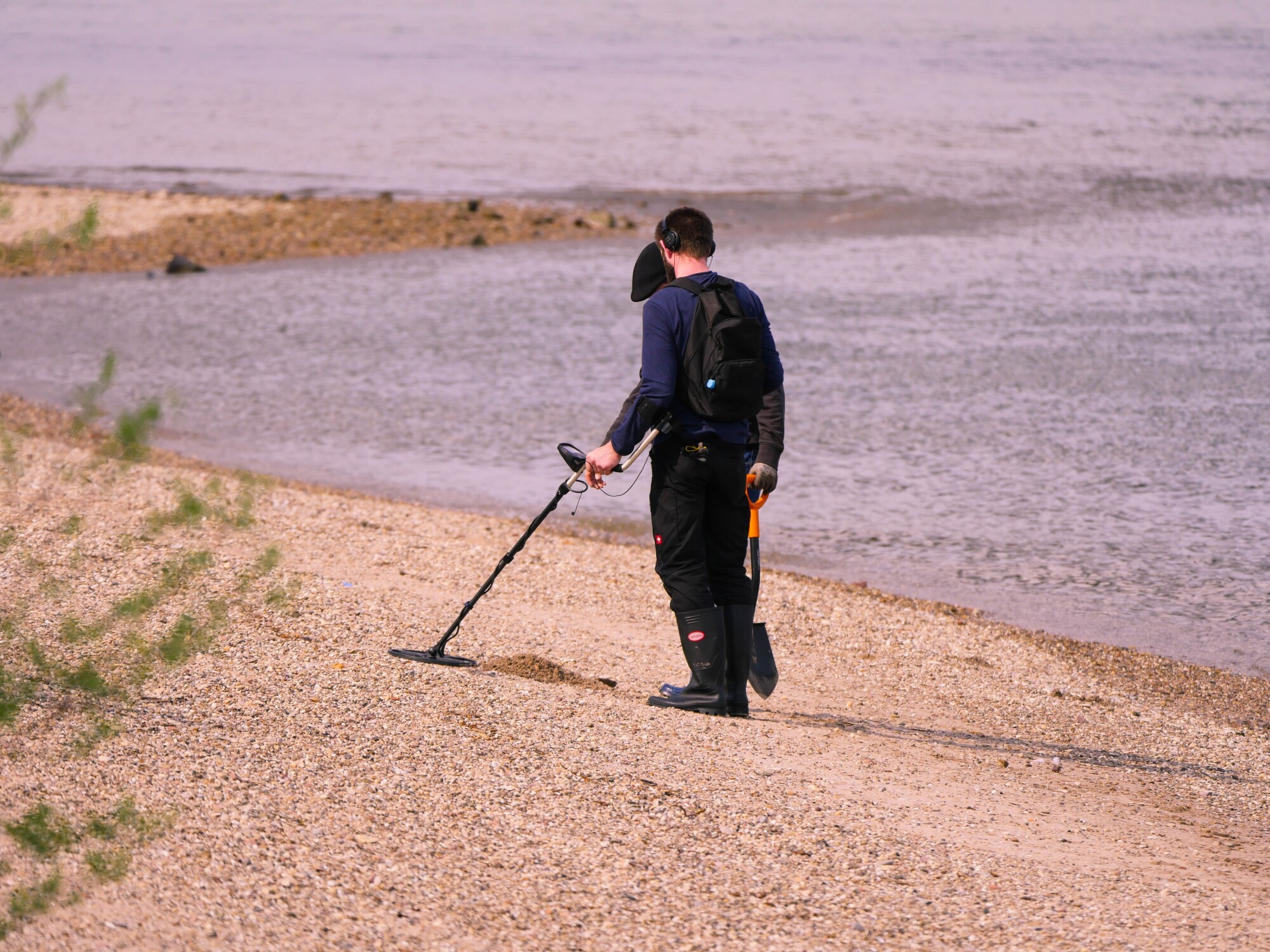
A patch of ordinary ground can become fascinating the moment you suspect something is hidden beneath it. A detector signal, a glint in a pan or a clue on your phone turns a familiar place into somewhere worth exploring.
Discovery-based hobbies offer something a scrolling feed rarely delivers: a mystery you can investigate yourself. Their appeal combines outdoor adventure with the satisfaction of finding something through patience, observation and a little luck.
Types of Discovery-Based Hobbies
Discovery-based hobbies share a simple idea: getting out, exploring your surroundings and seeing what you can uncover. Some involve searching for physical objects, while others turn an ordinary walk into a challenge.
For people curious about what lies beneath their feet, metal detecting offers a hands-on starting point. A buried coin or everyday object can make a familiar beach or field feel more interesting, especially when you begin wondering how it got there.
Gold panning brings that same curiosity to rivers and streams. Working through sediment in search of tiny gold particles gives you a reason to slow down, look closely and practise a technique that takes patience.
Not every discovery needs to come out of the ground, though. For instance, geocaching uses coordinates and clues to guide you towards hidden containers, encouraging you to notice places and details you might otherwise pass by.
The Uncertainty Makes Every Search Exciting
Part of the appeal of discovery-based hobbies is never knowing quite what you will find. Gold panning, geocaching and metal detecting may all give you clues to follow, but the outcome stays uncertain until you investigate.
The anticipation makes the search itself rewarding. A promising patch of sediment might contain gold, while a geocaching clue could lead you to a hiding place you have walked past countless times.
Even when an outing proves unsuccessful, there is always another location or approach to try.
Getting started means choosing tools that suit the kind of search you want to pursue.
For metal detecting, Serious Detecting offers beginner kits under $200 through to professional gold machines above $5,000, so you can match a detector to your sites and budget.
You do not need a spectacular find for an outing to feel worthwhile. Following a promising clue and discovering the answer for yourself can be enough to make you want to search again.
Discovery-Based Hobbies Create Something New to Learn
Discovery offers more than the excitement of uncovering an object. Even a modest find can open up questions that keep your interest alive after the outing ends.
The appeal lies partly in having a reason to learn. Instead of absorbing facts without context, you are investigating something you have encountered yourself.
Objects Turn History Into a Personal Question
According to the British Museum, 95% of the 74,506 archaeological finds recorded through its Portable Antiquities Scheme in 2023 came from metal detecting. For a hobbyist, those figures show that responsible searching can contribute to knowledge beyond a private collection.
An unfamiliar coin or buckle might lead you towards local history, manufacturing techniques or changing fashions. The discovery becomes the beginning of the research, rather than its final reward.
Practice Builds Useful Skills
Gold panning encourages close observation and steady technique. Geocaching asks you to interpret clues, notice details and reconsider assumptions when the obvious answer fails.
Progress does not depend entirely on finding something valuable. Recognising a misleading metal detector signal or solving a difficult clue can feel like a worthwhile achievement.
An Outdoor Break Has a Clear Purpose
An aimless walk does not appeal to everyone. But searching for something can give the outing a focus without requiring a competition or an ambitious fitness target.
The uncertainty helps maintain interest. You know what you are looking for, yet you cannot predict exactly how the search will unfold.
For people whose days involve plenty of screen time and routine, that combination can feel refreshing. Even an unsuccessful search leaves you with an experience you actively participated in, rather than another stream of content you watched.
Discovery Becomes More Enjoyable When It Is Shared
Treasure hunting can be solitary, but it also creates easy reasons to connect. A puzzling object, an elusive cache or a question about technique gives people something specific to discuss.
Geocaching HQ reported that 1,846,540 people found at least one geocache in 2024. For a newcomer, that scale suggests plenty of people already share the pleasure of following clues outdoors.
Friends can compare approaches, while experienced participants can help beginners understand disappointing results. Sharing the search also means the outing need not depend on one spectacular discovery.
Stories matter here as much as objects. The unexpected detour or clue everyone misread may become the part you remember longest.
Make Your Next Outing a Search
Discovery-based hobbies turn curiosity into something you can act on. The reward is not always treasure; sometimes it is something as simple as learning to notice more.
Discovery-based hobbies are undoubtedly on the rise and captivating a new generation. So, why not give one of the activities a go yourself? And if this article has been interesting, take a look at some of our other inspiring posts.