
Get all your news in one place.
100's of premium titles.
One app.
Start reading
Digital Camera World
Hillary K. Grigonis

The Panasonic Lumix L10 compact camera brings back an unusual feature from the tech graveyard – and it’s a little like open gate, but for photos too

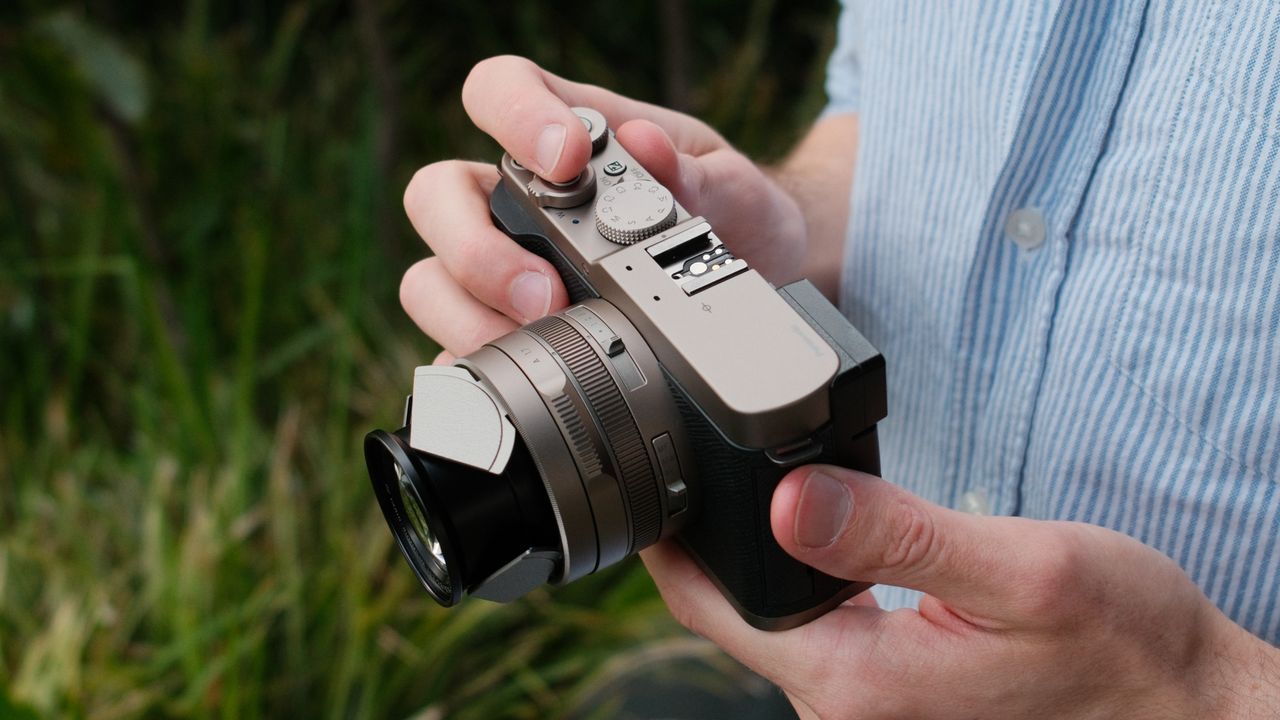
Hands holding the Panasonic Lumix L10 camera and adjusting its controls.

Panasonic has revived its once-dead advanced compact camera from 2018 with the launch of the Lumix L10. But the L10 doesn’t just mark the return of Lumix’s Micro Four Thirds compact cameras – it also brings back the multi-aspect sensor from the tech graveyard.

Several of Panasonic’s earlier cameras use what it calls a multi-aspect sensor, including the Lumix L100 II, which the new L10 is based on, as well as some mirrorless cameras like the GH5S. But in recent years, Panasonic’s Micro Four Thirds cameras seem to have largely switched to the more standard format sensors.

A traditional camera sensor is sized to fit just inside the boundaries of the curricular view that the lens captures. Sensors typically come in 3:2 or 4:3 aspect ratios themselves, and adjusting the aspect ratio from that native format means that some of the image is lost to a crop. Cropping in to adjust the aspect ratio also changes the view from the lens slightly.

A multi-aspect sensor is slightly larger than a traditional sensor so that the corners sit outside the imaging circle. This means that adjusting the aspect ratio doesn’t crop a 4:3 image down even smaller, but fits the selected aspect ratio into the oversized sensor.

The white lines mark how the L10's sensor adjusts to different aspect ratios while still diagonally filling as much of the sensor as possible (Image credit: Panasonic)

Leaving a portion of the sensor outside the lens circle sounds like a bad thing – after all, that means that those corner pixels are useless. But what the multi-aspect sensor design does is open up more aspect ratios without severe cropping.

Because the sensor is larger than it needs to be, aspect ratios like 16:9 fill out more of the sensor. The narrower 16:9 ratio doesn’t need those dead pixels in the corners and can stretch across more of the sensor. This means that the L10 can shoot in 4:3, 3:2, and 16:9 aspect ratios with the full width of the sensor rather than a crop.

The benefit of that isn’t just about resolution; it’s about keeping the view from the lens consistent across different aspect ratios. A traditional sensor design crops the image in order to shoot in a 16:9, which results in the lens looking as if it were shot a little bit closer to the subject. Multi-aspect sensors negate that effect.

The gray area is the sensor, which is larger than the circular image created by the lens (Image credit: Panasonic)
Now, look at the red box – that's what a traditional sensor design would crop a 16:9 to. Notice how the red box doesn't go all the way to the edges of the lens circle like the 3:2 does. (Image credit: Panasonic)
The multi-aspect sensor allows the 16:9 aspect ratio to extend all the way to the edges of the imaging circle, which leaves more of the image intact than the cropped red box above (Image credit: Panasonic)

The multi-aspect sensor reminds me of another trending tech: open gate. Open gate video is a term that means the video records from the full width and height of the entire sensor, and when you crop in post, you get to crop from that full sensor. That’s a key feature in an era where content often needs to be delivered to different platforms, requiring horizontal and vertical video.

Multi-aspect sensors and open gate are not the exact same thing – but multi-aspect does feel a bit like a form of open gate that also works for photos. The purpose of open gate is to crop to different formats and keep as much resolution as possible. The purpose of the multi-aspect type sensor is to crop to different formats without changing the angle of view in that crop.

I think being able to use multiple aspect ratios is more important than ever before. Creators today need to deliver works that look good on a variety of different screen sizes, and tech like multi-aspect sensors eases some of the challenges that come with that.

While Panasonic hasn’t used a multi-aspect sensor for a handful of years, the camera brand isn’t the only one thinking about giving cameras the flexibility of shooting for more formats. All of the new iPhone 17 models use a square sensor for the front-facing camera, which allows selfie takers to switch from vertical to horizontal and back again without turning the phone itself.

Multi-aspect sensors may not be brand new, but in the era of multi-format digital consumption, allowing creators to get the most formats out of their camera is a great tech to revive from the dead.

You may also like

Take a deep dive into the best compact cameras or the best Micro Four Thirds cameras.

Sign up to read this article
Read news from 100's of titles, curated specifically for you.
Already a member? Sign in here
Related Stories
Top stories on inkl right now
One subscription that gives you access to news from hundreds of sites
Already a member? Sign in here
Our Picks
Fourteen days free
Download the app
One app. One membership.
100+ trusted global sources.