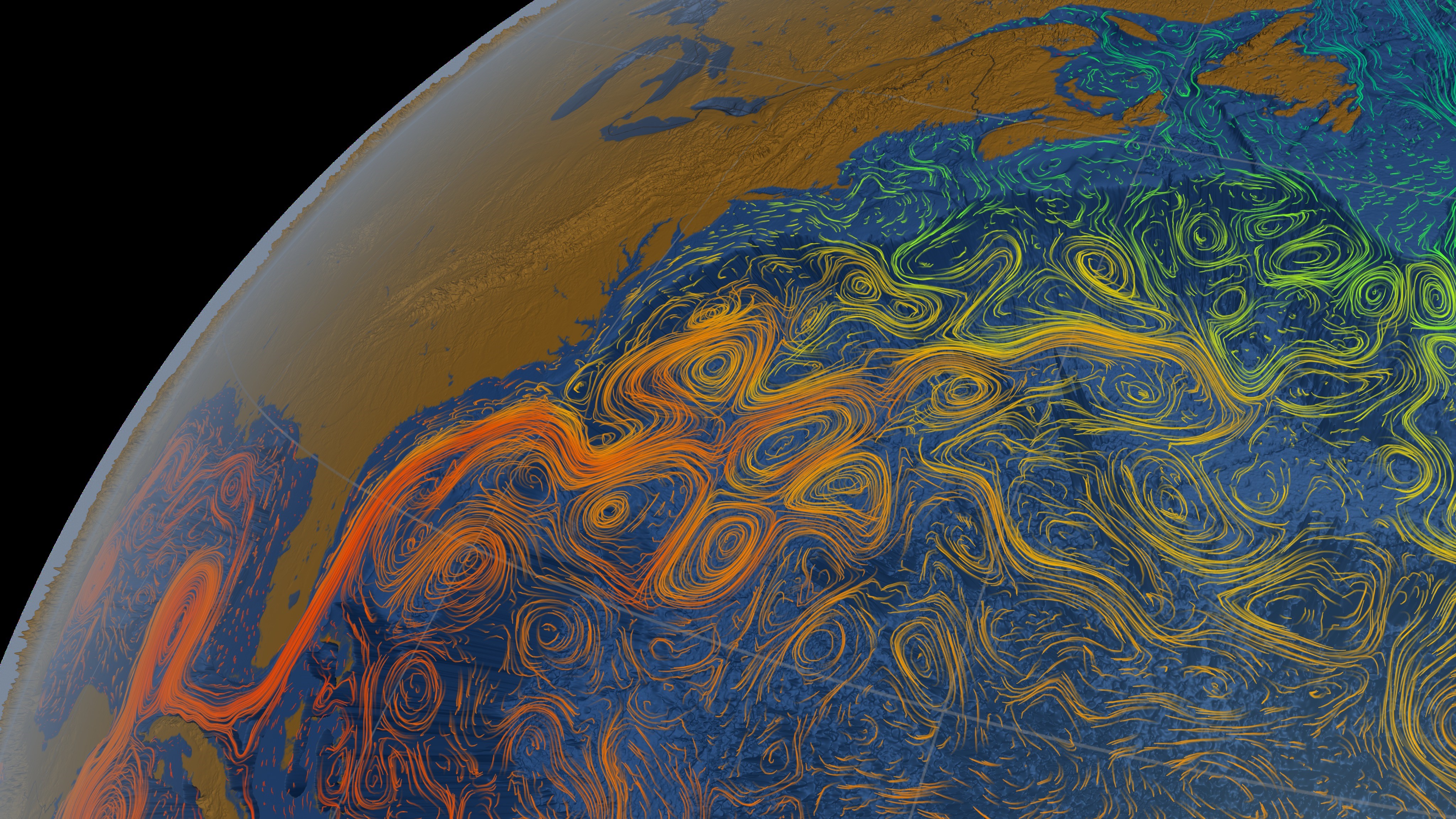
The Gulf Stream slowed dramatically at the end of the last ice age with dire effects on organisms in the Atlantic, scientists have found. This discovery could help researchers forecast how Atlantic currents will change in response to climate change today.
The Gulf Stream is a warm ocean current that originates in the Florida Straits between Florida and Cuba, before skirting the U.S. East Coast and Canada and crossing the North Atlantic to Europe. The heat it carries maintains temperate conditions in Europe and to some extent North America. The current forms part of the Atlantic Meridional Overturning Circulation (AMOC), which transports balmy waters from the Southern Hemisphere to the north and then back down toward Antarctica in a giant loop.