Get all your news in one place.
100's of premium titles.
One app.
Start reading
Fit & Well
Fit & Well
Health
Rebecca Lawton

The four running form mistakes most likely to cause knee pain, plus how to fix them

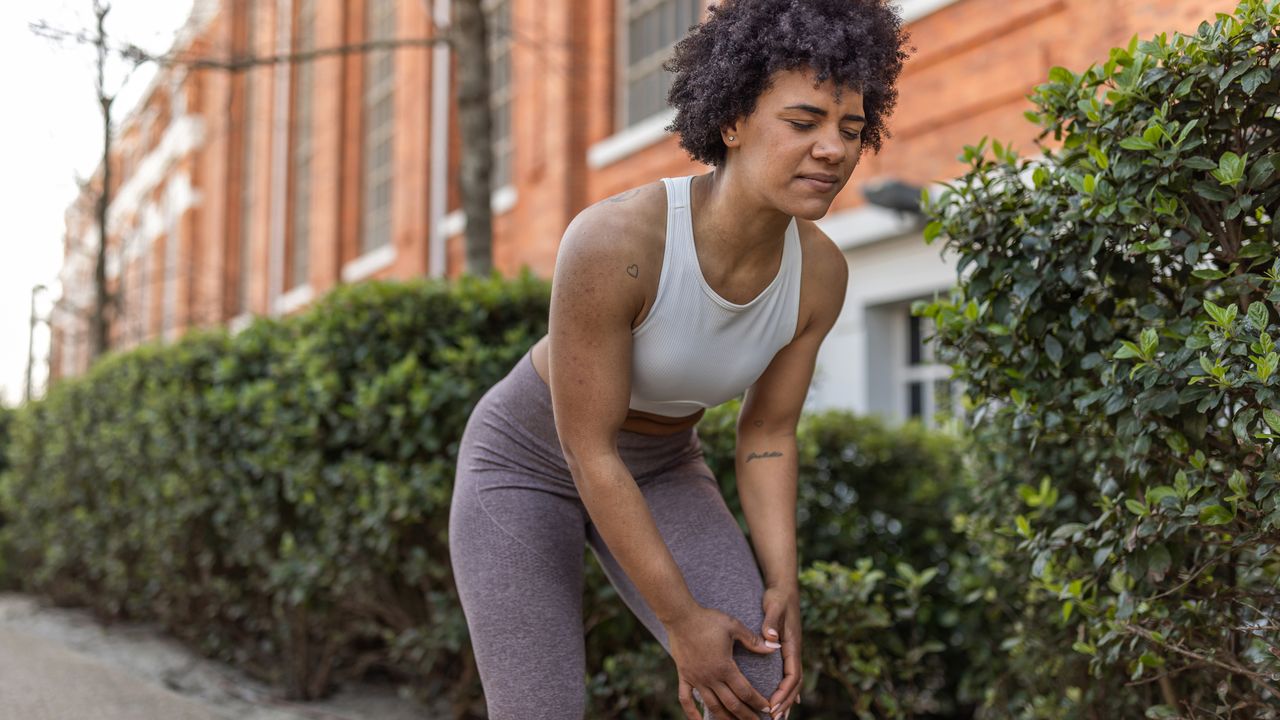
Woman in sportswear holds her knee with her eyes closed.

Knee pain is one of the most common complaints among runners. And more often than you might realize, a knee injury can be down to the way you run.

Small inefficiencies in your running form can increase stress on your joints over time, making discomfort hard to ignore.

According to Rebecca Bossick, chartered physiotherapist (broadly equivalent to a physical therapist in the United States) and founder of One Body LDN, knee pain is rarely caused by one major mistake.

“Most knee pain in runners doesn’t come from one dramatic flaw, it comes from a handful of small mechanical habits that quietly add up over time,” she explains.

“The fix is rarely about overhauling your technique completely, but about identifying which of these patterns is loading the knee unnecessarily and making one small adjustment at a time until you find the correct form.”

Here are the four running form mistakes that Bossick sees most often, and exactly what you can do to correct them.

1. Overstriding

Overstriding happens when your foot lands in front of your body, rather than underneath your hips. According to Bossick, it’s the number one form mistake, especially in newer runners.

“When your leg extends forward on contact, the impact lands right into the knee joint rather than being absorbed by the muscles,” she says.

You might notice a heavy, stomping feeling when you run, or discomfort around the knee—especially on downhill sections. It can also cause patellofemoral irritation, a dull ache around the kneecap that may linger even after your run.

Form tip: Aim to land with your foot under your hips. Increasing your cadence by taking slightly quicker, shorter steps will naturally reduce overstriding.

2. Heel striking with a locked-out leg

Heel striking isn't necessarily the problem, but landing with a straight, stiff leg can be, explains Bossick.

“When the knee is fully extended on landing, there’s little mechanical give in the joint, meaning the impact load has nowhere to go and gets transferred straight up into the knee and hip,” she explains.

Look out for a dull ache around the front of the knee, particularly during longer runs.

Form tip: Keep a slight bend in the knee as your foot makes contact. A slight forward lean from the ankles (not the waist) can also encourage a softer landing.

3. Hip drop

Hip drop happens when the hip on the opposite side to your standing leg dips downward with each step, often due to the glute not stabilizing the hips properly.

“When the hip drops, the whole leg below it compensates and the knee ends up rotating inward, which increases stress on the joint and is a major contributor to one-sided knee pain,” Bossick says.

If knee pain consistently affects the same side, or you notice your hips rocking from side to side, hip drop could be to blame.

Form tip: Focus on keeping your hips level as you run. Strengthening your glutes with single-leg bridges, lateral band walks, and single-leg squats can also help improve stability.

4. Leaning forward from the waist

Bossick says that while a slight forward lean can improve efficiency, when that lean comes from the waist rather than the ankles, it can cause problems.

“When runners hunch forward through the lower back and hips, the pelvis tilts forward, which shortens the hip flexors and puts more load onto the front of the knee,” she explains.

This tends to worsen as fatigue sets in. “The issue tends to show up as tightness across the front of the hip or a nagging ache around the kneecap that builds as the run goes on,” Bossick says.

Form tip: Imagine a string pulling the top of your head upward and think about running tall, keeping your eyes forward rather than down at your feet for a more upright posture.

The running form advice to be cautious of

One of the most common pieces of advice is that switching to a forefoot or midfoot strike—landing on the front or middle of your foot rather than your heel—will protect your knees. However, Bossick argues that the evidence doesn’t support this as a universal fix.

“Changing foot strike patterns too quickly, without building the calf and Achilles capacity to handle it, can swap one injury for another,” she explains.

“For most beginner runners, working on cadence, posture, and hip strength will do far more good.”

When to see a physiotherapist or physical therapist

If you experience stiffness or mild achiness that settles within 20 to 30 minutes after a run, it’s reasonable to try small form adjustments. But Bossick recommends only tweaking one thing at a time, so you can see what’s actually helping.

If the pain is present during the run, worsens as you go, or lingers into the following days, pushing through it won’t help.

“This is when you should get a proper assessment,” advises Bossick. “Gait analysis can identify what’s happening mechanically, while a physio can distinguish between something that needs a small technique change and something that needs more targeted treatment.”

Sign up to read this article
Read news from 100's of titles, curated specifically for you.
Already a member? Sign in here
Related Stories
Top stories on inkl right now
One subscription that gives you access to news from hundreds of sites
Already a member? Sign in here
Our Picks
Fourteen days free
Download the app
One app. One membership.
100+ trusted global sources.