Get all your news in one place.
100's of premium titles.
One app.
Start reading
Euronews
Euronews
Estelle Nilsson-Julien

Surging prices, voters’ anger: How France’s fuel crisis could shape the presidential campaign

With seven months to go until France's presidential election, fuel is becoming a major political flashpoint. Spiralling energy prices have stoked public discontent, amid a global fuel-supply shock, driven by the conflict in the Middle East and the closure of the Strait of Hormuz.

In recent weeks, fishermen have blocked oil depots and port entrances in the south of France, while farmers have staged demonstrations over rising fuel prices across the country.

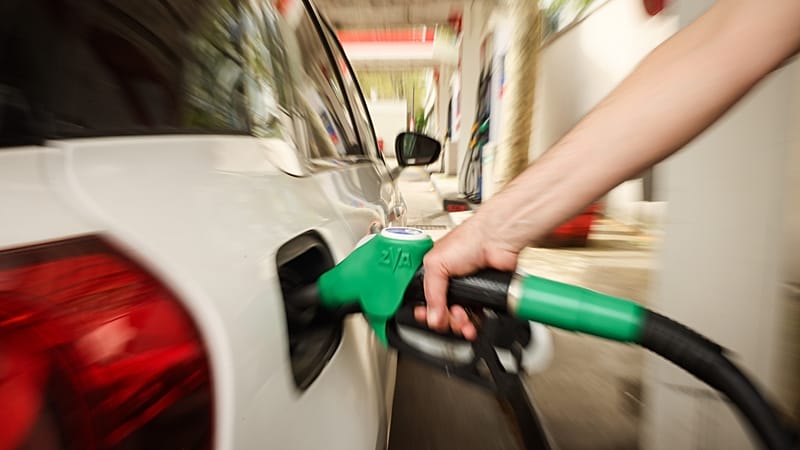
There are also signs that fuel demand in France is beginning to weaken, after several months of record-high prices. French diesel prices hit a fresh record of €2.41 a litre on Sunday.

Petrol prices also exceeded their previous 2022 peak, with SP95-E10 — the most popular type of unleaded petrol in France — rising above €2.17 a litre, while SP98 exceeded €2.28 a litre on average.

In response to the situation, the French government announced the expansion and extension of its targeted fuel relief measures for households most affected by soaring prices on Tuesday.

The new measures will cost €450 million, bringing total spending on fuel relief measures so far to €1.4 billion. This comes as France's budget deficit is projected to reach 5.4% of GDP this year, marking one of the worst deficits in the European Union, while public debt nears 120% of GDP.

The government also proposed a so-called “fuel golden rule” for its 2027 budget, under which any additional tax revenue generated by rising fuel prices would be neutralised and redirected towards measures supporting consumers, in a bid to ensure that the state does not profit from higher prices at the pump.

Why is fuel so costly in France and who pockets the profit?

France's fuel taxes are higher than many of its European nations, as Anna Creti, professor of economics at Paris Dauphine University told Euronews.

"This provides a significant source of revenue for the government, but it also places a heavy burden on the final price of fuel", she said.

Since March, France has addressed rising energy prices through targeted fuel subsidies rather than generalised tax cuts. France's economy minister, Roland Lescure, told reporters on Monday that this approach would remain “unchanged”, as part of the government's drive to assist households and sectors most affected by higher fuel prices.

France's two main fuel taxes are the TICPE (domestic consumption tax on energy products), which is generally charged as a fixed amount per litre and VAT, which sits around 20%. VAT is applied to the price of fuel after the TICPE has been included. As a result, motorists effectively pay VAT both on the underlying cost of the fuel and on the TICPE itself. The TICPE therefore increases the price of fuel directly while also increasing the amount of VAT paid.

Retail prices are generally determined by markets, subject to certain regulatory exceptions. Fuel retailers are required to report their prices through the government’s price-comparison platform.

Despite the common perception that fuel profits go largely unregulated in France, the market is subject to significant government monitoring and oversight.

"The distributors, meaning fuel pumps, have contracts with the companies that service them, which detail things like promotional campaigns, the profits they can generate, and how to handle issues with products or supply chain disruptions. So, it's not as chaotic of a sector, as it's sometimes portrayed", Creti told Euronews.

"The real profit margin is in refining, much more so than in distribution. There’s also a lot of competition downstream in terms of independent fuel stations, foreign companies, but also Total, which can indirectly control prices by setting them", said Creti.

In France, TotalEnergies has periodically introduced price caps to limit the amount customers pay per litre, particularly during periods of elevated fuel prices. Given the company's extensive network of service stations across the country, these measures have also placed competitive pressure on other fuel retailers to keep their prices down.

"A relatively small number of large oil and energy companies supply thousands of individual gas stations which compete for customers", commented Creti.

The fact that France has "one of the largest fleets of diesel vehicles in Europe" also exposes it to price shocks, said Creti.

"In addition to passenger vehicles — where diesel is used for personal transportation — it is also used by small and medium-sized businesses, primarily as a means of commercial transportation. Diesel engines are also used in industrial applications."

This is because France's diesel market is much more dependent on imports than its petrol market, meaning that it is particularly exposed to international shortages, higher wholesale prices and transport costs.

"When you factor in inflation, today’s prices have already surpassed the levels that sparked the 'gilets jaunes' protests. And we’ve surpassed them several times — notably in 2021 during the post-COVID period, and we surpassed them again during the 2022–2023 crisis", added Creti.

The 2018 "gilets jaunes" protests marked one of the biggest incidents of social unrest in France's recent history. The movement was driven by anger against the cost of living crisis, in particular against the implementation of a new carbon tax on fuel.

Protestors occupied and blocked roundabouts across the country, but also enacted mass protests — which were often accompanied by clashes with the police.

Almost a decade on,France is still among the European countries with the highest fuel costs in Europe, while public frustration continues to grow.

French presidential candidates' policies

According to Diane Bollet, associate professor of politics at Sciences Po Paris, the gilet jaunes movement marked a turning point, forcing political leaders to develop a policy on fuel.

"It really pushed politicians to have to say whether they recognised the impact of rising fuel prices and to what extent they supported those who were having to live with the consequences."

Presidential hopeful Marine Le Pen's far-right National Rally has sought to capitalise on discontentment around fuel by pledging to cut VAT from 20% to 5.5%, as she did in her 2022 campaign. But this measure would infringe on the EU's VAT regulation.

Bollet says this reflects a long-term strategy pursued by Le Pen, closely linked to the demographic and socioeconomic characteristics of the voters she seeks to attract.

"Le Pen has been taking ownership of this issue since 2018. She understands that these are key concerns for her electorate, which is predominantly rural or suburban, and where people are reliant on fuel."

Meanwhile, hard-left candidate Jean-Luc Mélenchon and his party, La France Insoumise (LFI) has pledged to cap fuel prices at €1.70 per litre for petrol and €1.80 per litre for diesel.

He has criticised Le Pen's plan to cut fuel VAT by arguing that a tax cut does not guarantee that the tax benefit will be fully “passed on to the consumer", pointing to France's past decision to cut VAT on restaurant meals, which did not significantly reduce prices for consumers.

On top of this, Mélenchon has a different electoral base to Le Pen, which shapes the extent to which fuel prices feature as a political priority in his current campaign, said Bollet.

"Mélenchon has voters in suburbs, but also in cities, places where people frequently use public transport, because he has focused on urban areas. So, while it is certainly important for them, it is not as important as it is for Marine Le Pen’s electorate. In comparison, we can see why she is really pushing this issue."

Although candidates have begun unveiling policy proposals and their key pledges, their full manifestos have yet to be published — which makes it difficult to assess the finer details of their fuel policies.

For now, centrist Gabriel Attal and conservative Édouard Philippe — two of French President Emmanuel Macron's former prime ministers — have backed measures to mitigate the effect of rising fuel costs on consumers, broadly aligning with the government's current measures.

Meanwhile, left-wing candidate Raphaël Glucksmann has placed a greater emphasis on reducing dependence on fossil fuels.

Driven by record-breaking costs at the pump, energy inflation could fast become a defining battleground of the French election — a political flashpoint heavily reminiscent of recent US campaigns, where soaring gas prices and the cost of living crisis have become an intrinsic part of the presidential campaigns.

Sign up to read this article
Read news from 100's of titles, curated specifically for you.
Already a member? Sign in here
Related Stories
Top stories on inkl right now
One subscription that gives you access to news from hundreds of sites
Already a member? Sign in here
Our Picks
Fourteen days free
Download the app
One app. One membership.
100+ trusted global sources.