
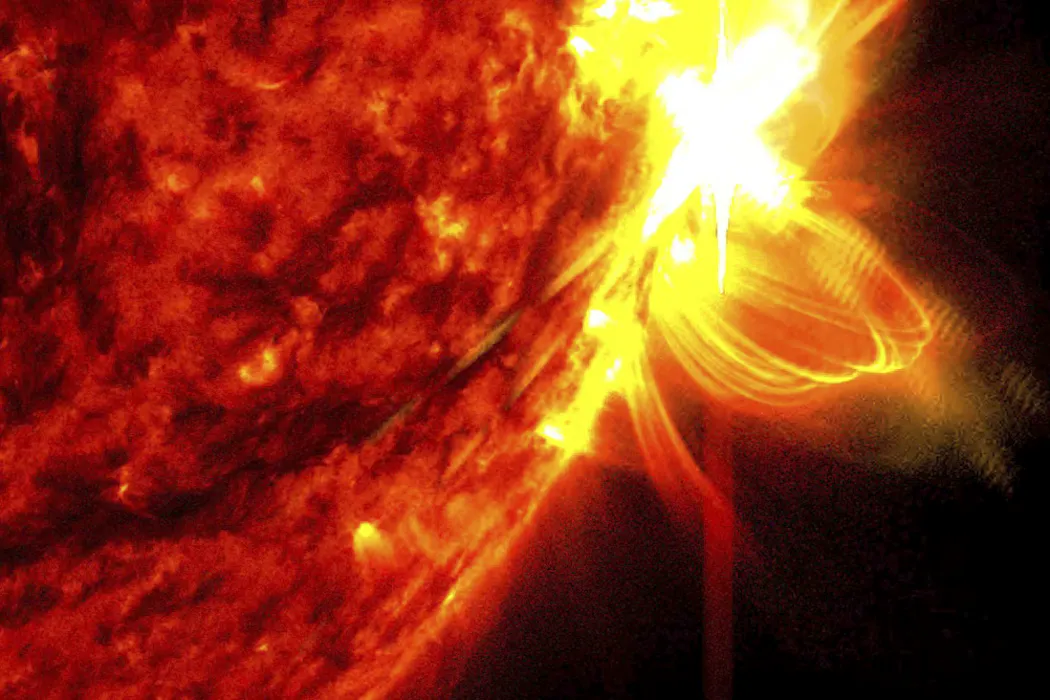
Most days, you can look up and see the Sun shining above. Even if it’s hidden behind clouds, you know it’s there, lighting up the sky. But while the Sun’s light might be relatively constant, its surface is surprisingly active. If you hopped on NASA’s Parker Solar Probe for a closeup view of the Sun, you might see spurts of charged gas called solar flares coming off its surface, or dramatic explosions called coronal mass ejections. These events travel outward from the Sun through space, and sometimes they interact with Earth’s magnetic field, causing space weather.
This week, the National Oceanic and Atmospheric Administration is tracking several coronal mass ejections that could lead to a minor geomagnetic storm in Earth’s atmosphere. People in Canada and the northern United States may be able to see an aurora the evening of Sept. 9, 2026.







