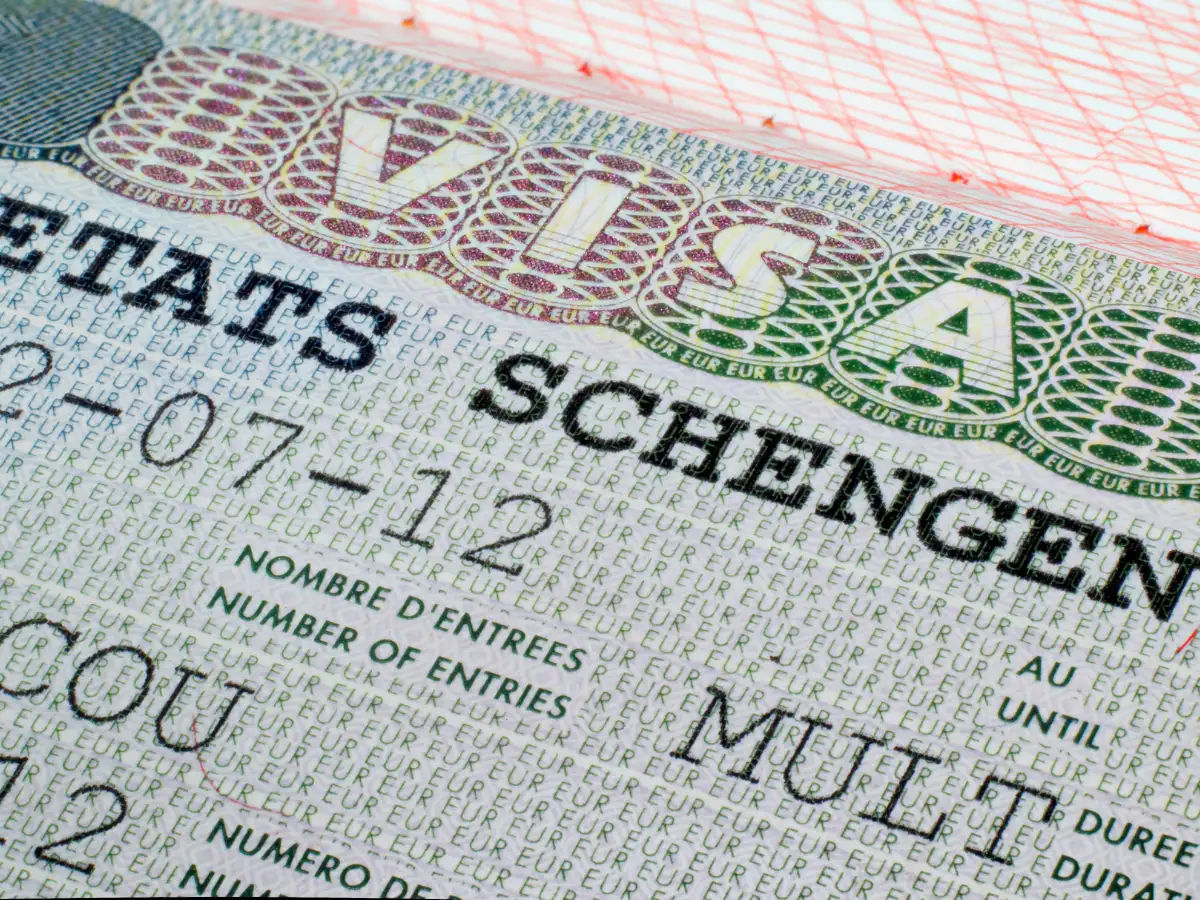
Spain’s National Court has expanded its investigation into an alleged visa fraud network at the Spanish Consulate in Algiers to include BLS, an Indian company hired to manage visa appointments and document processing.
The investigation began after the arrests of Vicente Moreno, the consulate’s chancellor and second-in-command, and local employee Mohamed Boutouchent. Both were arrested in Spain last April.

Judicial sources told Spanish news outlet The Objective that the case began after official communications from the Spanish Embassy in Algeria. Officials alerted authorities to a network allegedly profiting from the fraudulent issuance of Schengen visas, enabling applicants to enter Spain legally.
The investigation is being led by María Tardón, judge at the National Court’s Central Court of Instruction Number 3.
Families allegedly paid up to €25,000
According to the investigation, the network allegedly processed visas, residence permits and self-employment work permits for Algerian citizens who did not meet the formal requirements.
Applicants allegedly paid members of the group to arrange the procedures using unverified, altered or falsified documents. The scheme allegedly helped some applicants obtain residency in Spain or France.
The visa scheme allegedly required each family to pay up to €25,000.
The court is also examining the alleged involvement of companies providing administrative services, including appointment scheduling and document management. Investigators specifically referred to “processing platforms like BLS”.
According to judicial sources, employees of these companies allegedly helped prepare applications and selected families that had paid the required amounts.
BLS denies involvement
In a statement to Indian stock exchanges, BLS International categorically rejected any involvement in the alleged irregularities reported by the media.
“There is no evidence establishing any wrongdoing by BLS International or its employees in relation to the issuance of visas,” the company said.
BLS said its role was “strictly administrative” and carried out according to the requirements set by the competent authorities. It added that all decisions on visa processing, issuance or refusal rested solely with the relevant diplomatic and consular authorities.
The company said it remained committed to “the highest standards of integrity, transparency, compliance and service delivery” and to its role as a trusted service partner to governments and citizens worldwide.
Businesspeople had raised complaints
Several Spanish businesspeople had complained to the Foreign Ministry in 2025 that the Consulate General in Algiers was systematically refusing work visas for Algerian citizens.
Some complaints alleged that a “criminal structure” inside the embassy facilitated visas in exchange for money. They also alleged that part of the proceeds was laundered in Spain through vehicle purchases.
The alleged network reportedly bypassed appointments for applicants who met the legal requirements but did not provide financial benefits to those involved.
BLS contract dates back to 2016
The Foreign Ministry awarded BLS a contract in 2016 to manage visa appointments and document processing at selected Spanish consulates around the world. The contract was valued at €175 million.
The company’s work covered consulates in regions including Russia, China, India, the Maghreb, the Persian Gulf and Southeast Asia.
The outsourcing of visa appointment services began in 2011 with another Indian company, VFS Global. The contract with BLS had faced controversy because the company had previously been linked to scandals in India and the United States, according to The Objective.
Five charges in the case
The judge has charged the defendants with five crimes: money laundering, offences against the rights of foreign citizens, repeated document falsification by a public official, influence peddling and membership in a criminal organisation.
The alleged bribes were paid in cash to members of the network, who reportedly distributed the money among different participants.
Investigators believe the money was later placed into apparently legal transactions, mainly through the purchase of motor vehicles. They have also detected a high level of wealth among some people linked to the case in Spain and Algeria.
The police operation, named Jazira-Cova, was conducted with support from the Anti-Corruption Prosecutor’s Office. Officers seized €10,890 in cash, four mobile phones, two laptops and 17 USB drives during searches in Sagunto and Torrevieja.
Authorities also sought to freeze a property in Madrid and several financial assets. They requested the preservation of Foreign Ministry files and corporate emails linked to the issuance of the alleged fraudulent visas.