
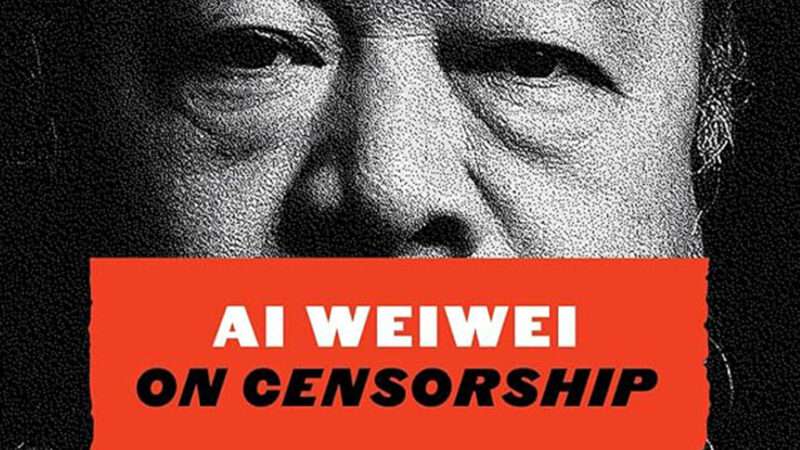
After becoming the target of police harassment, the Chinese artist and journalist Ai Weiwei left his homeland for good in 2015. In a new book, On Censorship, he writes about how censorship and surveillance go hand in hand. Like a dealer who can see all the cards, Ai argues, an all-seeing government has an "absolute advantage" over dissidents.
The nexus between surveillance and censorship has a psychological aspect as well. "A primary aim of censorship is to normalize itself, to present itself as natural and essential," Ai warns. He cites an ancient Chinese saying that "the great affairs of the state are worship and military bases," drawing a straight line from "worship" to modern-day taboos of political correctness.














