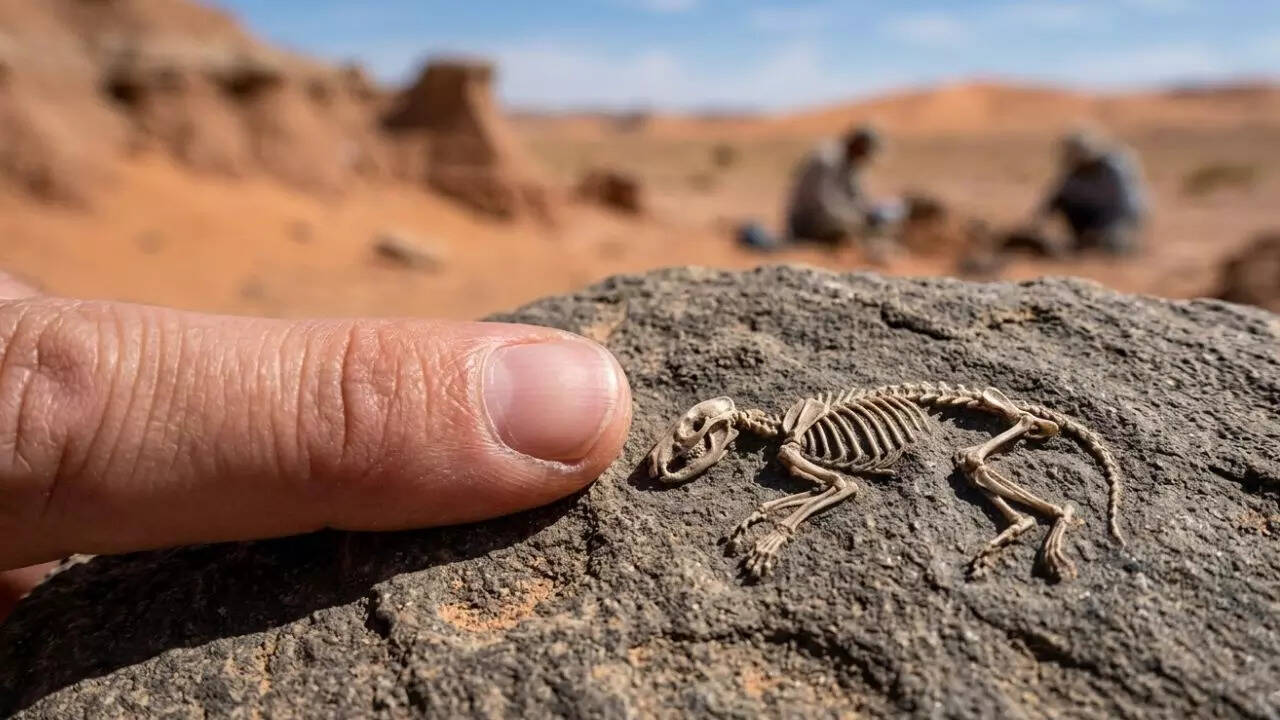
Palaeontologists have discovered an incredibly well-preserved fossil skeleton measuring only 1 centimetre long in the Ukhaa Tolgod area of the Gobi Desert. This fossil is believed to be one of the earliest examples of what are referred to as ‘micro-mammals’ from the Late Cretaceous time period. The American Museum of Natural History (AMNH), which was involved in the Mongolian-America Museum Expedition (MAME), states that finding a complete and intact specimen at this tiny size (about the size of a fingernail) is very uncommon. Items like teeth are found more commonly than this, but fossils are exceedingly hard to find due to their fragile nature. Finding this miniature skull and limbs provides scientists a rare, holistic view of Mesozoic biodiversity, offering transformative insights into how these tiny ancestors thrived alongside giants. This unprecedented find clarifies the evolutionary transition of early mammals, revealing how specialized skeletal adaptations allowed these minuscule creatures to occupy ecological niches previously thought uninhabited.