Get all your news in one place.
100's of premium titles.
One app.
Start reading
TechRadar
TechRadar
Benedict Collins

QR code phishing surges 146% as Microsoft detects and analyzes 8.3 billion phishing threats in Q1 2026 – attackers are changing tactics to bypass security

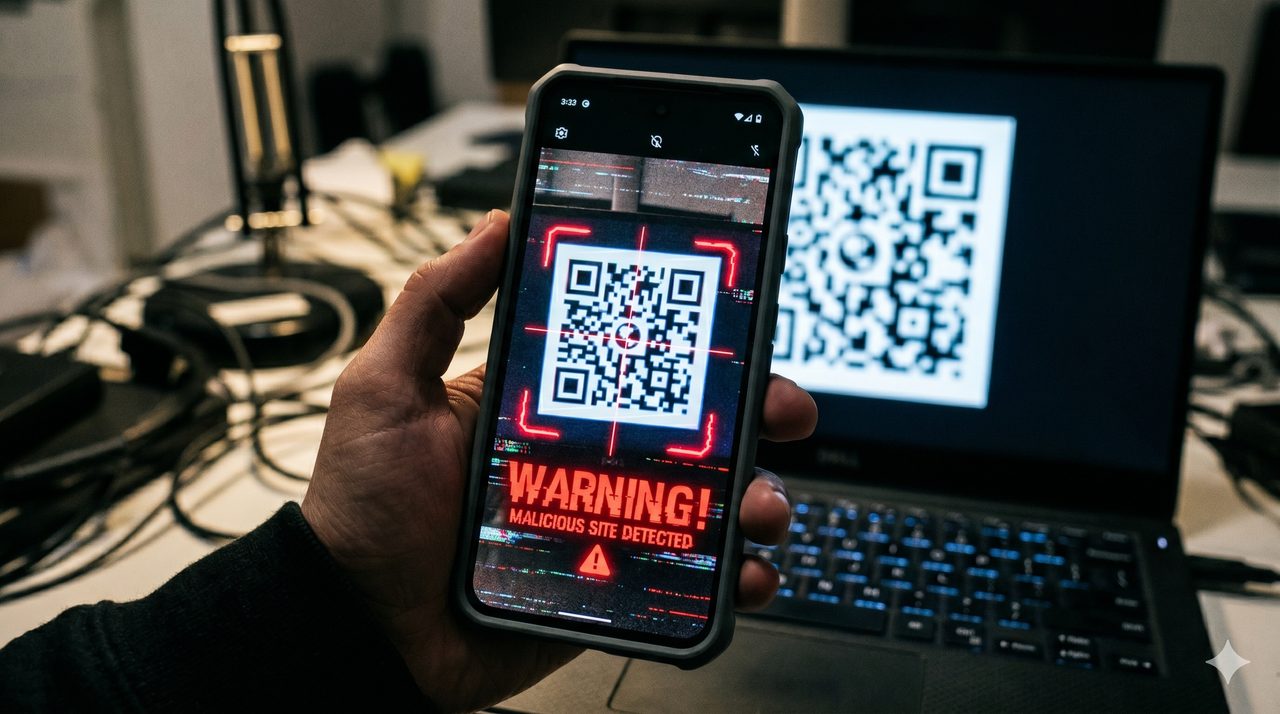
A hand holding a mobile phone scans a QR code on a blurry laptop screen. The phone issues a warning that the QR code could be malicious.
  • Microsoft detected 8.3 billion phishing emails in Q1 2026
  • Attackers are favoring QR-code based attacks
  • PhaaS group Tycoon2FA saw a drop in attacks following disruption, but is rehosting infrastructure elsewhere

Microsoft has warned of a 146% rise in QR code phishing (quishing) as attackers change tactics to get through defenses.
These stats come from Microsoft’s latest Email threat landscape report, generated after analyzing over 8.3 billion email-based phishing threats in Q1 2026.

Other than the notable shift in tactics, Microsoft has also warned of increases in business email compromise (BEC), CAPTCHA pages to avoid detection, and credential phishing malicious payloads.

8.3 billion reasons to enhance your security

While the overall volume of monthly phishing threats fluctuated between January and March, Microsoft noted a clear shift in tactics throughout Q1 2026.

Attackers have adapted to improved defender security by increasing phishing attacks via QR codes, with quishing attacks reaching their highest point in the last year.

While scan-based security defenses can quickly identify the typical text-based phishing attempts, they struggle to handle embedded QR-codes.

Moreover, the recipient of a QR-code-based attack is likely to use a mobile device to scan the code, taking the victim out of the protected environment on their workstation and thereby bypassing enterprise security tools - especially if they use a personal mobile device.

Attackers are also shifting tactics in terms of how they deliver QR codes to their victims. While PDF files were the preferred delivery method throughout Q1, there was a 336% surge in March of QR codes being delivered directly in emails, avoiding the need for attachments altogether.

(Image credit: Microsoft Threat Intelligence)

Microsoft recorded a downward trend in CAPTCHA-based attacks in the first two months of Q1, before attempts exploded by more than 125% in March.

CAPTCHA pages help attackers avoid detection by forcing victims to interact with the page before accessing the final payload. In some cases, the attackers use the CAPTCHA page to deliver the payload by having the victim believe they are verifying the CAPTCHA, but instead are copying and executing malicious commands.

Microsoft noted that attackers using the CAPTCHA method don’t seem to have a single preferred delivery mechanism for the payload, with groups experimenting in the use of HTML attachments, SVG files, PDF files, DOC/DOCX files, and Email-embedded URLs.

(Image credit: Microsoft Threat Intelligence)

The joint Microsoft/Europol disruption of the Tycoon2FA phishing-as-a-service (PhaaS) group in March contributed to a marked 15% decline in attacks utilizing the groups chosen methods, however the disruption is unlikely to be permanent as the group changes its infrastructure to be hosted on second-level domains such as .RU. To that end, Microsoft has already seen 41% of all Tycoon2FA domains using a .RU TLD since the last week of March.

As for business emails, Microsoft highlighted that it detected 10.7 million phishing threats directed towards business emails, with attackers showing a clear preference for lure-based phishing emails. These emails typically include a generic message such as “Are you at your desk?” to establish a conversation with the recipient before delivering the payload.

Attackers are also moving away from targeting business emails with requests for gift cards, and instead took advantage of tax season to send payroll update requests, with this attack vector growing by 15% in February.

In order to protect against phishing attacks, Microsoft recommends taking the following actions:

  • Check Exchange Online Protection and Microsoft Defender for Office 365 settings to ensure the recommended settings are turned on
  • Provide phishing simulation training to employees
  • If using Defender for Office 365, enable Zero-hour auto purge (ZAP)
  • Enable safe links in Microsoft Defender for Office 365
  • Enable network protection Microsoft Defender for Endpoint
  • Use phishing-resistant multi-factor authentication (MFA) such as FIDO2 keys or biometric authentication.
Sign up to read this article
Read news from 100's of titles, curated specifically for you.
Already a member? Sign in here
Related Stories
Top stories on inkl right now
One subscription that gives you access to news from hundreds of sites
Already a member? Sign in here
Our Picks
Fourteen days free
Download the app
One app. One membership.
100+ trusted global sources.