
Get all your news in one place.
100's of premium titles.
One app.
Start reading
The Conversation
The Conversation
Ryan C. Fortenberry, Associate Professor of Chemistry, University of Mississippi

Methane rocket fuel is easier to handle and convenient but, as Blue Origin saw, it can be very explosive

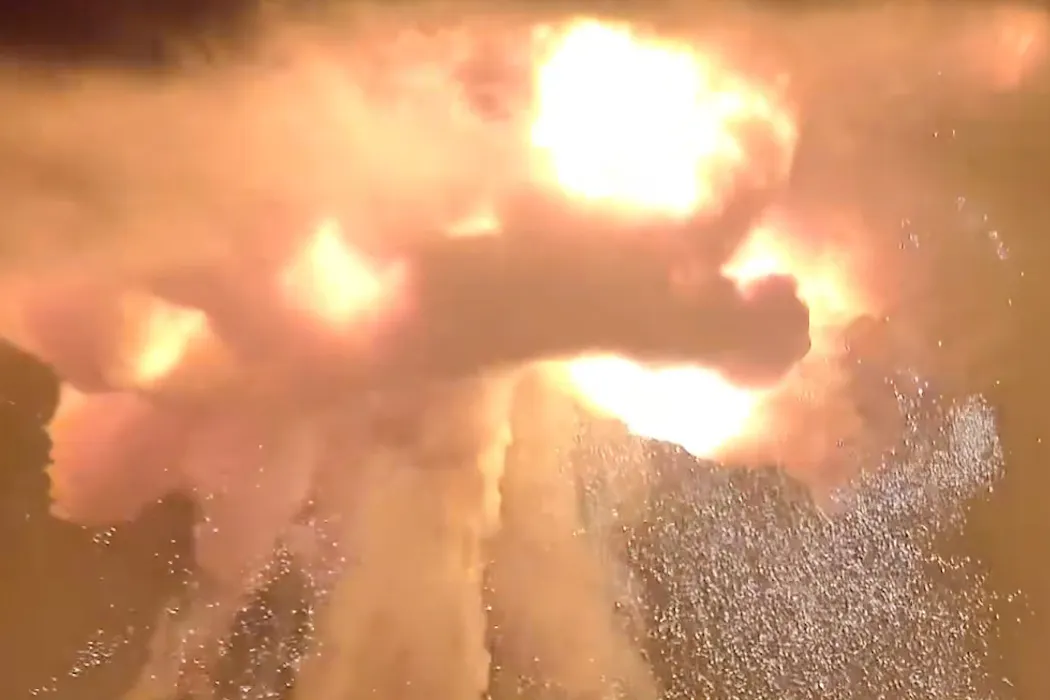
Blue Origin's New Glenn explodes on the launchpad at Cape Canaveral on May 28, 2026. @JConcilus via AP

Going straight up is hard. It takes a lot of energy. For those of us who enjoy hiking, cycling or running, hills are the bane of our existence. The hills sap us of our strength and speed, and they require more effort than we often want to expend.

Rockets are the ultimate definition of vertical ascent: They go up, fast. They need lots of raw power, and they need it immediately. Interestingly, though, the modern incarnation of reusable rocketry has come back to the same basic fuel as the human body uses: hydrocarbons. Granted, SpaceX and Blue Origin’s massive rockets are not using sugar, carbs or fats, but they are using the simplest hydrocarbon, methane: a single carbon atom with four hydrogen atoms around it, CH₄.

Sign up to read this article
Read news from 100's of titles, curated specifically for you.
Already a member? Sign in here
Related Stories
Top stories on inkl right now
One subscription that gives you access to news from hundreds of sites
Already a member? Sign in here
Our Picks
Fourteen days free
Download the app
One app. One membership.
100+ trusted global sources.







