Get all your news in one place.
100's of premium titles.
One app.
Start reading
The Economic Times
The Economic Times
Aastha Raj

Psychology says people who hate phone calls but reply instantly to texts may not be experiencing social anxiety

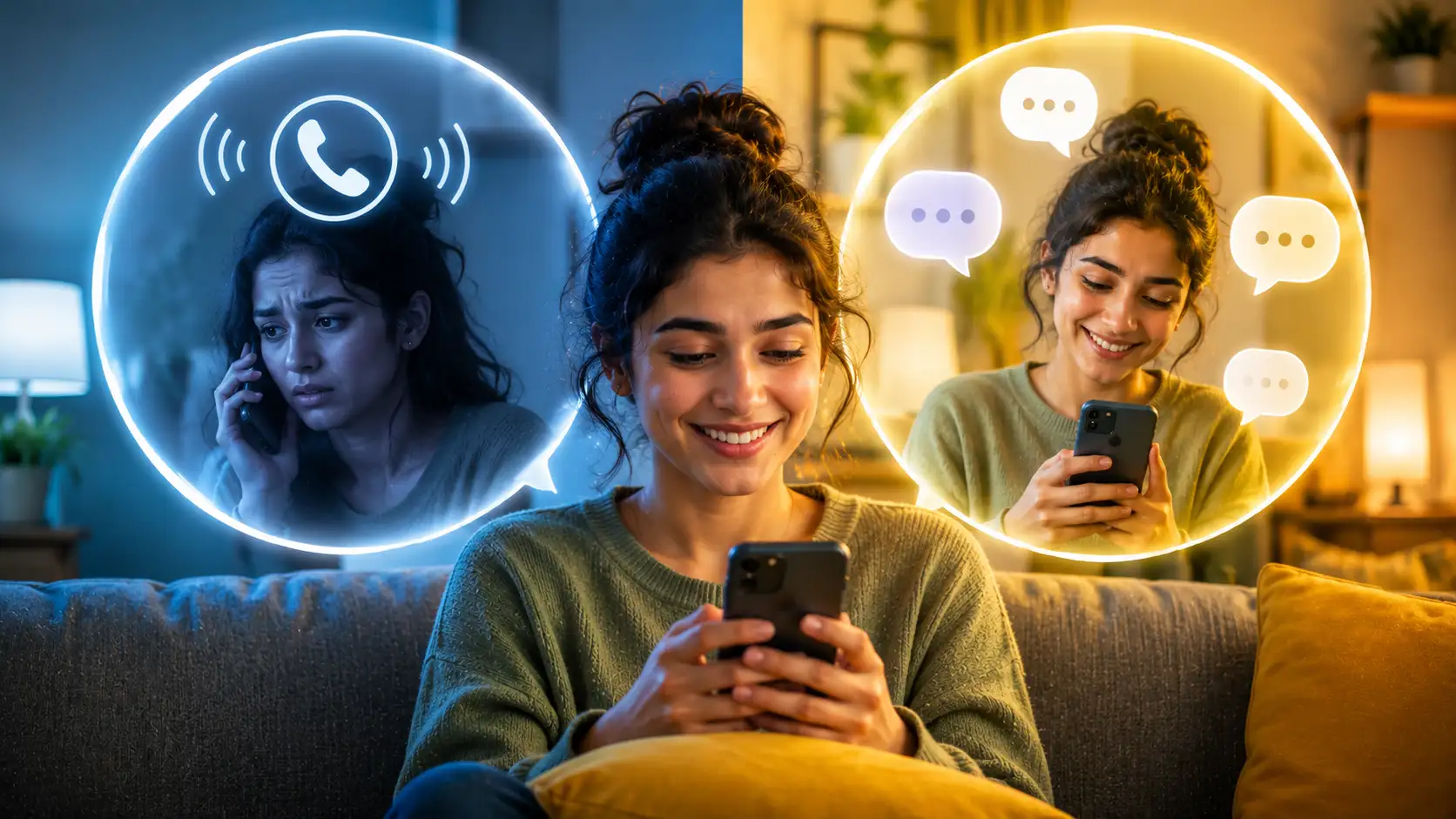
For some people, a ringing phone creates instant stress. They may let the call go to voicemail, reply with a text instead, or even hope the caller hangs up. Yet those same people might happily chat through messages for hours.

Psychology says that disliking phone calls doesn't automatically mean someone is rude, antisocial, or socially anxious. In many cases, it reflects how different people process communication. Research suggests that phone conversations demand immediate attention, quick responses, and continuous social interaction, which some individuals simply find more mentally demanding than text-based communication.
Phone calls leave little time to think

One of the strongest explanations comes from Communication Apprehension Theory, developed by psychologist James C. McCroskey.

Communication apprehension refers to the anxiety or discomfort some people experience during real-time conversations. Unlike texting, phone calls require immediate responses.

For example, someone receiving an unexpected work call may worry about saying the wrong thing because they have no opportunity to carefully think through their answers. Texting provides more time to organize thoughts, making it feel less stressful for many people.

READ ALSO: Psychology says people who leave cabinet doors open may not be as absent-minded, they may be experiencing attention shifts, and memory lapses

Uncertainty can increase anxiety

Research on Intolerance of Uncertainty suggests that some individuals become uncomfortable when they don't know what to expect.

A phone call often begins without context. The caller could have good news, bad news, a request, or an emergency. For example, seeing an unknown number appear on the screen may immediately trigger questions like:

"Is something wrong?"

"What are they going to ask me?"

This uncertainty alone can make answering the phone feel emotionally demanding.

Some people experience social anxiety

For individuals with Social Anxiety, live conversations can feel particularly challenging. Psychologists explain that social anxiety often involves worrying about being judged, misunderstood, or making mistakes during interactions.

Imagine someone preparing for an important phone interview. They may rehearse possible questions repeatedly because they fear awkward pauses or saying something incorrect. Not everyone who dislikes phone calls has social anxiety, but for some people it is an important factor.

Texting reduces cognitive pressure

Phone conversations require people to:

  • Listen carefully
  • Process information immediately
  • Plan a response
  • Speak clearly
  • Interpret tone of voice

All of this happens within seconds. According to Cognitive Load Theory, managing multiple mental tasks at once can increase cognitive effort. Text messages reduce that pressure by allowing people to pause, reread, and edit before responding.

READ ALSO: Psychology says people who can't throw things away may be holding onto more than just objects

Communication preferences have changed

Media Richness Theory, developed by Richard Daft and Robert Lengel, explains that different communication channels suit different situations. Although phone calls provide immediate feedback and emotional tone, many everyday conversations don't require that level of richness. For example, sending: "I'm running ten minutes late." takes only seconds as a text.

Calling someone for the same message may feel unnecessary. As digital communication has evolved, many people have simply developed different preferences.

Introversion may play a role—but not always

The Big Five Personality Model identifies Introversion-Extraversion as one dimension of personality. Some introverted individuals report feeling mentally drained after long phone conversations because they prefer quieter, less stimulating interactions.

However, psychologists emphasize that many extroverts also dislike phone calls. Communication preferences cannot be explained by introversion alone.

Previous experiences shape expectations

According to principles of Classical Conditioning, repeated negative experiences can influence future reactions. For example, if someone regularly receives stressful work calls or difficult family conversations by phone, the ringtone itself may begin triggering tension. Over time, the brain starts associating phone calls with stress, even before the conversation begins.

FAQs

Why do some people prefer texting over phone calls?

Psychologists suggest that texting provides more time to think, reduces uncertainty, and lowers the pressure of responding immediately.

Does hating phone calls mean someone has social anxiety?

No. While social anxiety can contribute, many people dislike phone calls simply because they prefer written communication or find calls mentally demanding.

Sign up to read this article
Read news from 100's of titles, curated specifically for you.
Already a member? Sign in here
Related Stories
Top stories on inkl right now
One subscription that gives you access to news from hundreds of sites
Already a member? Sign in here
Our Picks
Fourteen days free
Download the app
One app. One membership.
100+ trusted global sources.