Two of the biggest trends of the past half-decade, prediction markets and social gaming, are once again under the spotlight in the US.
Prediction markets allow users to bet on an endless array of real-world events – the existence of aliens, whether Jesus Christ will return, a Taylor Swift pregnancy announcement. Almost anything. And global prediction market trading increased more than 400% last year to almost $64 billion, with several forecasters marketing $1 trillion dollars by 2030.
Similarly, social gaming, mostly seen across social casinos and sweepstakes casinos, is booming in the US. Leading operators like WOW Vegas and Chumba Casino report having millions of players, and the social casino market itself is currently valued at around $8.36 billion. Gen Z and Millennials in particular are hooked, many of whom have ditched traditional gaming for the prize-chasing, free-to-play social gaming space instead.
But with so much growth happening for both these markets at the moment, the US has inevitably started taking a closer look at them from a regulatory standpoint, and some big changes are already starting to take place.
Prediction Markets Face Growing Regulatory Pressure in the US
The main topic of discussion surrounding prediction market sites throughout the US is whether they should even be legal to begin with.
Many think not, largely because prediction markets resemble gambling too closely.
On sites like Kalshi, users get to trade on the outcome of real-world events, from politics to pop culture moments, in the same way they would casually bet on a sports game or slot machine.
These trades are classed as ‘contracts’ by the prediction market sites, allowing them to operate under financial regulations rather than actual gambling laws, which online casinos and sportsbooks frustratingly have to abide by.
The Commodity Futures Trading Commission (CFTC) has also stepped up oversight of popular prediction market sites, while state officials have also started taking a closer look at them.
This has led to proposals to rein in prediction markets flying around Congress over recent weeks and months, with certain well-time trades, specifically around the ongoing Iran war, sparking concern over insider trading.
Washington ultimately decided to sue Kalshi at the end of March, accusing the site of skirting state laws through a prediction market cloak while violating the Washington state Gambling Act and Consumer Protection Act.
The New York-based Kalshi then fired back by launching an ad campaign at the end of March all throughout Washington, showcasing green spreads across billboards, bus shelters, and other places, claiming “We ban insider trading” and “We operate under U.S. law”.
These ads were done not just to boost the site’s somewhat controversial image, but to also create goodwill with regulators in the US who hold extreme scepticism.
As it stands, Kalshi dominates the US prediction market space, accounting for just over 90% of the market share according to the Bank of America, while other prediction market sites like Polymarket are global forces but have yet to get a genuine grip of the US.
White House Staff Warned Not to Use Insider Information to Place Bets on Prediction Markets
With insider trading being the biggest overall concern with sites like Kelshi, White House staff members have been warned not to take part in any insider trading.
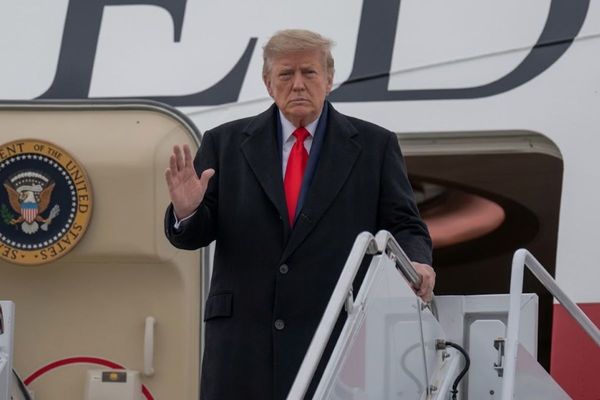
The warning came via a staff-wide email from the White House Management Office on March 24, the day before Trump announced a sudden pause of strikes on Iran.
The recent flurry of suspiciously timed bets surrounding the Iran war are behind this, and it’s now believed that White House staff are being monitored closer than ever to ensure none are making bets from prediction markets based on insider information.
Social Casinos Also Take the Heat
With Kelshi under serious fire in the US currently, social casinos, also known as ‘sweepstakes casinos’, are taking the heat as well.
Social casinos are a new type of casino that’s spread in popularity throughout the US ever since the COVID-19 pandemic, where many people discovered them for the first time while stuck in lockdown.
Sites like Chumba Casino and Stake.us, which reportedly pays rapper Drake $100 million a year as part of its ‘Drake x Stake’ sponsorship deal, have pulled in millions of users and even casual gamers have started giving them a go.
And up until early 2025, the social casino market was booming in the US, until state regulators finally started to take a look at them following concerns about player safety.
These types of casinos, where players bet virtual ‘Sweeps Coins’ instead of real money, allow users to redeem prizes like gift cards and cryptocurrencies, again mimicking real-life gambling the same way that prediction markets do.
In response, big states like New York and California have successfully passed legislative bills to kick these social casinos out of their state borders, along with Michigan, Montana, New Jersey, and others.
2026 has already seen Maine and Indiana pass laws against social casinos, so there’s no telling how many others might join the growing list of states by the end of the year.
Currently, Washington is pushing to ban social casinos before the end of the year as part of its Council Bill 260656, according to this report taken from SweepsKings.com.
Some sweepstakes casinos have responded by raising their minimum player ages 21, but none have adapted their existing Sweeps Coins models, where players can purchase these coins indirectly and win prizes, which is why bans keep flooding in.
Until social casinos make changes to their model or cut tax revenue deals with states in order to get them on side, much like the SGLA attempted to do in Indiana before the state’s recent ban, the industry is going to remain under fire.
It could even reach a point where social casinos become like regular online casinos, in the sense that they’re only legal in a small number of states.
Prediction Markets and Social Casinos Are a Big Hit, But Legal Problems Persist
A lot has changed in the US post-COVID.
With the economy continuing to struggle and cost of living higher than ever, it’s inevitably led to the emergence of new gambling-style markets, which some use for entertainment while others treat it as a potential way out of financial struggles.
As a result, prediction market sites like Kalshi and Polymarket are raking in countless users and hundreds of millions in revenue, with no sign of slowing down.
At the same time, ‘free-to-play’ social casinos, along with other social gaming-style sites with cash rewards, are also skyrocketing, particularly among Gen Z and Millennials.
Public concern is high off the back of this and Congress is exploring the nature of these sites and what measures can be potentially taken against them.
What the future holds remains to be seen, but it’s expected that both prediction market sites and social casinos are going to face much stricter regulations over the coming year.
Until then, US consumers will be able to keep betting on random real-world events and spinning the virtual slot reels while potential changes to state laws lurk in the background.