
Get all your news in one place.
100's of premium titles.
One app.
Start reading
Space
Space
Science
Anthony Wood

Planets, constellations and more: Here's what to look out for around the new moon this week

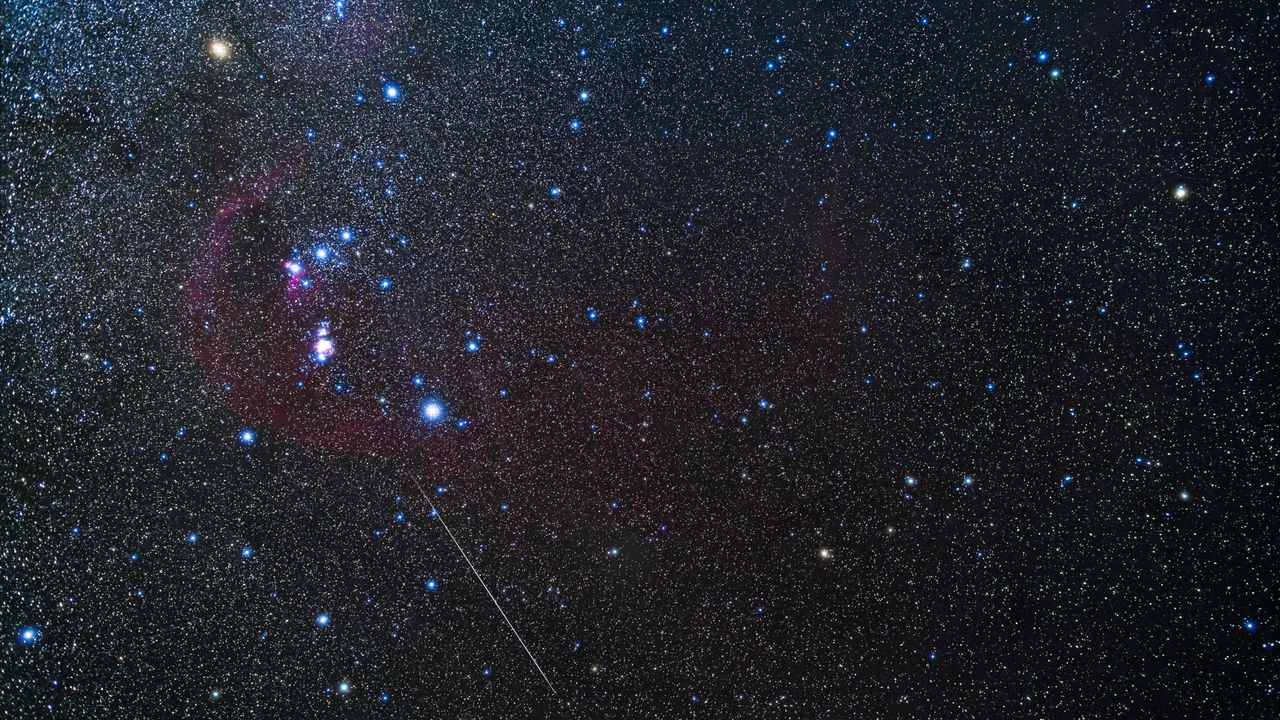
The stars of the constellation Orion shine in a winter night sky against a background of fainter stars as a meteor streaks diagonally across the image to the lower right.

The blissfully dark nights surrounding this month's new moon phase on Feb. 17 present a perfect opportunity to explore the wonders of the post-sunset realm while free of the glare cast by our natural satellite.

A new moon phase occurs when the moon is positioned directly between the sun and Earth, meaning the moon isn't visible at night and is hidden by the sun's glare during the day. February's new moon phase occurred at 7:01 a.m. EST (1201 GMT), heralding the onset of a spectacular annular solar eclipse visible across a swathe of Antarctica, as the lunar disk passed in front of the sun, leaving only the "ring of fire" of its outer edge on display.

Sign up to read this article
Read news from 100's of titles, curated specifically for you.
Already a member? Sign in here
Related Stories
Top stories on inkl right now
One subscription that gives you access to news from hundreds of sites
Already a member? Sign in here
Our Picks
Fourteen days free
Download the app
One app. One membership.
100+ trusted global sources.