
Get all your news in one place.
100's of premium titles.
One app.
Start reading
Cycling News
Cycling News
Sport
Tom Wieckowski

Parcours claims its new Vibracore vibration-damping wheel tech is equivalent to a 10-15 PSI drop in tyre pressure

Parcours Strade GT wheels .
Tech specs: Parcours Strade GT

Price: £2,499 / US$3,299 / €3,199 (steel bearings) / £2,719 / US$3,589 / €3,489 (ceramic bearings)
Weight: 1,130 grams - 495g front / 635 grams rear.
Freehub drive: 60 tooth star ratchet
Depth: 49.2mm front / 54mm rear
Rim widths: 23.5mm hooked internal
Spokes: Alpina Carbolite Aero

British wheel brand Parcours has launched a new, high-end road wheelset today named the Strade GT, which boasts some interesting claims around vibrational loss-saving technology. The brand says this is a wheelset for riders wanting 'aero efficiency, stability, and long distance comfort in a single system.'

This news comes well-timed, in the run-up to Paris-Roubaix, as comfort over rough surfaces and the tech that helps it is dominating our thoughts here in the Cyclingnews tech team.

Whilst these aren't wheels designed to help anyone over the Hell of the North's brutal stones, they do have some interesting claims around lowering vibrational losses and fatigue and helping riders stay fresher for longer.

The headline claim here from Parcours is that the Strade GT wheels' vibration-damping tech, which we get into below, is equivalent to reducing tyre pressure by approximately 10-15psi, which, at face value, is quite the claim.

The new tech is the focus here, but spec-wise, the wheels appear to tick a lot of boxes for the best road bike wheels. Like so many high-end wheels of late, they make use of carbon fibre spokes from Alpina, resulting in a claimed 1130-gram weight for the hooked 49/54mm deep rims, which the brand says are optimised around 30mm tyres, in part thanks to the 23.5mm internal rim. The wheels are also said to be more aerodynamic than the current Parcours Strade wheel, to the tune of 3.2 watts at 48km/h.

Strade GT wheels will cost £2,499 / US$3,299 / €3,199 for the steel bearing-equipped option and rise to £2,719 / US$3,589 / €3,489 if you want ceramic bearings.

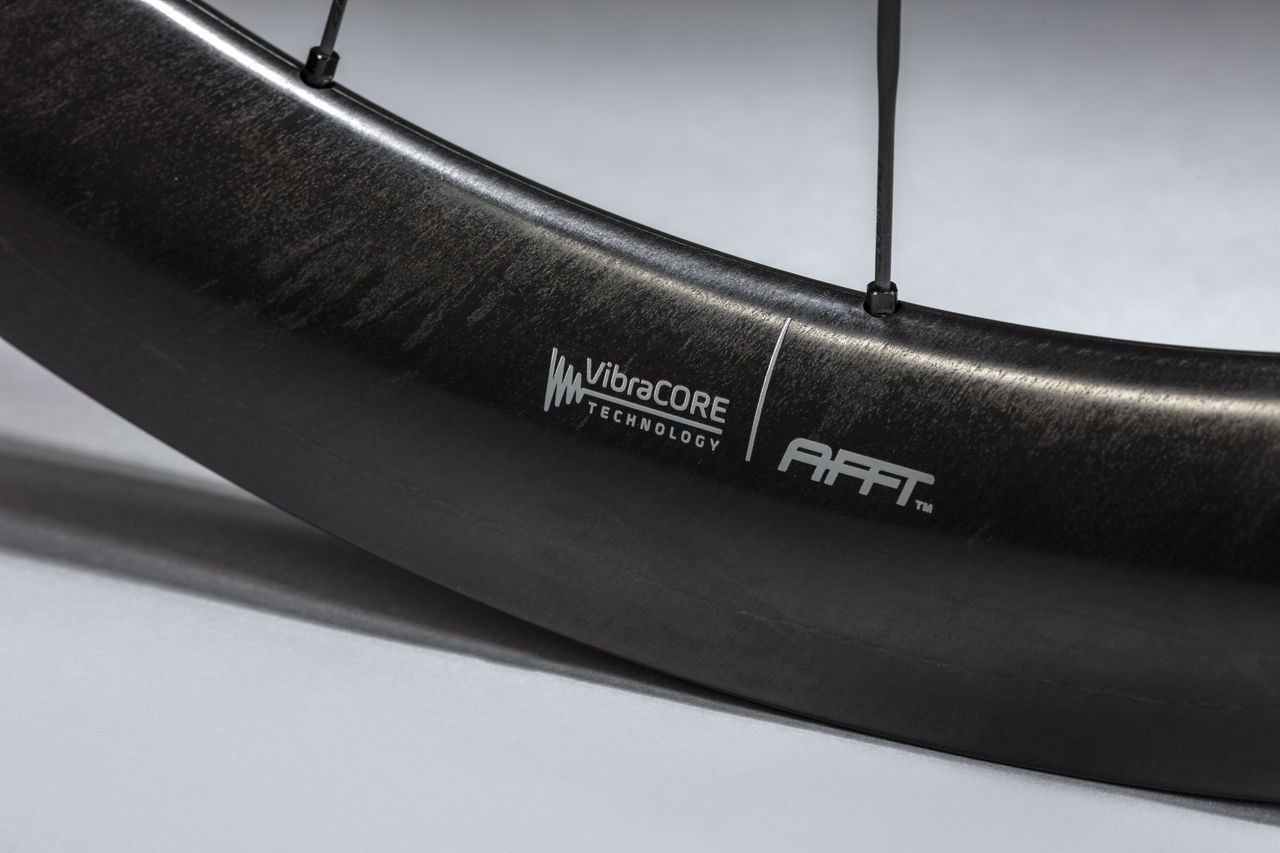
Parcours has used a new trademarked technology named Vibracore in the Strade GT wheels, which makes use of reclaimed Aligned Formable Fibre Technology (AFFT) from Welsh brand Lineat, in conjunction with Nottingham Trent University. Interestingly, the brand has to ship this material to its factory in the Far East for it to be incorporated into its wheels.

I spoke with Parcours on the project, and was told a greener wheelset was the initial goal with the Strade GT wheels, but the brand told me that the smoother ride quality the recycled carbon fibre material gave the wheels jumped out early on.

The recycled AFFT material is said to allow a 'different interaction within the laminate' and influences how energy is transferred between layers.

The recycled material is integrated into the spoke bed of the rims, which the brand claims helps reduce vibration at a structural level. This material helps deaden road vibration at the rim, creating a smoother ride and reducing what we tend to think of as 'road buzz', which should ultimately help keep us feeling fresher and less fatigued.

It's understandable for claims like this to raise eyebrows, especially now that large-volume tyres and low pressures can do so much to boost comfort. Is this tech needed?

Parcours says it has done two years of testing to prove and develop the technology and even provided a lengthy white paper on its findings and test protocols. I haven't included everything here, but I hope to test a pair of wheels for myself soon to really see what they are all about in the real world and compare my findings to the Parcours test results.

Parcours says it worked with the Sports Engineering Department at Nottingham Trent University on its testing. The brand used multi-axis vibration sensors on a bike stem and at the rear of the top tube. Five test riders weighing between 55 and 105kg rode different frames with 28 and 30mm Vittoria Corsa Pro tyres at 40,60 and 80 PSI across two test wheelsets, one with Vibracore and one without, across a range of surfaces over multiple runs.

The results showed reductions in RMS (root mean square) vibrational energy at Hertz ranges in line with what we typically feel as 'road buzz' on the bike. And at 60PSI, the brand says the reduction is in line with a 10-15 PSI reduction in tyre pressure without any of the potential disadvantages of this.

This is a top-line overview of the brand's testing, which, as mentioned, I will dig into more soon. This new technology is interesting for tech fans at the very least, and if Vibracore delivers could be a way of staying fresher for longer on the bike.

Here's a graph from the whitepaper showing test results at 60 PSI against another 'standard' wheel (Image credit: Parcours)
Sign up to read this article
Read news from 100's of titles, curated specifically for you.
Already a member? Sign in here
Related Stories
Top stories on inkl right now
One subscription that gives you access to news from hundreds of sites
Already a member? Sign in here
Our Picks
Fourteen days free
Download the app
One app. One membership.
100+ trusted global sources.