Get all your news in one place.
100’s of premium titles.
One app.
Start reading
The Guardian - UK
The Guardian - UK
Politics
Diane Taylor

Paralympian Helene Raynsford was asked to sign ‘do not resuscitate’ form

Helene Raynsford, Paralympic athlete.
Helene Raynsford is sharing her experience to warn other people with disabilities against feeling pressured into ‘snap decisions’. Photograph: Martin Godwin/The Guardian

A paralympian has said she was made to feel her life was “not worthy” after being asked to sign a “do not resuscitate” (DNR) form despite not having a life-limiting condition.

Helene Raynsford, 42, a wheelchair user, is a former rowing champion who won a gold medal at the 2008 Beijing Paralympics. She was asked to sign the form, commonly called a DNR, by somebody with no medical training after being invited to an appointment initiated by a primary care network in the south-east of England.
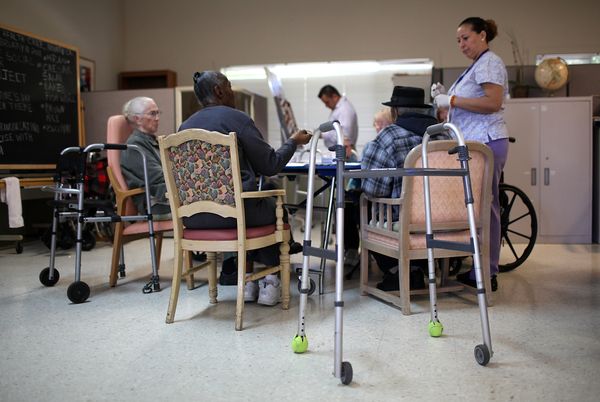
Raynsford believes she was asked to sign the DNR purely on the basis of being a wheelchair user as she is neither elderly nor suffering from a serious condition.

She has decided to speak out about her experience to warn others with disabilities who may also be asked to sign this kind of agreement simply because they are a wheelchair user or use some other kind of aid to help them with daily living.

“At the appointment the person who asked me to sign the DNR was not a trained healthcare worker,” said Raynsford. “She also asked me what my understanding of my medical condition was and if I had power of attorney.

“I was quite frustrated about the whole thing. It made me feel not worthy. The only information this person knew was that I’m a wheelchair user. I’m a huge fan of really good end-of-life care and talking about options, but I don’t have a life-limiting condition at the moment.

“The whole appointment felt bizarre. It would worry me if any snap decisions were made about this. I feel these kinds of conversations should be had with healthcare professionals who know the individual, not with people without medical training. I felt compelled to speak up to protect other disabled people and hope the implementation will be revisited.”

Raynsford said she “politely declined” signing the form and said she would first do some research into it.

“I wanted to make an informed decision and I really didn’t like this,” she said. “I don’t know what safeguards are in place for more vulnerable people. My GP was horrified when I told her what had happened and was so apologetic. She said to me that I’m not the kind of individual who should be having these forms put upon me.”

Reflecting on the episode, she added: “Is a judgment being made about the value of my life compared with someone else’s life? Would this mean that if I was injured in a car crash my life would not be deemed worthy of saving? Not much gets me down, but this really stopped me in my tracks and made me feel my worthiness for treatment was being questioned.”

Paralympian Anne Wafula Strike, also a wheelchair user, expressed alarm about what had happened to her fellow athlete.

She said: “Being disabled should never disqualify people from having a life. I have on several occasions reminded people that my being a wheelchair user does not mean I should be subjected to exclusion, discrimination or unequal treatment.”

A spokesperson for the integrated care board in Raynsford’s area said: “A ‘do
not resuscitate’ notice should only ever be issued by a medical professional who has full knowledge of a patient’s health issues and with the consent of the patient or their care workers.”

Sign up to read this article
Read news from 100’s of titles, curated specifically for you.
Already a member? Sign in here
Related Stories
Top stories on inkl right now
One subscription that gives you access to news from hundreds of sites
Already a member? Sign in here
Our Picks
Fourteen days free
Download the app
One app. One membership.
100+ trusted global sources.