
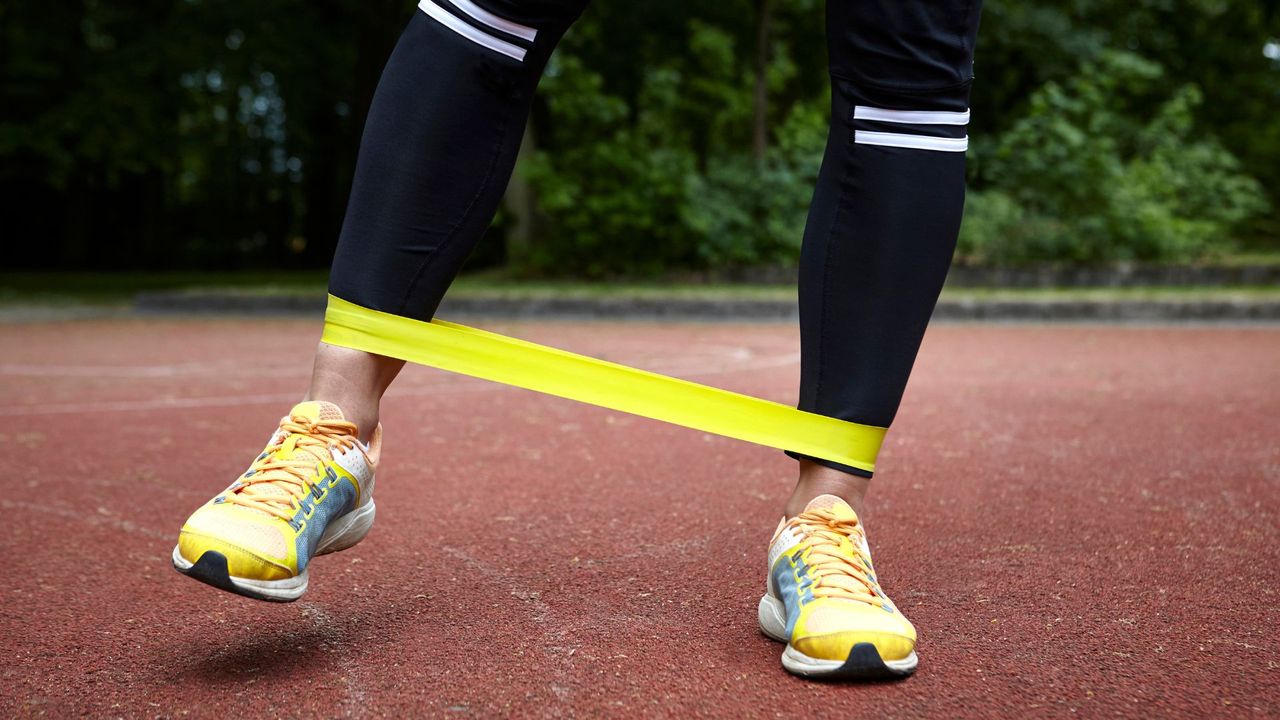
Whether it's walking, climbing stairs, or working out, our lower-body muscles play an essential role in helping us move freely. We use our legs, glutes, hip muscles, and core more than most other muscles in our body, so it's a good idea to keep them strong.
You can do glute exercises and quadricep exercises like squats, deadlifts, and lunges, and they are all worthy of a place in your workout routine. But you can also try the crab walk if you're looking to boost your stability, hip strength, balance, and muscle mass.
"The crab walk is easy to do. It feels almost like regular forward walking, but you move horizontally in a squat position, giving your muscles a fresh challenge," says David J Sautter, a performance enhancement specialist and qualified personal trainer with WalkFit.
To help get the basics down, I asked David how to do a crab walk using body weight, a resistance band, and a dumbbell. You can try this move at home.
What is the crab walk?
The crab walk is a "lateral walking exercise", says David, unlike most lower-body exercises, which involve up and down or backwards and forward motions. This means you move sideways under the resistance of your body weight, a resistance band, or a set of dumbbells.
"Unlike regular forward walking, this position forces new muscles to be used, engaging your core, shoulders, and glutes while challenging your balance and coordination," he says. If you're a runner, walker, or cyclist, you may find that regularly doing this exercise helps your performance by improving your hip stability and power.
How to do the crab walk
- Stand with your legs hip-width apart and knees slightly bent.
- Lower yourself down into a semi-squat position, sitting at about a 45-degree angle. Engage your core and keep your chest lifted.
- Take a breath, then take a step to the side. Lead with your outside foot, then carefully bring the other one in behind it.
- Repeat the step for at least 12 repetitions, then switch sides. Repeat 3 times.
What are the benefits of the crab walk?
1. Strengthens the entire lower body
From your glutes to the tiniest muscles around your ankles, the crab walk targets the entire lower body. The second you move down into the half-squat position, you're engaging your leg muscles, glutes, core, and hip flexors. When you do this frequently, you'll find it's enough of a new challenge to break down the muscle fibres, which is what needs to happen to build muscle and strength.
A study in the Sports Science Journal shows that doing half squats can effectively build strength, power, and muscle, and may even activate the quadriceps more than deeper squats.
2. Improves full-body stability
Most people will feel a little off balance doing a squat. Throw in some sideways movement, and it's a serious challenge for your stability.
Doing the crab walk a couple of times a week will continue to challenge your stability and improve it over time.
However, by simply strengthening glutes and the muscles in the hips, you'll improve your stability as these are vital for maintaining pelvic alignment and lower-body balance.
3. Boosts balance
Being a lateral movement, the crab walk is one of the best balance exercises and challenges coordination unlike any other. This makes it a particularly good exercise for over 50s to boost longevity later in life, says David.
He points to a study led by the University of Nebraska that found six weeks of sideways walking improved balance, reduced fall risk, and enhanced overall walking ability in older adults.
4. The crab walk is adjustable to all fitness levels
The crab walk is a hugely versatile exercise. Whether today is your first workout in years or you're looking to refresh your routine, it can help.
"This movement boosts calorie burn and adds variety to indoor workouts, making it accessible for almost anyone, from beginners to seasoned fitness enthusiasts, while keeping routines fun and motivating," says David.
"For those seeking more intensity, moving faster, adding light weights, or incorporating a resistance band around the thighs can further increase muscle activation.”
How to do a banded crab walk
To make the crab walk harder, wrap a resistance band around your knees. It needs to be a short, thick resistance band (otherwise known as a 'booty band') rather than a long elastic band.
Here's how to do it:
If you don't have a resistance band, you could always switch in a set of dumbbells or a kettlebell. Hold one weight over each shoulder for safe movement and keep it light to begin with until you're comfortable with the movement.
To do a banded crab walk, you'll need a short, thick resistance band like these. This set come in three different 'weights' to help you get stronger.