
Get all your news in one place.
100's of premium titles.
One app.
Start reading
Bangkok Post
Bangkok Post
Business

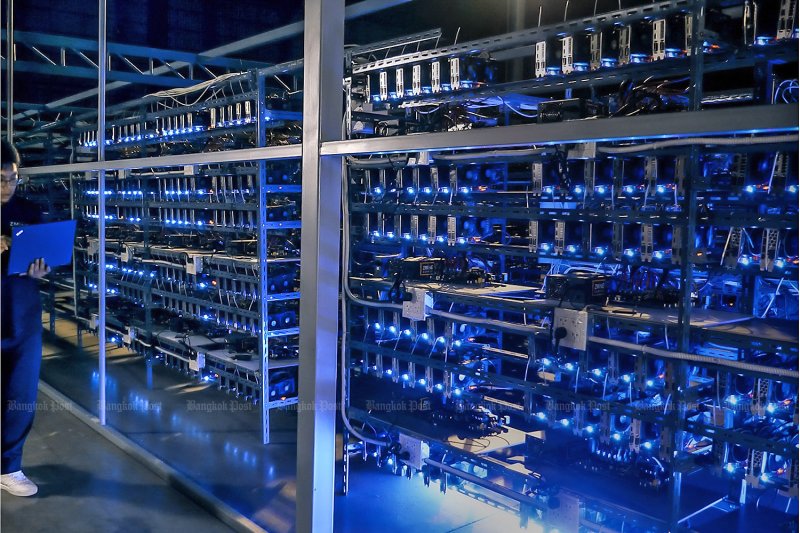
Nokia taps data centre boom driven by AI

Nokia is expanding beyond its traditional telecom business to capture growing opportunities in artificial intelligence (AI)-driven data centres and cloud infrastructure, betting that surging demand for high-capacity, secure and energy-efficient connectivity will fuel its next phase of growth.

Vito Di Maria, vice-president of optical networks for Nokia Asia-Pacific, said the data centre opportunity is a natural extension of Nokia's core expertise in connectivity rather than a shift away from its telecom business.

As AI, cloud services, and data-intensive applications continue to scale, they are driving unprecedented demand for high-performance, secure, and energy-efficient connectivity both within and between data centres, Mr Di Maria said.

This opportunity significantly expands Nokia's presence in the rapidly growing data centre market.

"From data centre interconnectivity and subsea connectivity to next-generation optical networking innovations, Nokia is helping customers build the networks needed to unlock the full potential of the AI era, while supporting Thailand and the region's broader digital transformation ambitions," he said.

Thailand remains a strategic market for Nokia as the country accelerates its digital transformation and AI ambitions, said Mr Di Maria.

Thailand is recording strong data centre growth and is well-positioned to become a digital hub in Southeast Asia, supported by localised computing capacity, data sovereignty, and its role in regional connectivity, he noted.

Thailand also provides important terrestrial routes linking Vietnam and China with Singapore, offering an alternative or backup to subsea cables. Nokia is working with local service providers on these cross-border projects.

Mr Di Maria said AI-related traffic in Thailand is likely to develop in three waves, with the first driven by international subsea traffic flowing into local hyperscale data centres.

He said the next waves will come from agentic and physical AI, supported by Thailand's manufacturing and industrial base, which will increase traffic between data centres for AI training as well as from data centres to edge locations and business premises, where AI agents and physical systems operate.

The company is leveraging its strengths in internet protocol (IP), optical networking and network automation to serve high-growth segments where reliable, scalable and intelligent networking infrastructure is essential to support AI and cloud workloads.

While major technology companies such as Amazon and Google are increasingly building their own fibre optic networks, Nokia does not view the trend as a threat.

Instead, Mr Di Maria described it as an evolution of collaboration, noting the company already works with nine of the world's 10 largest hyperscalers.

Although hyperscalers are investing in their own infrastructure, they continue to rely on advanced optical, IP and data centre interconnect technologies.

ENERGY EFFICIENCY

The growing complexity of AI-scale networking, particularly around capacity, automation, reliability and energy efficiency, continues to create demand for specialist networking expertise, he said.

Energy efficiency is also becoming a key competitive factor as operators face rising electricity costs and stricter sustainability requirements.

Mr Di Maria said Nokia is continuously improving the cost and power efficiency of every bit delivered, enabling customers to increase network capacity while lowering energy consumption and operational costs.

The company's optical technologies and network automation are designed to optimise network performance while reducing power consumption, physical footprint and operating expenses.

He said Nokia is working with cloud providers, hyperscalers, telecom operators and enterprises to support the expansion of AI and cloud infrastructure while helping build the high-capacity, secure and resilient networks needed to connect data centres, users and applications.

"Our focus is on building momentum by staying close to customers, bringing innovation in AI-ready and cloud-scale networking, strengthening partnerships across the ecosystem and delivering tangible business outcomes," he said.

Sign up to read this article
Read news from 100's of titles, curated specifically for you.
Already a member? Sign in here
Related Stories
Top stories on inkl right now
One subscription that gives you access to news from hundreds of sites
Already a member? Sign in here
Our Picks
Fourteen days free
Download the app
One app. One membership.
100+ trusted global sources.


