Get all your news in one place.
100's of premium titles.
One app.
Start reading
The Economic Times
The Economic Times
Advaita Suresh

No gym, no equipment, no sweat: This 800-year-old Chinese exercise is quietly fixing high blood pressure

An ancient Chinese exercise practiced for more than 800 years that just takes a few minutes daily is now gaining global attention after researchers discovered that it may help lower high blood pressure naturally.

Researchers in China have found that baduanjin, a traditional exercise combining slow movements, breathing control and meditation may lower blood pressure almost as effectively as some widely prescribed medications. The findings were published in the Journal of the American College of Cardiology following a large year-long clinical trial.

What is baduanjin? Ancient Chinese exercise for high blood pressure

For decades, doctors have advised people with hypertension to remain physically active. However, several patients find it difficult to maintain intense workout plans, expensive gym memberships or long-term fitness routines.

That is where baduanjin may provide a practical solution.

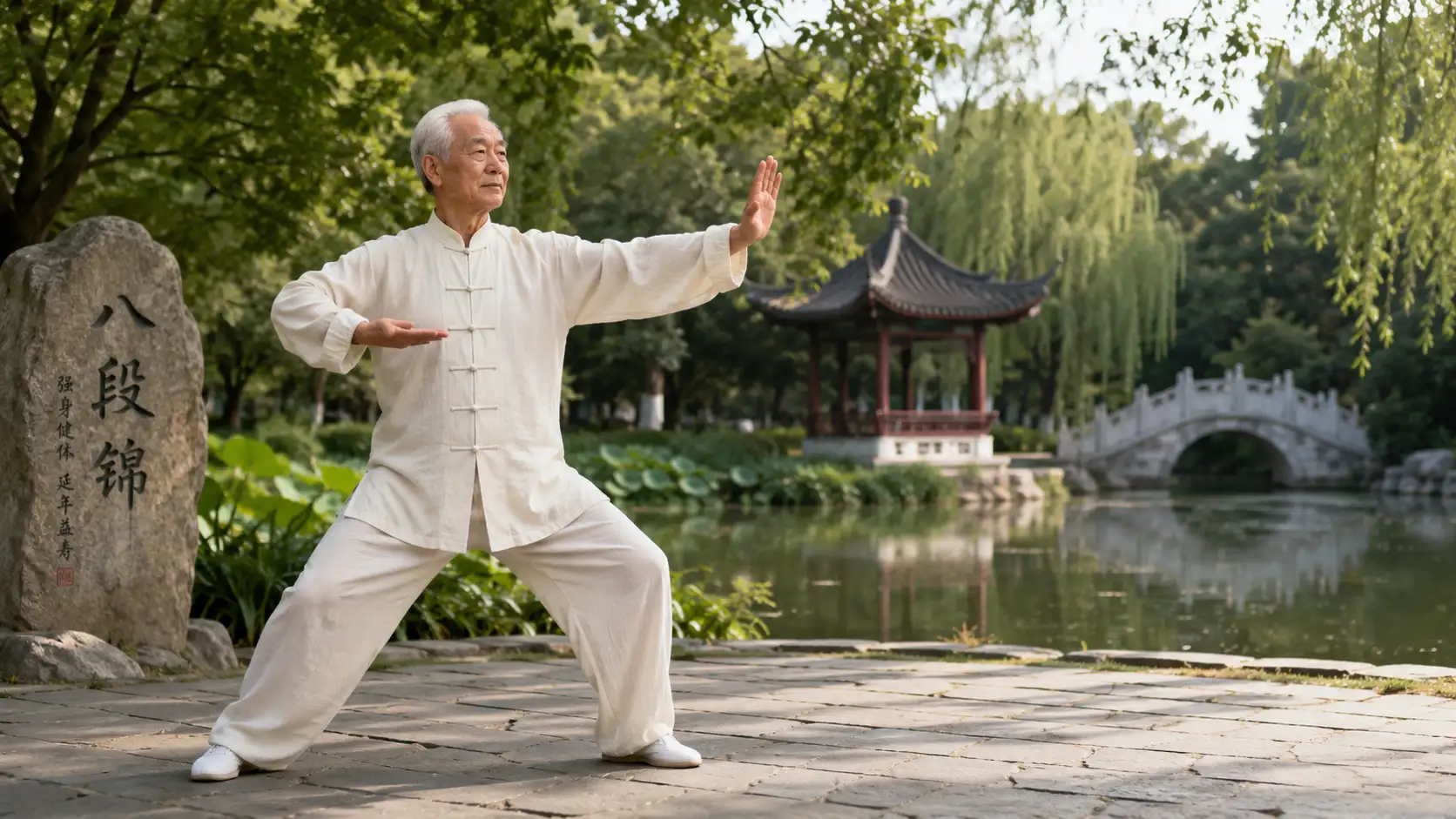
The traditional Chinese exercise which includes eight gentle movements created to enhance flexibility, posture, breathing and relaxation. Unlike most contemporary exercise programs, it needs no equipment, no training machines and very little physical strain. A complete session generally extends between 10 and 15 minutes and can be done almost anywhere.

Baduanjin has been practiced in China for over 800 years and continues to be a familiar sight in parks and public gathering spaces. Experts state that the movements blend elements of aerobic activity, stretching, mindfulness and controlled breathing, making the routine accessible even for older adults or individuals with limited mobility.

Baduanjin benefits: What researchers discovered about blood pressure

The study monitored 216 adults over the age of 40 who had stage 1 hypertension, meaning their systolic blood pressure measured between 130 mm Hg and 139 mm Hg. Participants from seven Chinese communities were divided into three separate groups for the year-long trial.

One set of participants practiced baduanjin five days every week. Another group followed brisk walking routines, while the third performed self-directed exercise programs without organized supervision.

Researchers tracked participants’ blood pressure throughout the study. After just three months, the people practicing baduanjin featured noticeable improvements.

Their 24-hour systolic blood pressure reduced by nearly 3 mm Hg, while office blood pressure readings decreased by almost 5 mm Hg compared to the self-directed exercise group. As per the researchers, those improvements remained stable even after one complete year.

The study also found that baduanjin offered blood-pressure advantages comparable to brisk walking.

Can baduanjin lower blood pressure naturally? Experts explain

Dr. Jing Li, senior author of the study and Director of Preventive Medicine at the National Center for Cardiovascular Diseases in Beijing, stated that the exercise could become a significant public-health tool because it is safe, inexpensive and simple to continue long-term.

Researchers also emphasized another key finding: participants continued practicing the routine even without constant supervision. Long-term consistency is often one of the biggest concerns in lifestyle-based treatment plans, mainly for conditions like hypertension.

Harlan M. Krumholz, Editor-in-Chief of JACC and the Harold H. Hines Jr Professor at Yale School of Medicine, explained the study as an example of traditional health practices being validated through modern science.

“Baduanjin has been practiced in China for over 800 years, and this study demonstrates how ancient, accessible, low-cost approaches can be validated through high-quality randomized research,” Krumholz cited.

“The blood pressure effect size is similar to that seen in landmark drug trials, but achieved without medication, cost or side effects. This makes it highly scalable for community-based prevention, including in resource-limited settings,” h stated.

Why the findings matter

Hypertension remains one of the major causes of heart disease and stroke worldwide, despite being largely preventable. Health experts have long highlighted regular exercise as part of blood-pressure management, but several people find it difficult to stick to demanding fitness schedules.

Because baduanjin is low-impact, short in duration and needs no special equipment, researchers believe it could become an appealing solution for people looking for affordable and sustainable ways to improve heart health naturally.

While experts stress that patients should not substitute prescribed medications without medical advice, the study indicates that simple traditional practices may still hold enormous value in modern preventive medicine.

Disclaimer: This article is intended for informational purposes only and should not be considered medical advice. Individuals should consult a qualified healthcare professional before making any significant changes to their diet, exercise routine, or health management plan.

FAQs:

Q1. What is baduanjin?

Baduanjin is a traditional Chinese exercise that combines gentle body movements, breathing techniques and meditation. It has been practiced for centuries as part of wellness and relaxation routines.

Q2. How long does a baduanjin session usually last?

Most baduanjin sessions last between 10 and 15 minutes. The exercises are simple and designed to be easy for beginners to follow.

Sign up to read this article
Read news from 100's of titles, curated specifically for you.
Already a member? Sign in here
Related Stories
Top stories on inkl right now
One subscription that gives you access to news from hundreds of sites
Already a member? Sign in here
Our Picks
Fourteen days free
Download the app
One app. One membership.
100+ trusted global sources.