
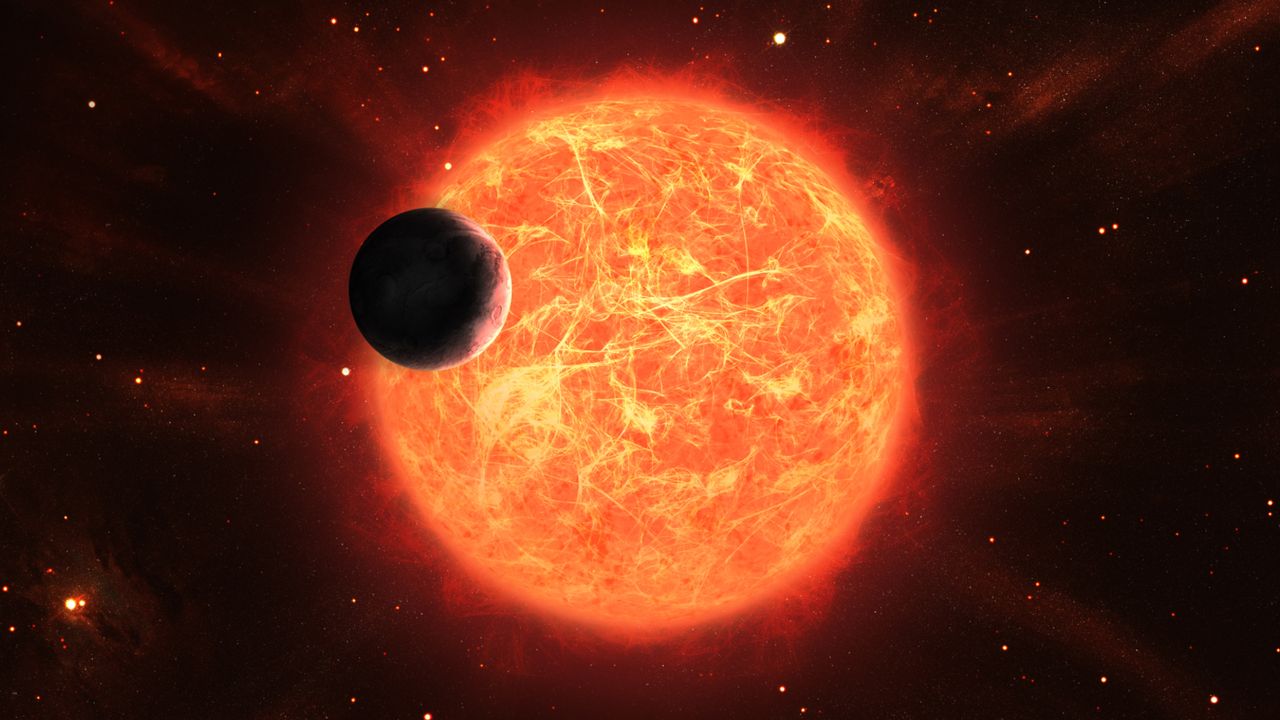
Astronomers may have just discovered the "most pristine" star ever seen, lurking near the edge of the Milky Way. The unusual alien sun, which could be the offspring of one of the universe's first stars, is so metal-poor that it breaks a major rule of star formation.
All known stars are powered by nuclear fusion, which forces the atoms of lighter elements together under immense pressure, fusing them into heavier elements and emitting large amounts of energy in the process. The most common example of this is hydrogen, the most abundant element in stars, fusing into helium, the second-most abundant element in stars. But at the very heart of stars, you can also find other fused elements including carbon, oxygen and iron — the latter of which is the most abundant metal in stars. Heavier metals such as gold, copper and uranium are created when dying stars explode in supernovas, and can also be found within most stars.