Get all your news in one place.
100's of premium titles.
One app.
Start reading
The Conversation
The Conversation
Stephen Collins, Professor of Government and International Affairs, Kennesaw State University

Military force may have delayed Iran’s nuclear ambitions – but history shows that diplomacy is the more effective nonproliferation strategy

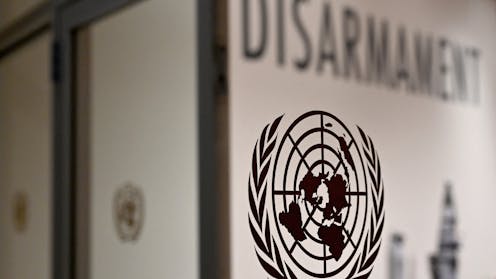
View of the United Nations logo at a 2022 conference of the Parties to the Treaty on the Non-Proliferation of Nuclear Weapons. Angela Weiss/AFP via Getty Images)

While the U.S. military’s strikes on Iran on June 21, 2025, are believed to have damaged the country’s critical nuclear infrastructure, no evidence has yet emerged showing the program to have been completely destroyed. In fact, an early U.S. Defense Intelligence Agency assessment surmised that the attack merely delayed Iran’s possible path to a nuclear weapon by less than six months. Further, Rafael Mariano Grossi, director of the United Nations’ International Atomic Energy Agency, stated that Iran may have moved its supply of enriched uranium ahead of the strikes, and assessed that Tehran could resume uranium enrichment “in a matter of months.”

Others have warned that the strikes may intensify the Islamic Republic’s nuclear drive, convincing the government of the need to acquire a bomb in order to safeguard its survival.

Sign up to read this article
Read news from 100's of titles, curated specifically for you.
Already a member? Sign in here
Related Stories
Top stories on inkl right now
One subscription that gives you access to news from hundreds of sites
Already a member? Sign in here
Our Picks
Fourteen days free
Download the app
One app. One membership.
100+ trusted global sources.