
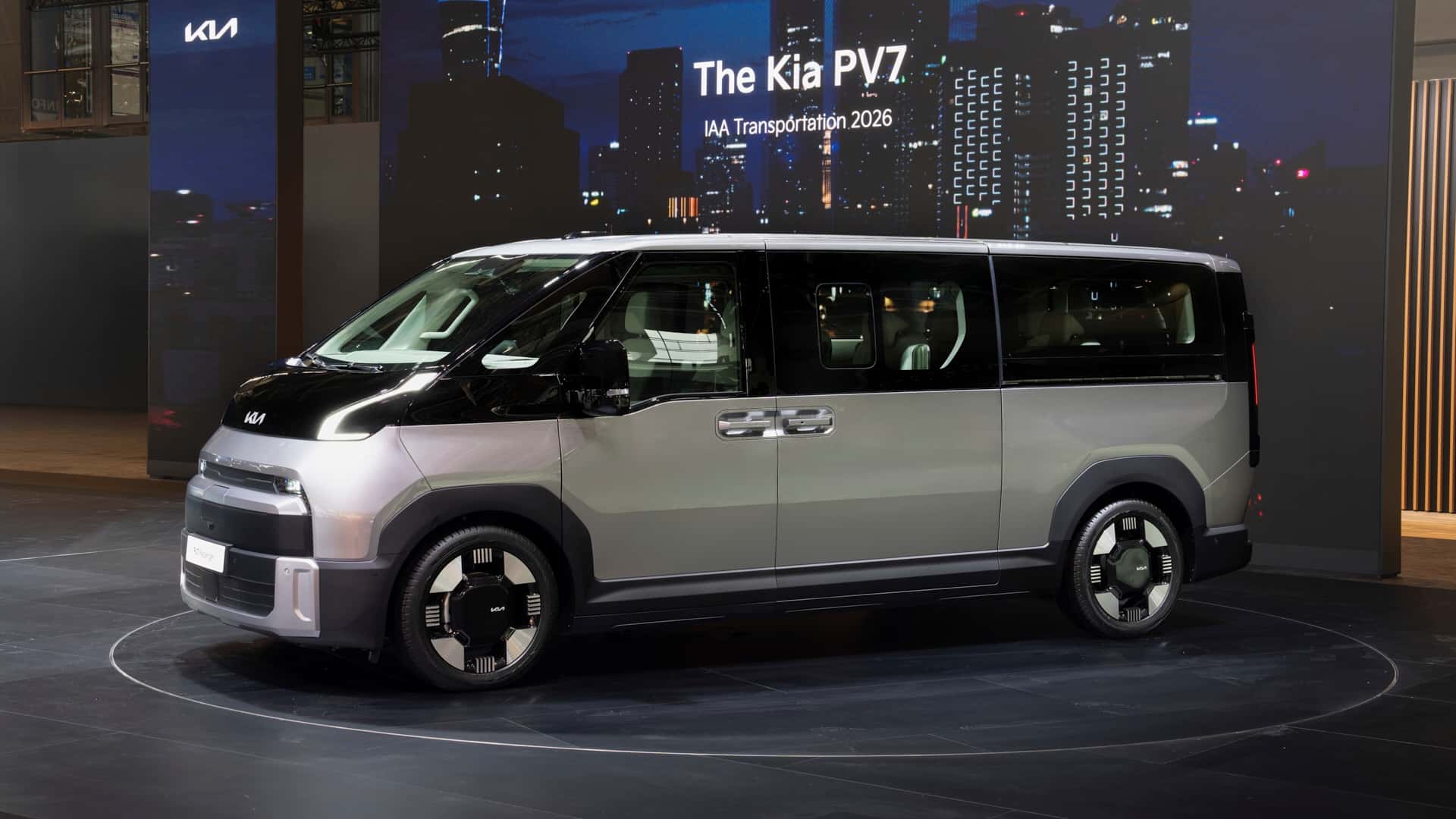
- The Kia PV7 offers up to 282.5 cubic feet (eight cubic meters) of cargo space and can carry up to 11 people.
- It offers 96.2-kWh and 71.5-kWh battery options, with up to 286 miles (460 km) of WLTP range.
- Kia plans 23 PV7 variants, including Cargo, Passenger, High Roof, and Chassis Cab versions.
Kia is going bigger with its electric van strategy. After launching the PV5 last year, the Korean company has now unveiled the PV7, a larger electric commercial vehicle designed to handle everything from deliveries and logistics to passenger transport. The second model in Kia’s dedicated Platform Beyond Vehicle (PBV) lineup made its world debut this week at IAA Transportation 2026 in Hannover, Germany.

It’ll be offered in Cargo and Passenger configurations and sits on the dedicated E-GMP.S architecture, which uses a flat floor to maximize interior space. The PV7 measures 17.6 feet (5,350 millimeters) long, 6.5 feet (1,995 mm) wide, and 6.5 feet (1,990 mm) tall, with a 11.5-foot (3,500-mm) wheelbase.
The Cargo version is available with two or three seats and puts practicality first. The Long model can swallow up to 215.4 cubic feet (6.1 cubic meters) of cargo, while the High Roof version increases that figure to 282.5 cubic feet (8.0 cubic meters). Payload capacity reaches 2,646 pounds (1,200 kilograms), depending on the configuration.
Good For All Types Of Jobs
The Long version also has a loading height of just 21.7 inches (550 mm) and can accommodate up to three Euro pallets. Kia offers different cargo-floor configurations, while customers can choose between a conventional lift-up tailgate and a twin-swing setup designed to make loading easier in tight spaces.
There is considerably more flexibility on the passenger side. The PV7 Passenger can carry up to nine people, while Korean-market versions can accommodate up to 11 occupants. A seven-seat version gets removable seats mounted on long rails, while the nine-seat model can be configured with or without a fourth row.
That makes the PV7 suitable for everything from employee shuttles and rental fleets to tourism and, presumably, families looking for a very large electric people carrier. Rear climate controls, USB-C ports, storage solutions, and power-sliding doors are available to make life easier for those sitting behind the driver.
Kia PV7 Specs
Under the floor, Kia offers 71.5-kWh and 96.2-kWh NCM battery packs. The electric powertrain produces up to 268 hp and 310 lb-ft (420 Nm) with power sent to the front wheels. An all-wheel-drive version is planned for later.
The Long Range Cargo with the larger battery is expected to travel more than 286 miles (460 kilometers) on the WLTP cycle. Kia says its 800-volt electrical architecture allows the battery to go from 10 to 80 percent in the mid-20-minute range when connected to a 350-kW DC fast charger.
Interestingly, the PV7 is Kia’s first vehicle to offer dual charging ports. In addition to the front AC/DC port, an optional rear-side AC port gives operators more flexibility depending on how the van is parked.
The Kia PV7 Doubles As A Power Bank
Kia has also embraced the idea that an electric commercial vehicle should do more than haul people or stuff around. The PV7 offers Vehicle-to-Load functionality to power tools and equipment, while a dedicated heavy-load driving mode adjusts the vehicle’s behavior based on how much cargo it is carrying.
Inside, the van gets 12.9-inch and 14.6-inch displays and the new Android Automotive-based Pleos Connect infotainment system we’ve already seen on some Hyundai models like the new Elantra and Tucson.
23 Versions Planned
The PV7 is also intended to become much more than the two versions shown at its debut. Kia plans to expand the lineup to 23 variants, including Cargo Compact, Cargo Long, High Roof, Passenger Compact, Passenger Long, and a Chassis Cab. Conversion models will further broaden its potential applications.
Although the wraps have come off, the first versions aren’t scheduled to arrive in Korea and Europe before the second half of 2027.
2027 Kia PV7 Passenger
Motor1's Take: The PV7 shows that Kia isn't treating electric vans as an afterthought. The sheer number of planned configurations is impressive. The bigger question is whether Kia can turn all that flexibility into a compelling business case.
Commercial buyers care about uptime, running costs, payload, and charging as much as they care about range. Kia appears to understand that, which is why the PV7's fleet-management and conversion capabilities could ultimately matter as much as its electric powertrain.
Gallery: 2027 Kia PV7 Cargo