Get all your news in one place.
100's of premium titles.
One app.
Start reading
Tom’s Guide
Tom’s Guide
Technology
Becky George

Is sleeping with a fan on bad for you? A respiratory expert weighs in

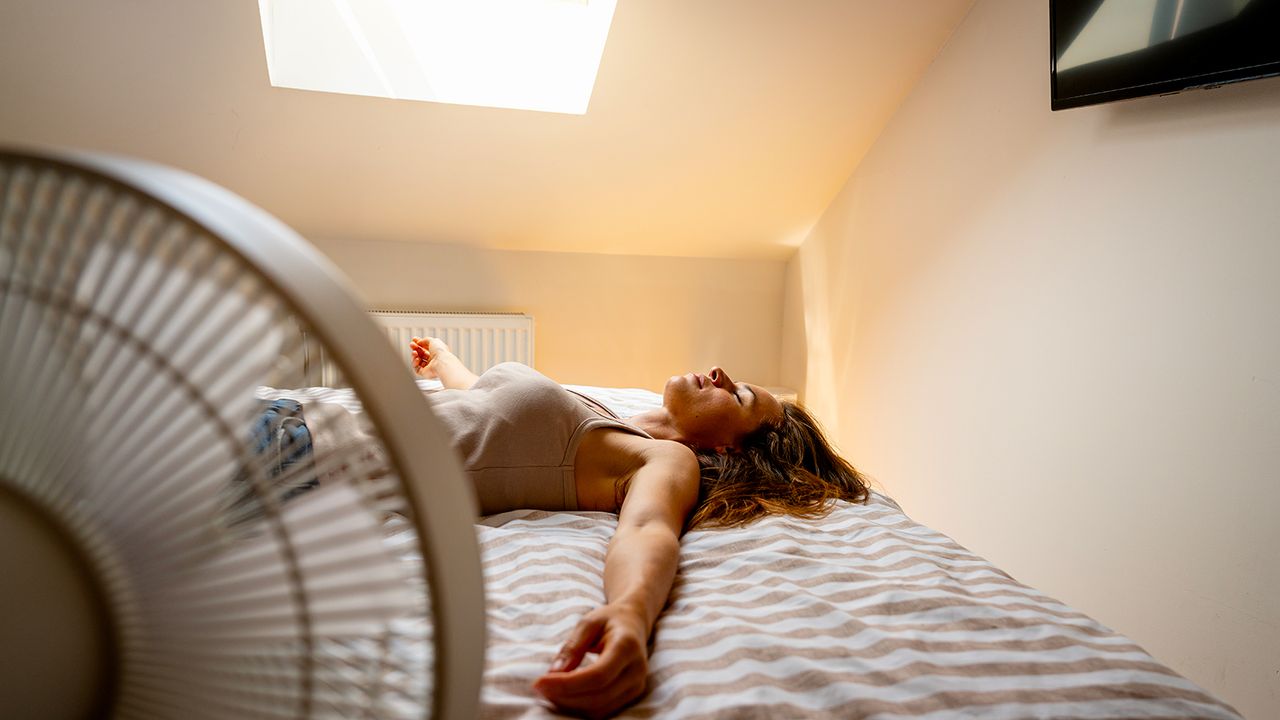
A woman struggling in a heatwave in front of a fan .

Sleeping with a fan on isn't inherently bad, but for people with certain respiratory issues, or dry skin or dry eyes, it can be a double-edged sword. While it's a good way to stay cool during warm weather, the room you're sleeping in, and your personal health history, are key considerations.

"For those with pre-existing respiratory conditions or allergies, a fan can circulate dust and pollen, aggravate symptoms and actually disrupt sleep quality," explains Dr Praveen Bhatia, a consultant physician in respiratory medicine.

On the plus side, sleeping with a fan on can help you fall asleep faster. Dr Hana Patel, NHS doctor and sleep expert at Time4sleep says: "The consistent hum of the fan mimics white noise, providing a soothing background that helps many drift off faster."

Here's exactly how a fan affects your sleep and your body overnight, and the simple steps our featured experts recommend to help you sleep safely and healthily with a fan on...

(Image credit: Shutterstock)

The risks of sleeping with a fan on

"While fans improve air circulation, they do not affect filtration," says Dr William Lu, medical director at Dreem Health, a digital sleep clinic.

"What this means is that instead of allergens staying in one spot in the room, they move around, leading to more consistent exposure while you sleep," he explains.

This can essentially lead to three major issues for some sleepers:

1. It can make asthma or allergy symptoms worse

(Image credit: Getty Images)

Dust mites, pollen, mold spores and pet dander that may have settled on surfaces can get stirred up and redistributed around the room when the fan is switched on.

If your bedroom has a lot of allergens, this increased circulation may worsen your exposure during the night, causing allergy flare-ups.

"If your airway is already reactive and sensitive, the combination of circulating allergens and dryness can make symptoms like coughing, wheezing, or congestion worse," says Dr Lu.

This is especially true in the case of people struggling with conditions like asthma, allergic rhinitis or hay fever.

2. It can lead to dry skin and eyes

(Image credit: Getty Images)

Fans circulate air to help cool an environment, and this can cause our skin to dry out or irritate the eyes as we sleep.

The constant air flow during the night can remove the moisture from your skin and eyes, which leads to dryness and discomfort.

Having a fan directly pointed at you for long hours during the night can lead to moisture loss and irritation, especially if you struggle with a compromised skin barrier due to conditions like eczema or psoriasis.

"This is similar in some respects to how we experience dry skin during a flight," adds Dr Patel.

3. Sleeping with a fan on can cause congestion

(Image credit: Shutterstock)

"The constant airflow can dry out your mucus membranes, particularly in the nose and throat, which can cause nasal congestion, a sore throat, or a dry mouth by morning," says Dr Bhatia, who is also a specialist clinical advisor for MedCourse.

This could be a major risk for people with respiratory conditions. But why does this happen?

"Continuous airflow accelerates evaporation of moisture from exposed skin and mucus membranes," explains Dr Bhatia.

This forces the body to produce more mucus, making you feel more congested. Consequences include a blocked nose, coughing and sneezing, which can seriously disrupt your sleep quality, even leading to nighttime wake-ups and extreme fatigue the next day.

How to sleep safely with a fan on at night

While it poses a risk to some, we can't deny that sleeping with a fan on is one of the most cost-effective cooling methods to adopt during summer.

The good news is that you don't have to skip it entirely – all you have to do is follow these easy expert-approved tips...

(Image credit: Shutterstock)

1. Keep your bedroom clean

The main objective is to reduce allergen exposure. Don't stop with a massive one-time spring cleaning routine — dusting and vacuuming your room regularly is key this season.

Washing your bedding once every week is crucial to avoid the buildup of allergens like pollen, dust and pet dander. Keeping your windows and doors shut during the day can also help minimize the risk.

"Wipe down the fan blades before use. This will reduce the amount of dust circulated," adds Dr Patel. Need more info? Here are our 9 top tips to reduce allergens in your home.

2. Point the fan away from you

(Image credit: Shutterstock)

Having a fan placed quite close to you or worse, pointed directly at you for long hours, can dry out your skin and eyes.

Instead, have it face the ceiling or the wall to avoid blowing allergens at your face or irritating your airways.

Additionally, moisturizing is an important step recommended by Dr Patel for those who regularly struggle with dry skin issues.

3. Use a fan with a HEPA filter

(Image credit: IKEA)

"Pairing the fan with a HEPA filter (which captures minute particles) can reduce the circulating allergens," says Dr Bhatia.

Using an air purifier with a fan can also have the same impact. With smart and sleek options such as the IKEA Starkvind available on the market, improving the air quality in your home has become a much easier task than before.

Alternative ways to stay cool while sleeping

As we mentioned, using a fan might not work for everyone as it can exacerbate existing respiratory conditions and allergies.

Instead, here are five other practical ways to sleep cool this summer:

(Image credit: Getty Images)
  • Consider investing in a proper cooling mattress to help you sleep at the right temperature. Many of the top-rated options in our best mattress guide can help.
  • Investing in cooling bedding designed to draw away heat and absorb sweat can make a world of difference for hot sleepers.
  • Wear breathable nightwear made of materials like cotton and linen.
  • Use blackout curtains to keep out sunlight and maintain the coolness in your bedroom.
  • A warm shower before bed can create a rebound cooling effect that helps with a good night's rest.
  • Adding water-rich fruits and vegetables like watermelon, cucumber, strawberries and oranges to your diet can help you stay hydrated and cool in summer.
Sign up to read this article
Read news from 100's of titles, curated specifically for you.
Already a member? Sign in here
Related Stories
Top stories on inkl right now
One subscription that gives you access to news from hundreds of sites
Already a member? Sign in here
Our Picks
Fourteen days free
Download the app
One app. One membership.
100+ trusted global sources.