Since he swapped a Senate desk for the top job at the Department of Homeland Security, Markwayne Mullin has run the agency the way he ran his old office: by picking up the phone. A Thursday investigation from Axios traces a string of DHS reversals — a nationwide halt on ICE vehicle stops, a stalled border project in Texas, a dropped threat to airport customs staffing — back to personal appeals from lawmakers Mullin once sat beside on Capitol Hill.
From backbench colleague to Cabinet chief
Mullin logged 13 years in Washington, ten in the House and three in the Senate representing Oklahoma, before President Trump tapped him to run DHS this spring. The Senate confirmed him 54-45 in late March, and he was sworn in the next day, stepping into a department that had just cycled through predecessor Kristi Noem, who left the post amid criticism over her leadership and two fatal shootings by federal agents in Minneapolis. Noem herself had drawn complaints from lawmakers in both parties for going quiet when Congress called; Mullin has leaned hard into the opposite instinct. Mike Howell, a former DHS attorney who now leads the Mass Deportation Coalition, put it to Axios this way: "Once you leave the Senate, you're eager to please your old friends," and that instinct, he argued, has turned parts of DHS into something resembling constituent services.
A Maine shooting triggers — and then loses — a policy reversal
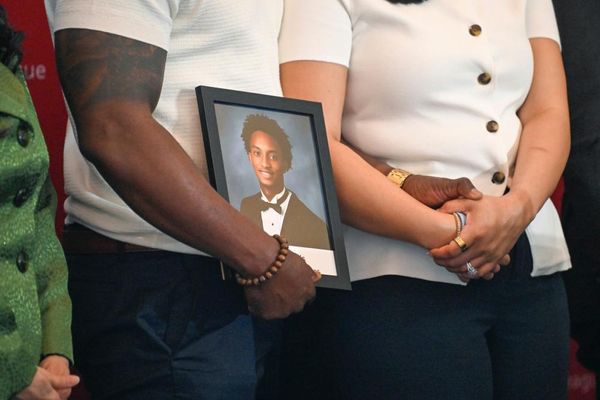
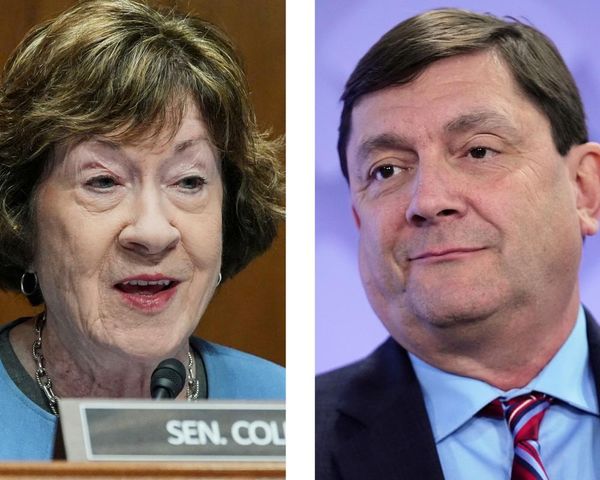
On July 13, an ICE officer shot and killed a Colombian national during a traffic stop in Biddeford, Maine, days after a separate fatal ICE shooting of a Mexican national near Houston — the second such killing in under a week. Maine's senators, Republican Susan Collins and independent Angus King, were in direct contact with Mullin within hours. By the next day, DHS field offices had paused most vehicle stops nationwide so agents could get more training. It didn't hold: after fuming privately Tuesday night, Trump reversed the pause by Wednesday morning over a Truth Social post, and Mullin publicly fell back in line, posting that ICE officers needed every tool available to keep doing their jobs safely. King later warned that undoing the pause "is a mistake that may turn out to be a tragic mistake."
One senator's letter freezes a border project
A similar dynamic played out in West Texas this month. On Aug. 7, Sen. John Cornyn wrote to Mullin pressing DHS to consult local ranchers, sheriffs and park advocates who argue Big Bend's canyon terrain already deters illegal crossings, before more barrier construction moved forward. Ten days later, CBP Commissioner Rodney Scott posted a video announcing he was pausing all construction in the park so he could "get down there and do a personal evaluation." Texas Gov. Greg Abbott said separately that Mullin had personally assured him there would be "no construction of any type of barrier" inside the national park.
Favors that cross party lines
Mullin's accessibility hasn't stopped at his own party. Deisy Rivera Ortega — married to an Army sergeant with 27 years of service — was detained by ICE in El Paso on April 14 during a Military Parole in Place interview, despite holding an active work permit and pursuing legal status through her marriage. She sat in custody for roughly a month before Sen. Tammy Duckworth called Mullin directly in mid-May; Rivera Ortega was released within days, and Duckworth said she was "thankful to Secretary Mullin for heeding my personal call to release Deisy."
Los Angeles Mayor Karen Bass got a comparable hearing weeks later, after Mullin floated pulling federal customs officers from airports in sanctuary cities just ahead of World Cup matches in Los Angeles — a threat that would have snarled international arrivals at LAX. Bass, who'd previously worked with Mullin on foster-care legislation, spoke with him directly and told reporters afterward that "I doubt seriously that he would follow through with that." She was right; the plan was dropped.
Not every relationship has worked in Mullin's favor. Shortly after his confirmation, he was reportedly frustrated to learn DHS was investigating then-Rep. Eric Swalwell over allegations he'd used campaign funds to pay a nanny who lacked work authorization. A DHS spokesperson has disputed that Mullin's reaction had anything to do with Swalwell holding office at the time.
Governors applaud, a former ICE chief frowns
Maryland Gov. Wes Moore praised Mullin's responsiveness earlier this month at a National Governors Association summer meeting, telling the room that governors broadly appreciate how reachable DHS has become under him. Not everyone reads it as a virtue. Mark Morgan, who led ICE and CBP during Trump's first term, argues the pattern lets personal relationships steer policy that should be driven by law and operational need rather than by which lawmaker happens to call.
A DHS spokesperson maintains that Mullin stays in constant contact with lawmakers, his 22 agency heads, and the White House — framing it as the same accessibility he promised senators at his confirmation hearing.
The MAGA backlash Mullin is now fighting on a second front
This reporting lands in the middle of a rockier stretch for Mullin than the "favors" framing alone suggests. Just weeks earlier, at that same NGA gathering in Oklahoma City, Mullin floated expanding permanent work visas and broader immigration reform to address labor shortages — remarks that set off a furious reaction from Trump's base. Steve Bannon told Politico that "Mullin is the wrong guy at the wrong time for the wrong job," while Laura Loomer and Jack Posobiec joined calls for his removal, and Mullin scrambled to walk the comments back on X. The White House has publicly stood behind him, but the episode — combined with this week's reporting on his habit of overriding enforcement priorities for old colleagues — has left Mullin managing pressure from two directions: a Capitol Hill network he still treats as family, and a MAGA base that increasingly views that same instinct as a liability.