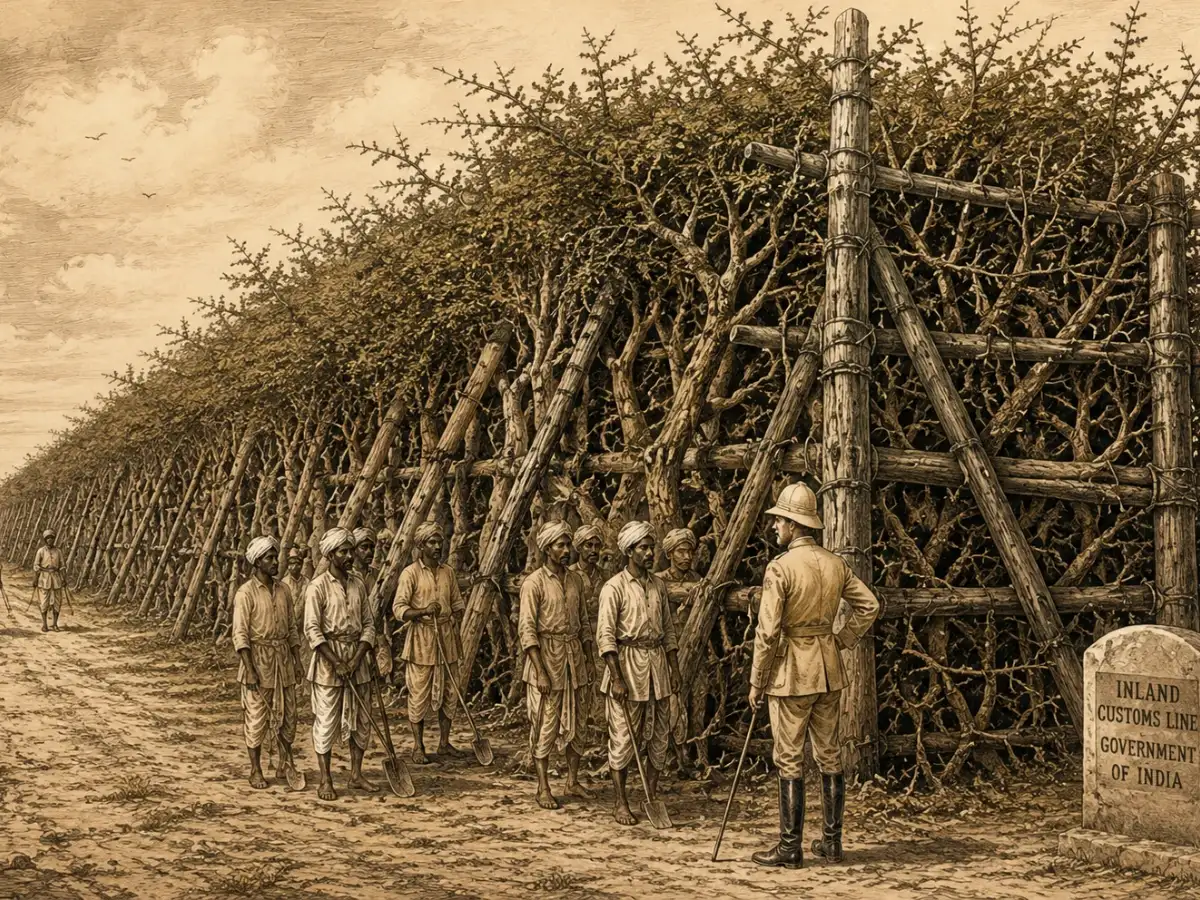
In 1995, Roy Moxham, a book conservator in London, came across a passing reference in the memoirs of a British official to an enormous hedge that once stretched across India.
The claim seemed improbable. The British authorities had built and maintained a living barrier thousands of kilometres long to enforce the salt tax. Intrigued, Moxham spent years digging through archives and travelling across India to reconstruct its history.
The result was his book 'The Great Hedge of India: The Search for the Living Barrier that Divided a People' published in 2001 which brought back into public view one of the largest and most unusual projects of revenue extortion by the British Raj.
Also Read: Meals, books & biscuits behind Partition-era businesses that became part of Delhi’s story
The tax that created the Great Wall of India
Salt was one of the most heavily taxed commodities in British India. Unlike luxury goods, salt was consumed by everyone. Rich and poor alike needed it for survival. That made it an ideal source of revenue. The origins of the problem lay in the uneven tax system that developed across British-controlled territories. Salt produced in some regions attracted much higher duties than salt available elsewhere. This created strong incentives for smuggling. Traders could buy cheaper salt in one area and transport it into regions where prices were inflated by taxation.