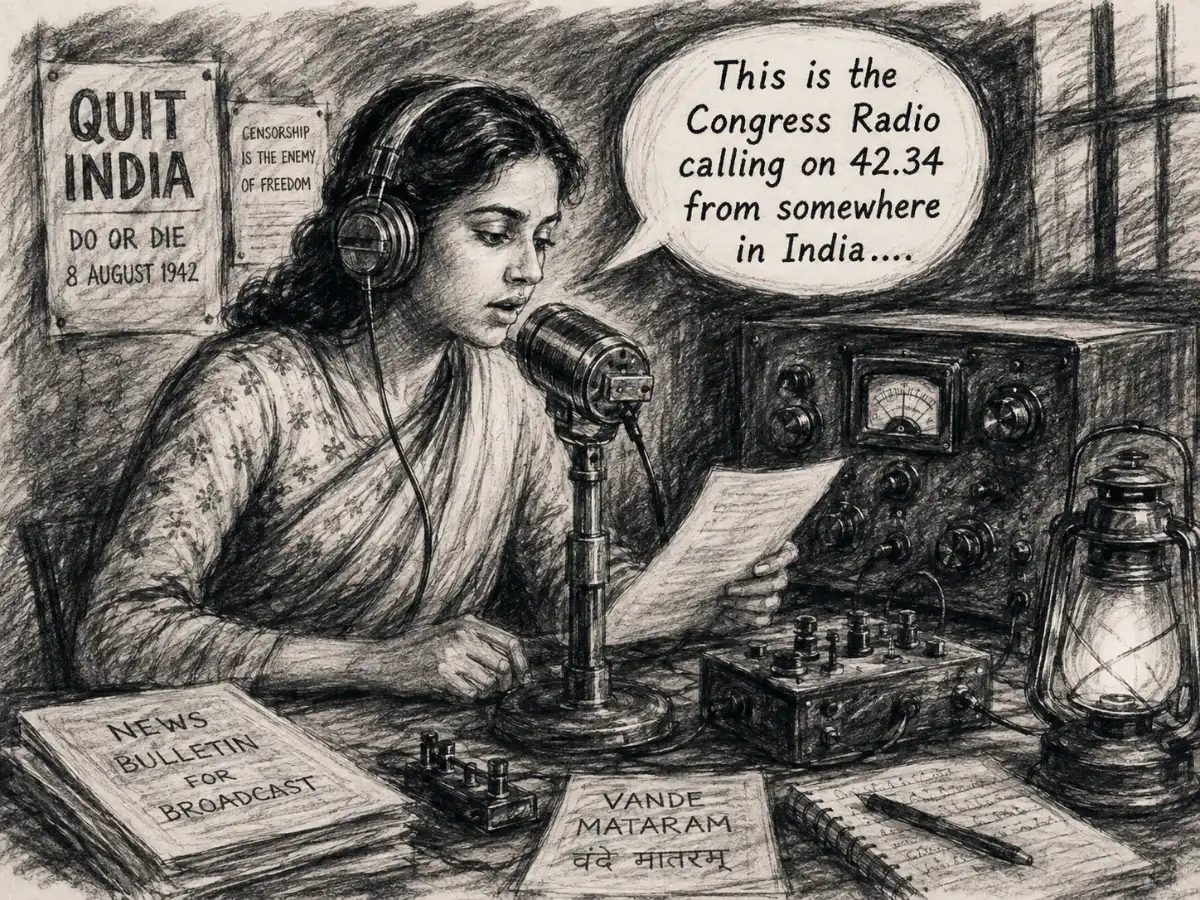
On the night of 8 August 1942, as Mahatma Gandhi gave the call of "Do or Die" and launched the Quit India movement, few people in Bombay could have guessed that one of the most effective challenges to British authority would soon come not from a political leader but from a young student.
Usha Mehta was only 22. Within days, she and a small group of underground activists had assembled a clandestine radio station that slipped past colonial censorship and carried the message of resistance across India.