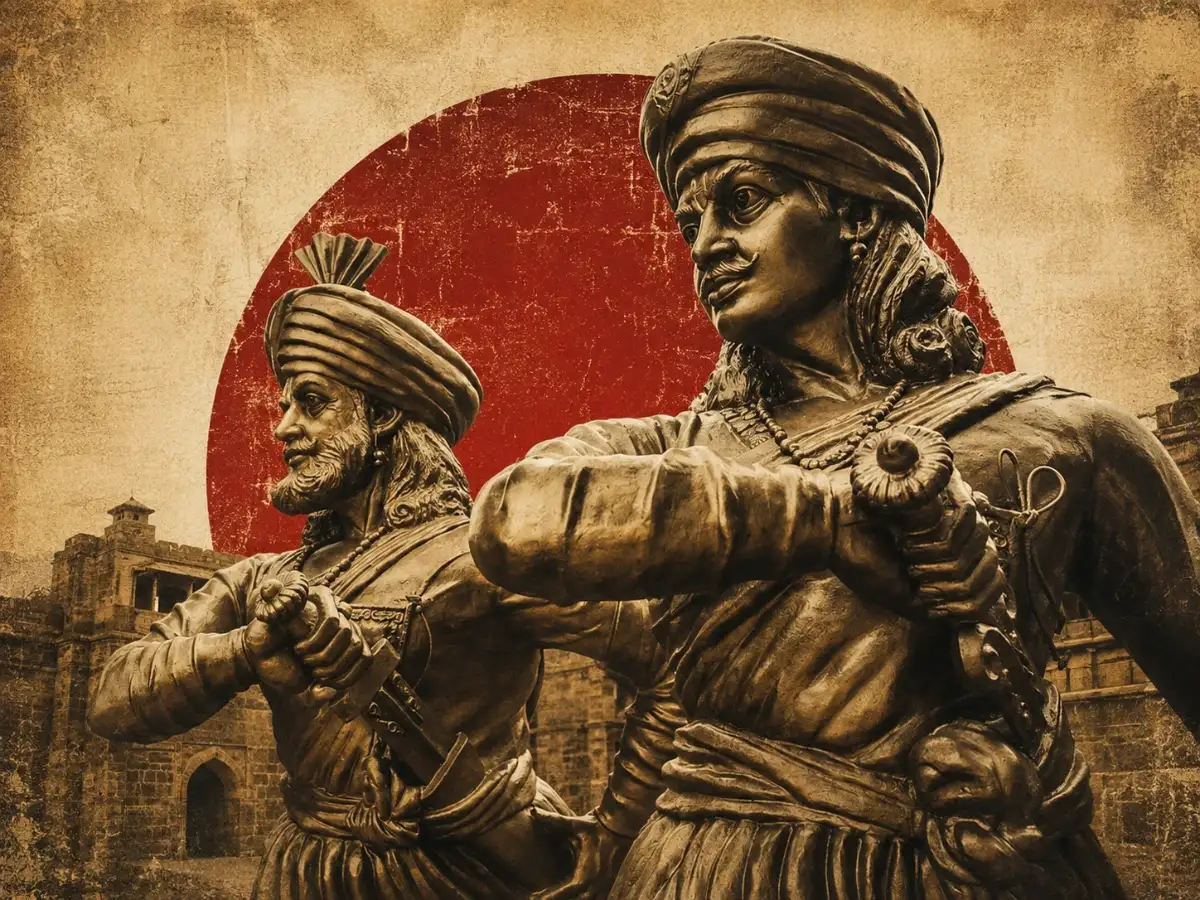
In September 1857, at the heart of then-colonised India, British soldiers came looking for a rebellion. Inside the Jabalpur residence of Raja Shankar Shah, they found something far less conventional: handwritten verses.
The verses were not harmless in the eyes of the colonial authorities. They invoked the goddess Chandi against the British, while other papers recovered during the search included letters and documents linked to plans for rebellion.