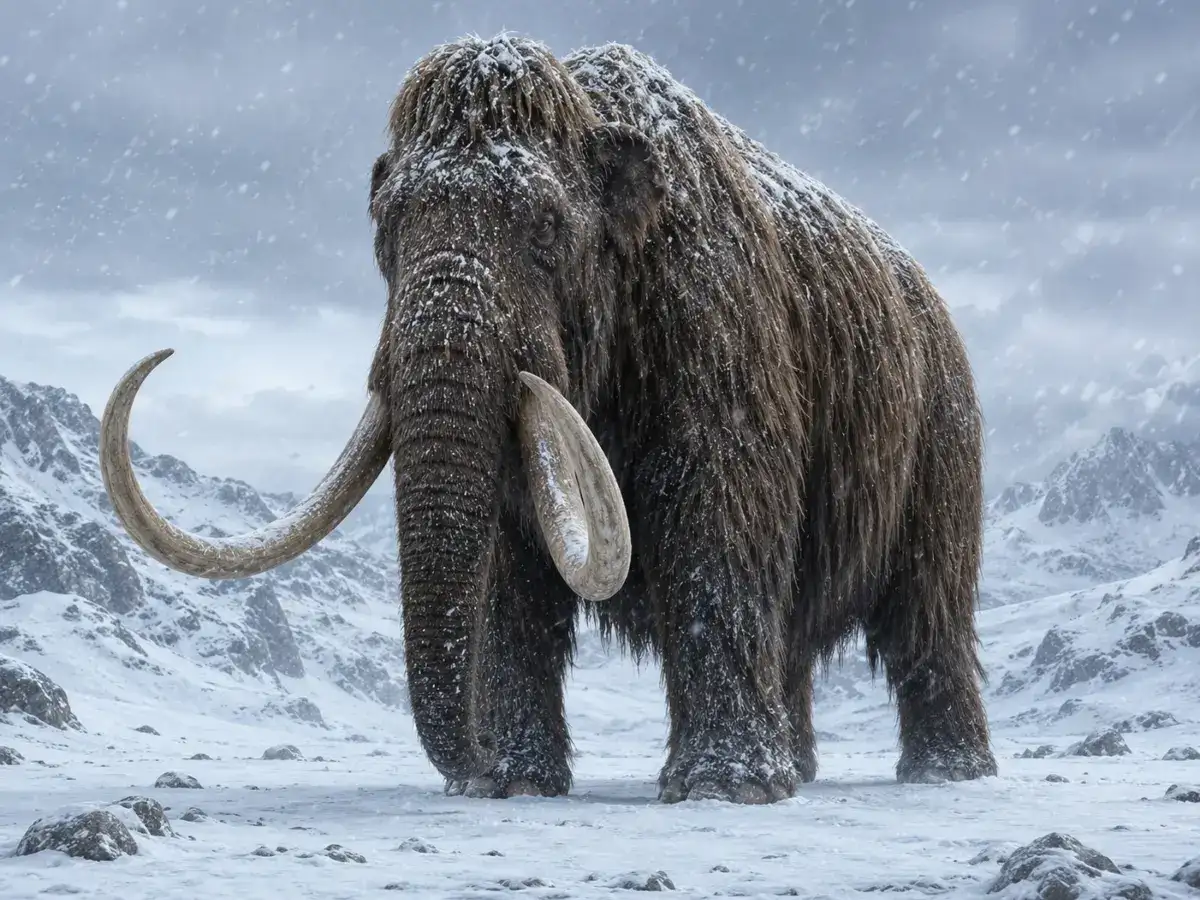
Even nowadays, any researcher studying ancient DNA is working exclusively with fragments. First, researchers extract DNA fragments from bones, teeth, or preserved samples of an organism, and further, applying various methodologies, they attempt to reconstruct the genome of the species step-by-step. Such discoveries have significantly impacted the views regarding mammoths, Neanderthals, and a number of other extinct organisms.
Nevertheless, there is always one limitation. Given that DNA starts decaying over time, much of it cannot be researched anymore since it has disintegrated. Such considerations guided many scientific efforts in this sphere for decades. At least until scientists decided to conduct research on a woolly mammoth found in Siberia. At first, it seemed to be just another promising sample which can be studied. The results were unexpected.

Why the mammoth was unique
First of all, the discovered mammoth was female, and she lived around 52,000 years ago. Another thing which distinguished her was the excellent state of preservation of her skin. As stated in the scientific article published in the journal Cell in 2024, the significance of the findings could be understood only afterward via the application of novel imaging and genomics techniques.
In addition to detecting fragments of DNA, it became apparent that the structure of chromosomes of the ancient animal had also been preserved.
Chromosomes are not simply strands of DNA but much more intricate three-dimensional formations. In all cells, DNA is organized in such intricate three-dimensional formations that facilitate gene expression regulation. Scientists supposed that although fragments of DNA could be kept for thousands of years, three-dimensional structures would not survive. However, it appears that this assumption was wrong as at least partial preservation was discovered.
PaleoHiC technology helped scientists identify characteristics of the genome architecture of the ancient animal, specifically chromosome territories, loops, compartments, and formation associated with inactive X chromosome.
According to Nature magazine, the discovery is the first identification of fossil chromosomes in frozen mammoth skin. This helps us know what more could be found in the relics of olden times, say the scientists in their article that appeared in Nature magazine.