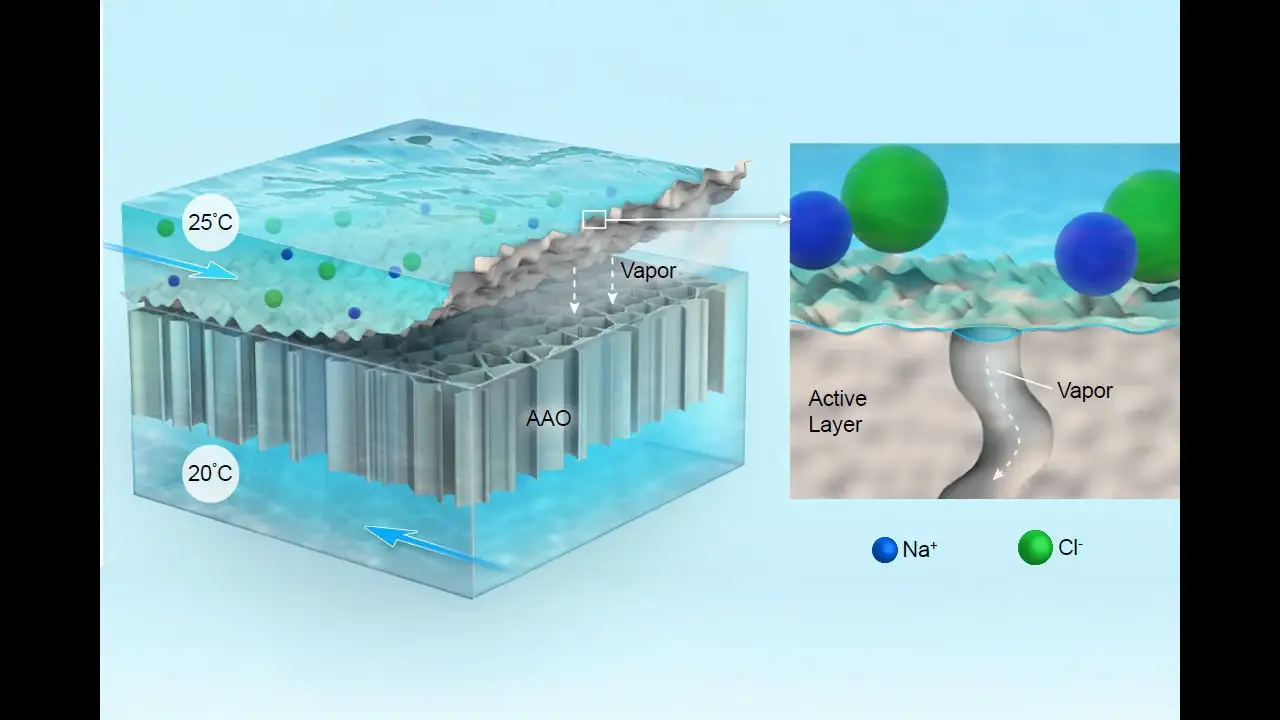
The strangest part of this desalination idea is that its membrane does not repel water. Instead, it uses trapped air to keep liquid out of microscopic pores. That approach came from two insects that face water in very different places. Springtails survive in wet soil, while seaskaters move across open oceans. Both insects use tiny surface structures that can hold air when submerged.
Researchers at King Abdullah University of Science and Technology, or KAUST, copied that principle for water treatment. Their gas-entrapping membranes use specially shaped pores inside materials that naturally attract water. The pores hold an air layer instead of filling with liquid. That allows water vapor to cross while dissolved salt stays behind.