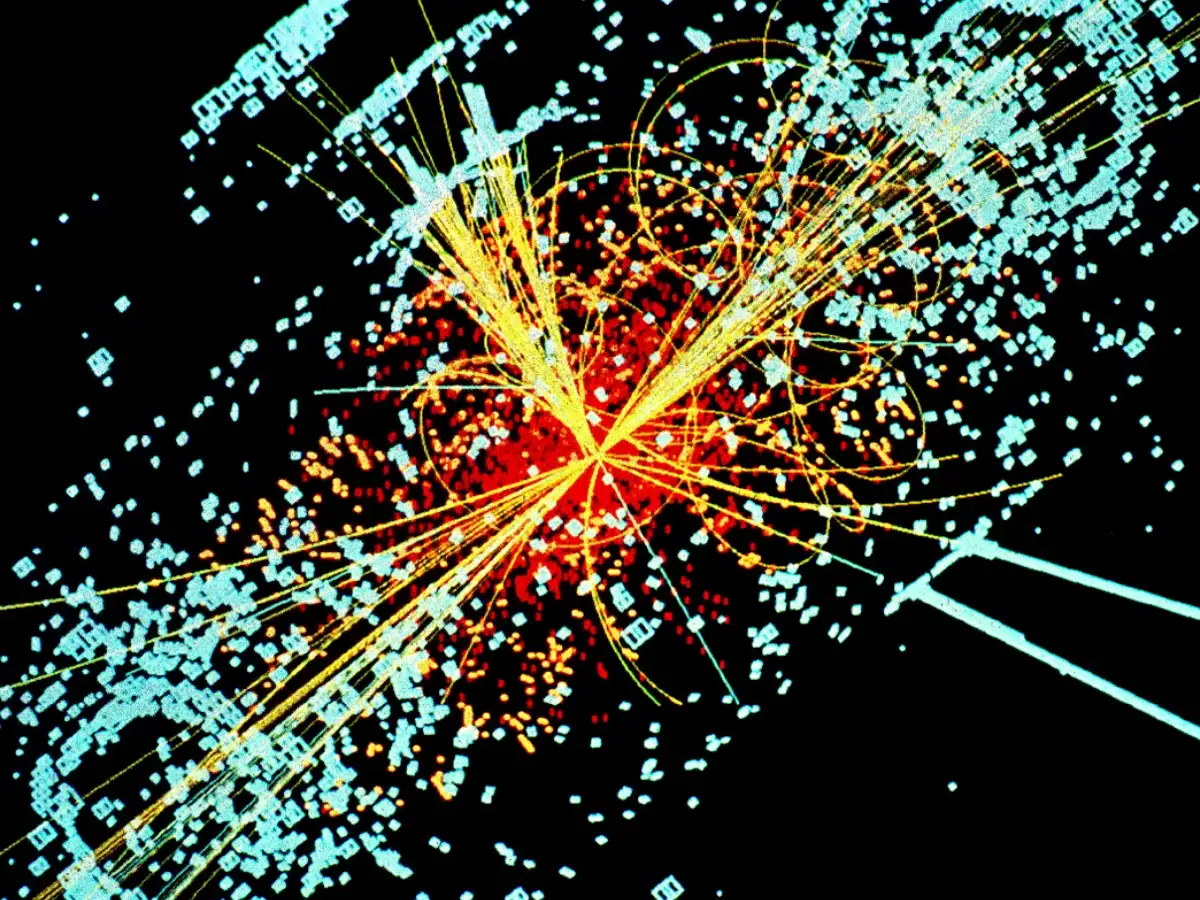
Tens of thousands of volunteers with nothing but a laptop and some curiosity spent months combing through snapshots from one of the most expensive machines humanity has ever built, and no physics degree was required to take part. That's the story of a project called Higgs Hunters, launched in November 2014 by physicists working on the ATLAS experiment at the CERN Large Hadron Collider with help from Oxford, NYU, and Birmingham universities. According to a peer-reviewed 2016 study titled “That looks weird' - evaluating citizen scientists' ability to detect unusual features in ATLAS images of LHC collisions," by Alan Barr, Andy Haas, and Christina Kalderon, on arXiv, the effort had, by that point, seen "over 32,000 citizen scientists from 179 countries" spot peculiarities in collision images for the project, logging around 1.2 million points of interest, with numbers growing exponentially as it goes. By the time the project wrapped, it had seen well over 42,000 volunteers from nearly 170 countries spot peculiarities in nearly 39,000 images, per Oxford's own project summary.
The work of spotting the weird stuff
Here's some background. After the discovery of the “God particle,” The Higgs boson, in 2012, physicists wondered what else it could contain. One popular theory was that a Higgs boson could decay into a lighter particle of an unknown kind, which would travel a short distance before decaying itself, producing an 'off-centre vertex' (a point, away from the original collision point, where a particle decays into other particles) in the process. Spotting these by eye turns out to be a task humans have a demonstrable edge at, compared to trying to teach an algorithm to spot all of the odd stuff out.