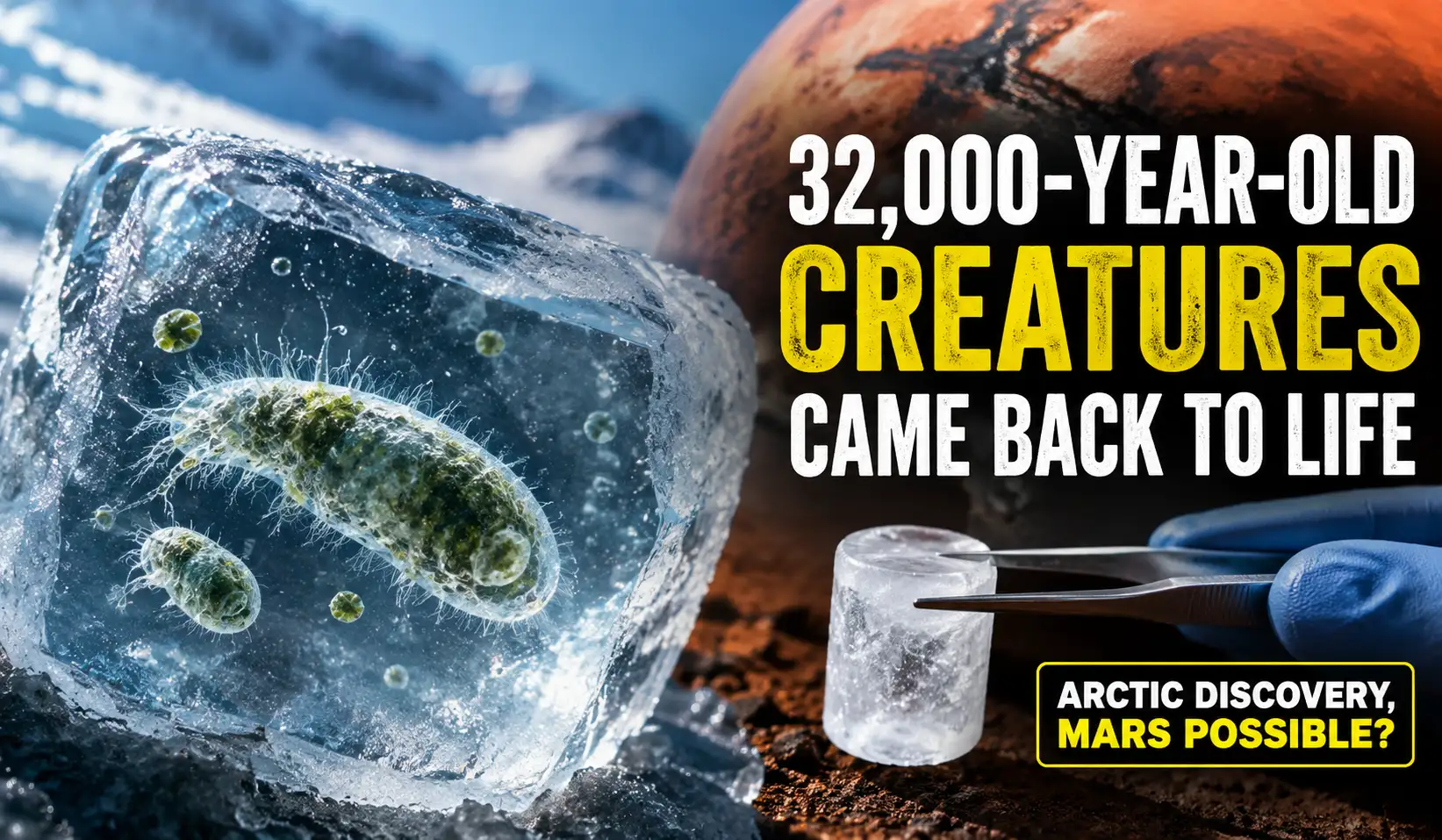
In 1999, a team led by NASA astrobiologist Dr. Richard Hoover entered a frozen research tunnel near Fox, Alaska, looking for life that could survive in one of Earth's harshest environments. What they found seemed almost impossible. Hidden inside 32,000-year-old Arctic permafrost were microscopic organisms that had remained trapped since the Ice Age. When the ancient ice was carefully thawed in the laboratory, the bacteria did not simply survive. They quickly became active, started swimming, feeding, and multiplying. The discovery challenged long-held scientific beliefs about how long living organisms can remain dormant and still return to life.
The remarkable microbe was later identified as Carnobacterium pleistocenium , a previously unknown species of extremophile. Unlike many organisms that die after prolonged freezing, these bacteria had survived thousands of years without oxygen in deep permafrost. Scientists believe special protective proteins and cellular adaptations allowed them to endure extreme cold while preserving their ability to function once conditions improved. In 2005, NASA described it as the first fully validated living species recovered from ancient ice, making it one of the most extraordinary discoveries in modern microbiology and cryobiology.