Get all your news in one place.
100's of premium titles.
One app.
Start reading
The Economic Times
The Economic Times
Shreya Biswas

In 1997, NASA sent a lightning sensor into orbit aboard TRMM to study storms. 29 years later, the mission’s data still helps scientists understand lightning, rainfall and climate

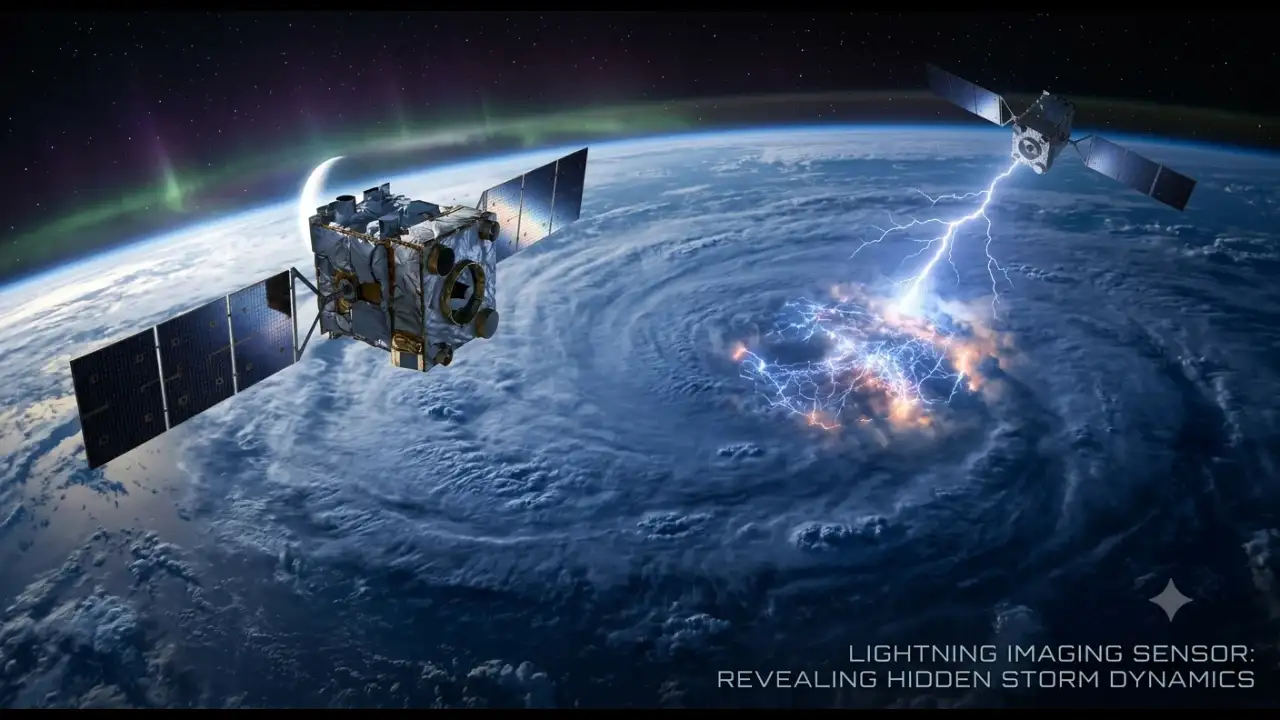
In 1997, NASA's Lightning Imaging Sensor, or LIS, was sent into orbit aboard the Tropical Rainfall Measuring Mission, known as TRMM. Developed by NASA's Marshall Space Flight Center, LIS was designed to help scientists understand the role of lightning in weather and climate.

TRMM was launched by Japan's National Space Development Agency and carried five instruments. Alongside LIS was the first radar designed to map rain from space, as well as sensors that observed clouds and moisture using visible and infrared light and microwaves.
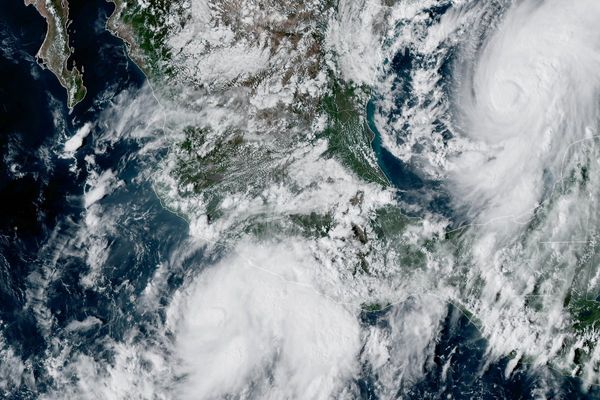
When operations began, TRMM's instruments provided new information about how clouds work, including the role played by lightning.

LIS was designed to study lightning and rain

LIS images and data were intended for research in five areas: global lightning and rain; tropical convection and sea surface temperatures; rainfall estimates from geostationary orbit; the global electric circuit and lightning; and atmospheric chemistry.

READ ALSO: In the early 1930s, New York State bought 340,000 acres of abandoned farmland for trees. 26 years later, the new forests had significantly reduced runoff, with their effect stable through 1967

NASA had been observing lightning from space since 1981

The TRMM mission followed earlier lightning research at NASA's Marshall Space Flight Center. During the second Space Shuttle mission in 1981, Marshall scientists modified a 16mm movie camera so astronauts could record lightning from above the clouds rather than from below. A version of the camera later flew aboard a high-altitude U-2 research aircraft.

During the Mesoscale Lightning Experiment, cameras in the shuttle's payload bay recorded hundreds of nighttime lightning flashes. Some were spectacular events that lit up entire storm systems, while flashes in one region were sometimes followed by flashes in another.

These experiments showed that lightning could be observed from above the clouds. They also showed that most of the electrical activity in clouds was not seen or detected by electrical sensors on the ground.

Space observations revealed hidden electrical activity

Ground-based lightning detection systems use the Earth as part of their detection network and show cloud-to-ground strikes.

The space-based experiments showed that much of the electrical activity inside clouds was not detected by these ground-based systems.

NASA's Optical Transient Detector, or OTD, later operated aboard the Microlab 1 satellite, launched in 1995. OTD and LIS were almost identical, although some minor improvements were made for LIS. OTD operated at a higher altitude and had a wider field of view.

READ ALSO: In 1997, America's last bismuth refinery shut down. 29 years later, the metal is crucial to a 240-MW nuclear reactor whose coolant supply is 82% Chinese

Lightning research also examined El Niño

Researchers also studied relationships between lightning, rainfall and larger weather patterns. During the first week of February 1983, Central Florida experienced the most widespread severe weather outbreak in its history. The outbreak produced 21 tornadoes, killed four people and left 200 homeless.

Goodman and Christian, along with Steve Goodman of NASA's Marshall Space Flight Center, examined warm, cold and neutral El Niño/Southern Oscillation periods from 1986 to 1989 in the southeastern United States, as per a ScienceDaily report. They found a direct relationship among rainfall, lightning, Gulf moisture transport and upper-level winds.

TRMM carried lightning observations alongside other measurements

TRMM carried LIS alongside instruments that measured rainfall, clouds and atmospheric moisture. The mission followed NASA Marshall's earlier observations of lightning from above the clouds, including experiments using the Space Shuttle and the Optical Transient Detector.

LIS images and data were intended to support research into global lightning and rainfall, tropical convection and sea surface temperatures, rainfall estimates from geostationary orbit, the global electric circuit and lightning, and atmospheric chemistry.

READ ALSO: In 2017, USGS and MIT researchers dated a magma pulse to 251.9 million years ago. 9 years later, it links to Earth's worst extinction

Sign up to read this article
Read news from 100's of titles, curated specifically for you.
Already a member? Sign in here
Related Stories
Top stories on inkl right now
One subscription that gives you access to news from hundreds of sites
Already a member? Sign in here
Our Picks
Fourteen days free
Download the app
One app. One membership.
100+ trusted global sources.