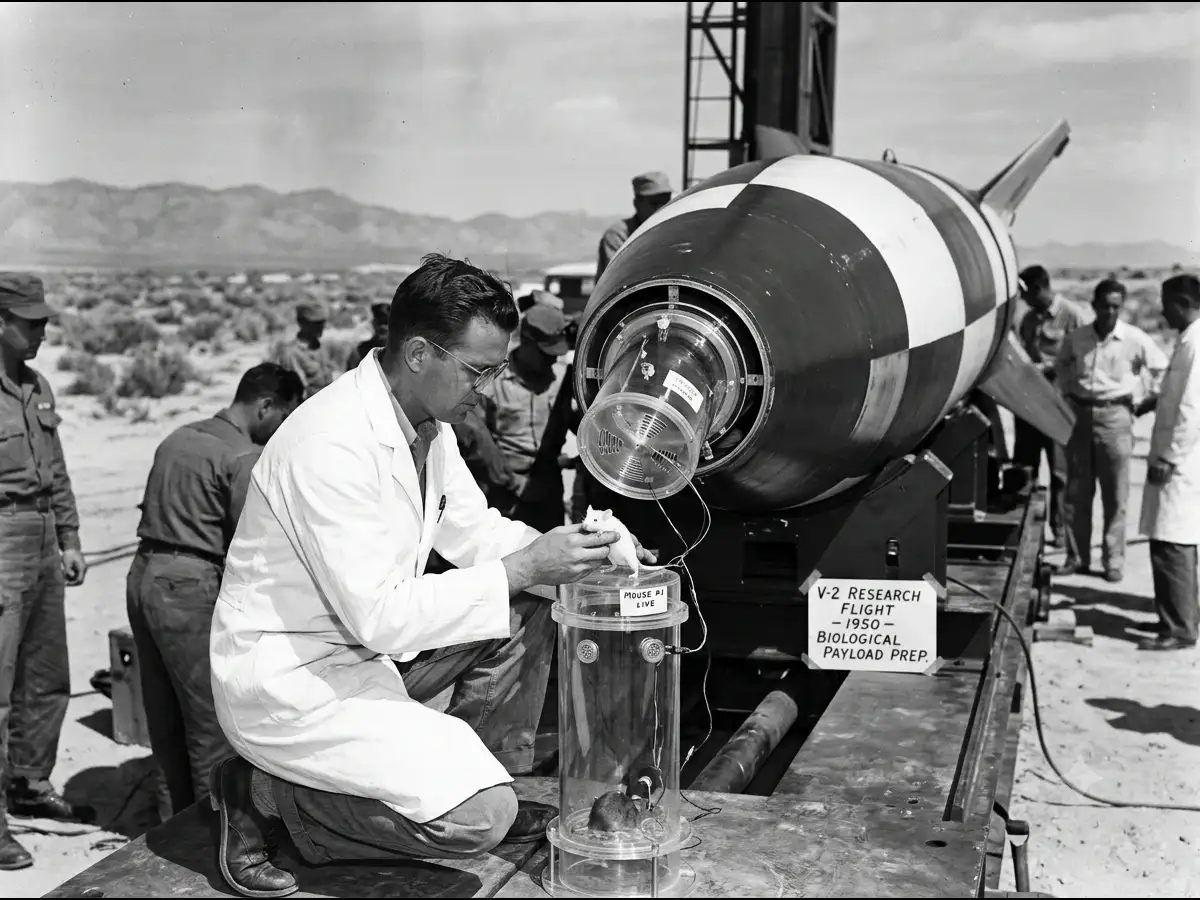
In 1950, a live and unanaesthetized mouse was sent to the upper atmosphere in a V-2 rocket to test biological responses and capture physiological data and imagery during the flight. The launch was part of early American research into how living organisms responded to high-altitude and suborbital flight conditions. On August 31, 1950, a captured German V-2 rocket was launched from White Sands Proving Ground in New Mexico. The rocket carried one unnamed mouse. An automated camera photographed the animal during the flight. The rocket reached an altitude of about 136.4 miles, or 219.5 kilometres, according to records about the mission. The rocket performed as expected, but its recovery parachute failed.