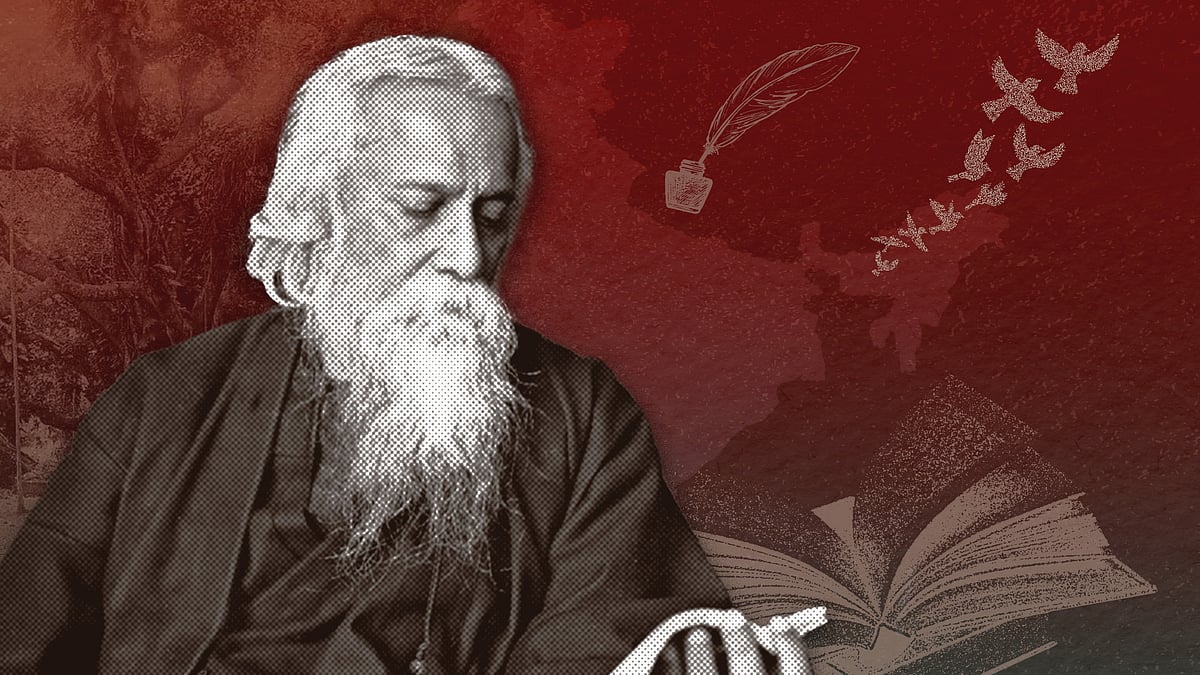
Without a doubt, nationalism perpetuates an insular view of the world. And demands from the citizen an acceptance of the phrase ‘national interest’ – the constituents of which are, more often than not, a moving target. This notion of nationalism sets itself up as superior in the international arena. Unsurprisingly then, freedom and nationalism are increasingly understood as limitations placed on one another: curtail freedoms to safeguard national interest versus forsake national interest to protect individual freedoms. It is a conflict that arises primarily because of how constricted our definition of these terms has come to be. In times like these, I turn to Rabindranath Tagore, the one person who never seemed to struggle with such expressions.
It’s hard to adequately describe Tagore because of his multifarious and polymathic contributions. And harder still to box in his social, cultural and political outlook. In him, we can find a rationalist, a dreamer, a philosopher, a mystic, a deeply local person and a true citizen of the planet all bundled together. He was an artist who revelled in intellectual and emotional fluidity. In this essay, I will focus on two events in his life. The first is the creation of the song Jana Gana Mana, and the second his long-drawn debate with Gandhi on freedom, self-reliance and nationalism.