
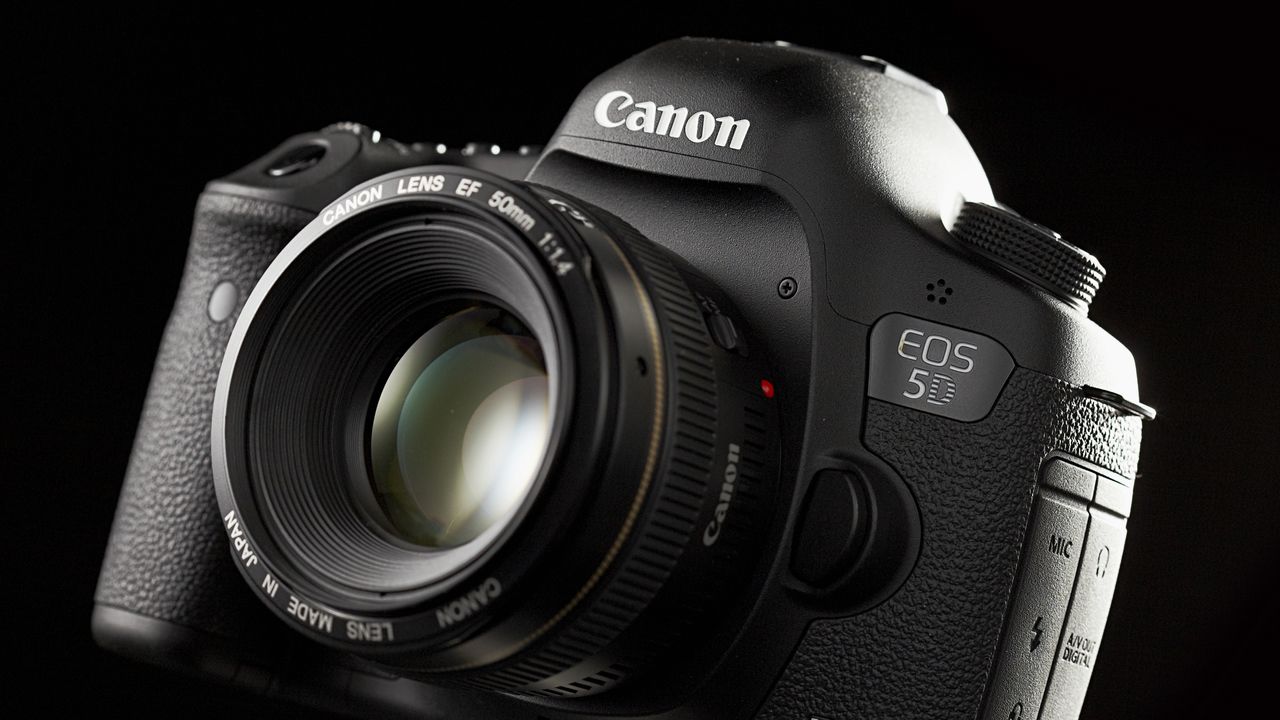
Since the point at which most manufacturers conspired to get us to re-buy all our interchangeable lens camera equipment in more compact mirrorless form, DSLRs have been portrayed as bulky, lumpen and very much yesterday’s news.
That perception persists, underscored by the fact that former DSLR stalwarts Canon and Nikon have stopped releasing anything new with a mirror box. Along with everyone else, except possibly Pentax.

While I’ve shared prior opinions on why I feel that’s short-sighted and a shame, any connection of mine to DSLRs isn’t nostalgic, emotion-based or a kneejerk reaction to manufactured hype.
There are tangible, practical reasons for choosing a DSLR in 2026. Yes, still. And, if choosing a DSLR, for choosing a Canon DSLR above all others.
Why? Well, for starters, the golden rule of buying an interchangeable lens camera still holds – namely, I shouldn’t just consider the specific body I have my eye on, but the whole system that surrounds it, including all lenses and accessories.
Even before DSLRs were no longer cool, Canon still enjoyed the most far-reaching and comprehensive support out of any camera brand.
And still, if buying a Canon DSLR today, users not only have access to lenses produced since the first digital EOS, but also film-era lenses stretching back decades (if, in some cases requiring an adaptor).
Buying a Canon DSLR therefore becomes the most cost-effective, value-added solution, as I explore the wealth of compatible Canon EF and EF-S lenses for DSLRs – numbering over 200 since 1987 – available on both the new and second-hand market.
Last year Canon claimed it had manufactured 170 million EF and EF-S lenses in total. So, tracking down a perfect match for both intended subject and DSLR in use won’t be an issue.
Couple this with over 110 million Canon EOS cameras produced – with the caveat that this figure does include some mirrorless – and it shouldn’t be a stretch to find either a mint unboxed DSLR or a good quality used option.
At the time of writing, I can still buy a flagship EOS-1D X Mark III or EOS 5D Mark IV camera body direct from Canon’s online store. Or, at the other end of the price scale, snap up an EOS 2000D DSLR plus standard zoom for less than is currently being asked for most compact travel zooms.
So yes, as well as a DSLR’s imaging performance, functionality, battery life, optical viewfinder and durable build, sheer stock numbers work in Canon’s favor. As they do for anyone considering one of its DSLRs in 2026.
DSLRs might not be the cool kids anymore, but sometimes sensible is the smarter option.
Check out our full guide to the best DSLRs you can still buy today. If you want to follow in Gav's footsteps with one of the best Canon cameras, check out the best Canon lenses for DSLRs to go with them.