The Hoka Clifton is one of the most popular running shoes available, rivaling the likes of the Brooks Ghost and Nike Pegasus for name recognition.
It’s also a shoe that needed a big update, in my opinion. The Hoka Clifton 10 was a solid but unremarkable daily trainer that risked falling behind rival shoes that use livelier midsole foam.

This big update arrived not in the Hoka Clifton 11, which seems very similar to the Clifton 10, but in a new addition to the line called the Hoka Clifton Pro.
The Clifton Pro is a considerable upgrade on the standard model thanks to a new midsole foam and rocker geometry, and I thoroughly enjoyed my runs in the shoe during testing thanks to its comfortable, smooth ride.
I wish this were simply the Clifton 11, though, because Hoka doesn’t need both shoes in its line-up and putting Pro in the name writes performance checks the Clifton Pro can’t cash. It rivals the best running shoes for comfort on easy, steady runs, but lacks the versatility of a super-trainer, which you might expect from a "Pro" model.
Hoka Clifton Pro review: Price and availability
The Hoka Clifton Pro launched in July 2026 and costs $165 in the U.S. and £150 in the U.K., which is $10/£10 more expensive than the Hoka Clifton 11.
It’s also a little pricier than the Asics Novablast 6, which I’d consider a key rival as one of the best cushioned daily trainers I’ve tested this year. But the Clifton Pro is cheaper than the Nike Vomero Plus, which I consider another standout option in this category.
Hoka Clifton Pro review: Design and fit
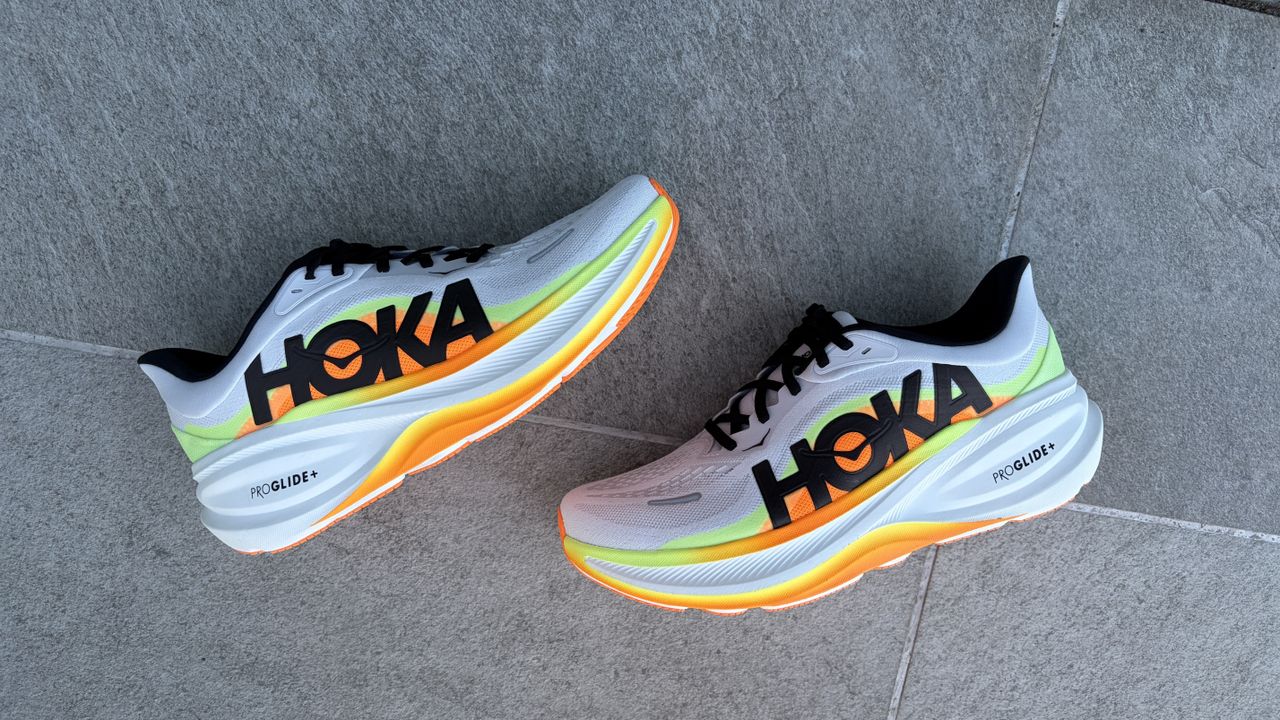
The Hoka Clifton Pro is currently available in seven colors, including the white-and-orange design I tested.
I found that it fit well in my normal running shoe size, the same size I’ve used for all Hoka shoes in the past. There are wide models of the Clifton Pro available too.
The shoe actually has the same stack height and drop as the Clifton 11. It has an 8mm drop and stands 42mm tall at the heel and 34mm at the forefoot (in a men’s US size 10).
In my US men’s size 9.5, the Clifton Pro weighs 9.5oz, which is pretty light for a highly-cushioned daily trainer like this, though it’s actually a tad heavier than the Clifton 11.
Upper
The Clifton Pro has a mesh upper that’s proved breathable enough during my testing during a heatwave here in the UK.
There’s ample padding around the heel for the shoe to fit comfortably and securely, and it didn’t feel oppressive to me during my runs.
Midsole
The main upgrade on the Clifton Pro compared with the Clifton 10 and 11 is the ProGlide+ midsole foam, which is a supercritical EVA material, as opposed to the compression-moulded EVA on the Clifton 11.
This foam makes the Clifton Pro bouncier on the run than the standard Clifton, and it also has a more aggressive rocker profile than its cheaper counterpart, which makes for a smoother ride, especially at faster paces.
While EVA foams were the standard in running shoes for a long time, it’s worth saying that most brands have moved on to livelier materials like PEBA, TPEE and aliphatic TPU even in their daily trainers.
This does make the Clifton Pro look a little outdated on paper, but in general I don’t really care too much what a midsole foam is made from myself, as long as it feels good on the run, and the Clifton Pro certainly feels good on the run.
Outsole
The Clifton Pro has a segmented outsole design, but a generous layer of the brand’s Durabrasion rubber does cover most of the bottom of the shoe.
It has gripped well for me on roads and light trail runs, though I’ve yet to test it in the wet because of how dry the weather has been near me this summer.
Hoka Clifton Pro review: Running performance
On paper, the Hoka Clifton Pro doesn’t look all that exciting. It’s not built to be a super-trainer like the Asics Superblast 3, isn’t amazingly light or plated, and uses EVA, which is almost a dirty word among running shoe geeks these days.
However, Hoka has a history of making shoes that look a bit underwhelming on paper but impress in the real world, with the excellent Hoka Mach 7 being just the latest example I’ve tested, and I’ve loved my miles in the Hoka Clifton Pro.
The new ProGlide+ midsole foam combined with Hoka’s reliable rocker geometry creates a ride that’s very smooth and enjoyable at easy paces and works well when pushing to steady or tempo speeds as well.
I found cruising in the shoe to feel almost effortless at times, and when I did a 90-minute-long run in the shoe one Sunday after a tough double workout day, it was protective and comfortable without feeling big or cumbersome, which some max-stack shoes can do when I’m really tired.
It’s not a super-trainer like the Asics Megablast, lacking the speedy feel I like to tackle my fastest workouts, but the Clifton Pro is an excellent daily trainer for your easy, steady, and long runs, and it’s good for walking as well.
Should you buy the Hoka Clifton Pro?
The Hoka Clifton Pro hits the spot as a cushioned daily trainer that’s protective, comfortable and fun to run in.
It’s one of the strongest options in this area, in my opinion, and would be a good all-rounder for runners who prioritize, or work well in rotation with, a faster shoe for workouts, which is how I’d use it.
There’s no need to have both it and the Clifton 11 in Hoka’s line-up, in my opinion, especially given how close in price the two shoes are. The Clifton Pro is an upgrade worth making to do the same job for runners, and I do wish Hoka had simply launched it as the Clifton 11 and kept the price at $155.
The Asics Novablast 6 is a stern competitor, because it’s cheaper and a little livelier at faster paces, making it a more versatile daily trainer. I’d lean towards the Asics myself to make the saving.
If you want an even springier feel on your runs and even more cushioning, the Nike Vomero Plus is a great cushioned shoe, and though it’s more expensive than the Clifton Pro, it regularly appears in sales.