In 1994, India faced a crisis. Cheap ultrasound technology had made sex determination easy, female foeticide was rampant and sex ratios were worsening. Pre-Conception and Pre-Natal Diagnostic Techniques (PC-PNDT) Act was a serious response to a serious problem. Thirty years on, however, India's sex ratio at birth has barely improved, from 109.2 in the early 1990s to 108.1 by 2020. The law's impact on sex ratios has been modest, even as concerns have emerged about its effects on broader healthcare access.
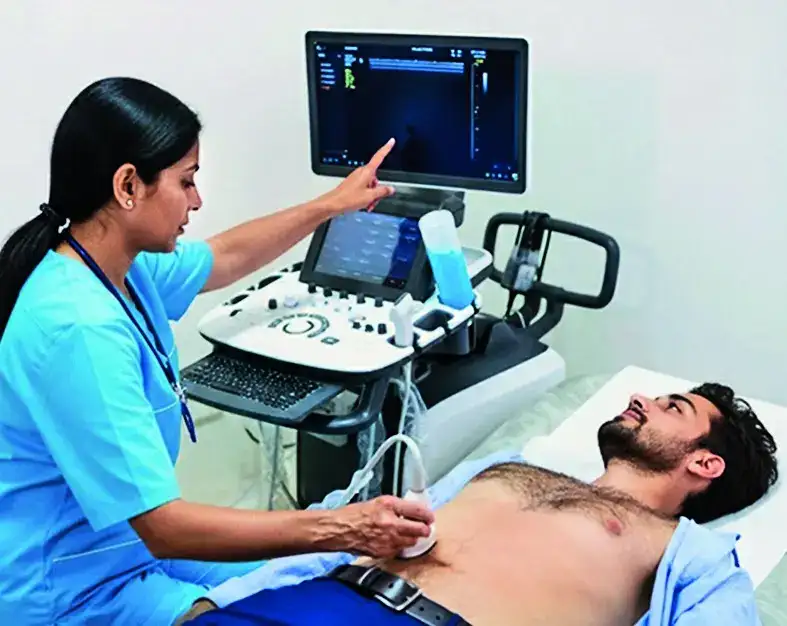
Ultrasonography (USG) is cheap, radiation-free and portable. Its applications extend far beyond obstetrics. Emergency physicians use it to detect internal bleeding. Cardiologists rely on it to assess heart function. Orthopaedic and trauma care depend on bedside USG for rapid diagnosis of injuries.
Studies show it can reduce hospital stays by up to 4 days. In much of the developed world, USG machines are operated by technicians and nurses. India, with roughly one machine per 11,500 people, has limited access to this technology not just in antenatal care but across diagnostics. Regulatory complexity under the Act is one factor slowing the spread of USG facilities.
Internationally, the fight against sex selection has been addressed through education and economic empowerment. South Korea expanded female labour-force participation and reduced families' dependence on sons for old-age support. Its sex ratio fell from 116 in the 1990s to 104.7 by 2022, within the natural range, and its ban on sex determination was lifted in 2024. In India, meaningful improvements came only after 2011, driven by attitude-change campaigns such as 'Beti Bachao, Beti Padhao', rather than PC-PNDT enforcement alone.
The problem is not the law itself. The problem lies in implementation. What counts as a compliance failure in one jurisdiction may pass unnoticed in another. This patchwork of enforcement creates perverse incentives. Ethical practitioners, uncertain of local standards and fearful of disproportionate consequences, are deterred from setting up USG facilities altogether.
Meanwhile, those willing to flout the law often find ways around it regardless. A 2020 analysis found that 68% involved procedural, rather than substantive, violations. Cases involving sealed machines and criminal prosecution over minor clerical errors reflect failures of implementation rather than legislative intent. Clearer and more uniformly applied procedures would also reduce the scope for discretionary enforcement and problems that can accompany it.
No other country has made access to this essential tech so difficult. The human cost is visible. India's maternal mortality rate stands at 80 per 100,000 live births, nearly 20x South Korea's figure of 4. Fewer than 60% of Indian mothers receive adequate antenatal care. Beyond maternal health, compliance costs have pushed doctors towards costlier and less-appropriate alternatives, with patients paying for X-rays and CT scans when an affordable USG would have sufficed.
In rural India, where MRI and CT are neither financially nor operationally viable, USG is the only realistic path to expanding diagnostic access at scale. The Act has foreclosed that path. It has the right foundations. Building on them requires attention to two priorities:
Simplification The process of registering and operating USG facilities, particularly portable and handheld devices, in its current form is a deterrent to legitimate medical practice. Obtaining a licence can take over a year. Documentation requirements are extensive, and the consequences of minor clerical errors are disproportionate. Rationalising paperwork, streamlining approvals and distinguishing procedural lapses from substantive violations would make compliance far more achievable for practitioners acting in good faith.
Uniformity The Act is applied differently across states. This inconsistency lies at the heart of the problem. When enforcement standards are unclear and variable, practitioners cannot know with confidence what compliance requires.
The solution is a set of national guidelines defining clearly and consistently what constitutes a serious offence and what constitutes a minor lapse, applied uniformly across the country.
PC-PNDT Act was born of genuine concern that remains valid. But its administration deserves careful reform. The task at hand is not to dismantle the law's purpose but to improve how it is implemented.