
Get all your news in one place.
100's of premium titles.
One app.
Start reading
Livingetc
Livingetc
Amiya Baratan

How Japanese Designers Turn Windows Into 'Picture Frames' — Nagame (眺め) Is the Feeling of "Stopping to Smell the Roses" and Appreciating Your Home

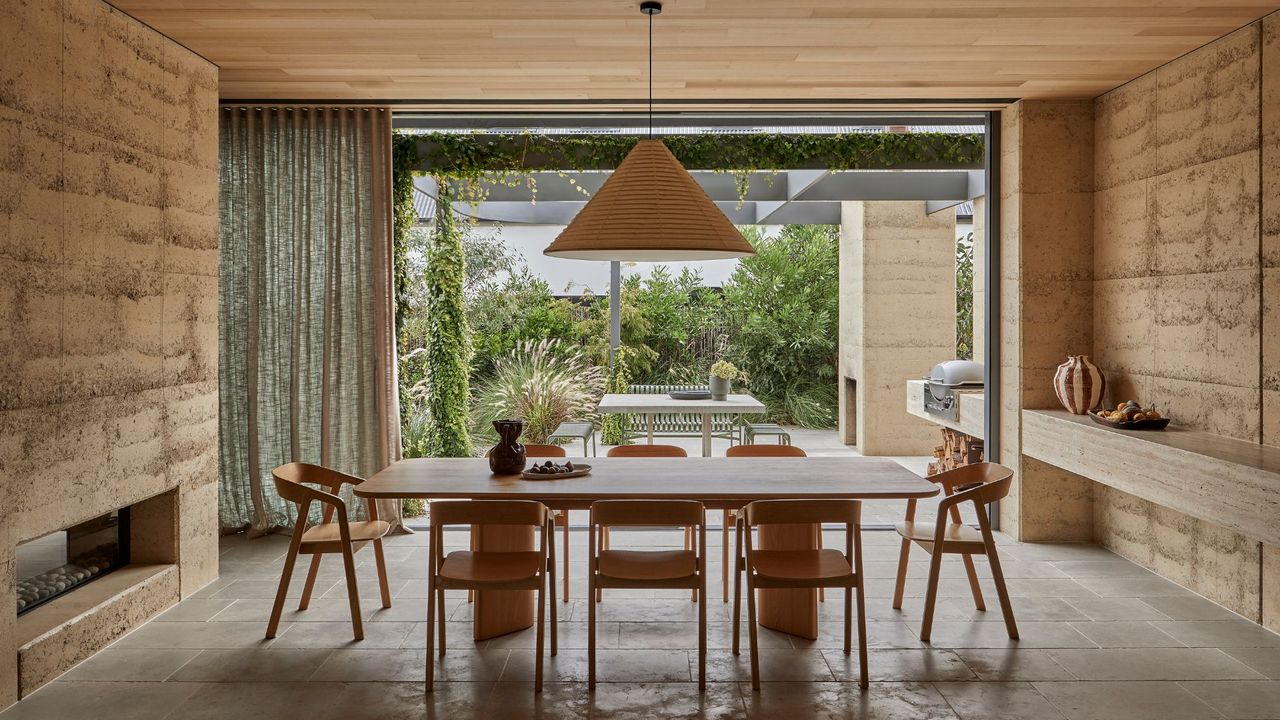
A dining room with a wood dining set, a conical lantern, and a large sliding glass door looking out onto an outdoor dining room and grill.

Literally translating to scenery, nagame is the Japanese concept of framing a scene. And when it is realized in a living space, it often manifests as a well-placed window offering up a picturesque moment that hangs like art in a home.

It's a notable aspect of many homes constructed under the lens of Japanese design. Rather than treating the window as just a portal of light and air, it's used to help you pause for a moment. I'd even go as far as to say that it's the architectural version of stopping to smell the roses.

So, what does nagame entail, and how can you design it into a space?

What Is Nagame?

"Although nagame (眺め) means 'view', in Japanese architecture it carries a specific intention: windows and doors are not simply openings for light and ventilation — they are picture frames," says interior designer Yoko Kloeden.

"The tradition of shakkei (借景) or 'borrowed landscape' takes this further, using carefully positioned views to make distant scenery part of the home's own composition. Think a neighbor's tree, a roofline, even a strip of sky."

Yoko explains that in Japan, it's common to begin a project by positioning the garden first, then constructing the house to face specific views. "The engawa (veranda) and sliding screens allow an entire wall to open toward a garden that has been composed as deliberately as any room," she adds.

"Ceremonies like tsukimi (月見), also known as the moon-viewing at the start of autumn, show how deeply this awareness of framed outlook is embedded in daily and seasonal life."

And beyond that, it's a beautiful way to intentionally bring the art of komorebi into your home, too. Dappled light from a framed view? Now, that's romance in design.

How Does Nagame Impact a Home?

Imagine this windowed space with a bleak wall in its space. It zaps so much magic right out of the room. (Image credit: Yoko Kloeden Design)

"What you see every day shapes how you feel every day. A single, carefully composed sightline can make a home feel more serene, more spacious, and more deeply connected to nature than panoramic glazing ever could," says Yoko.

"In a recent kitchen extension in west London, a picture window was designed specifically to frame lush planting, so that greenery remains present even when doors are closed."

Through this kitchen window design, Yoko made it so the garden becomes part of daily rituals, from morning coffee to evening cooking, rather than a distant backdrop. "Nagame also works within the home," she adds.

"Framed openings between rooms create anticipation and layered depth. You glimpse what lies beyond rather than seeing everything at once. The effect is a home that unfolds as you move through it, rather than one that reveals itself all at once."

How to Bring Nagame Into Your Interior Design

Just imagine waking up to a bathroom with a framed view like this. It'll make morning blues non-existent. (Image credit: Roger Davies. Design: Studio Emblem & Co.)

"Before we draw a single line, we ask: what do you want to see from here? The view from a kitchen worktop, a desk, or a bath matters as much as the view from a living room," says Yoko.

"More glass does not automatically create a better view. You can start by removing visual noise, which can strengthen a vista far more than enlarging an opening. Framing a view is about intention. So editing what you will keep from overwhelming the eye."

And if you're thinking nagame is impossible to adopt into city homes, Yoko proves otherwise. "In London period homes with modest gardens, a single tree or courtyard wall with climbing plants, carefully framed by a well-proportioned window, is enough," she says.

"Window seats, which appear in nearly every project we take on, represent nagame in action. It's a dedicated place to sit and look, where the view has been considered as carefully as the comfort."

Now, let's say you have a window and it's framing a mediocre view that needs a touch of attention. Directing the eye through decor is the way to go. And here are some simple features that will get the job done.

Since light-maximizing is one of the big curtain trends this year, this sheer set from H&M is a dreamy choice.

The easiest way to bring people to a beautiful view? Give them a place to take it in from. Like this chic metal bench, which doubles as a storage feature.

I love the idea of using tiles to frame the window, offering a view. Even a couple of tiles at one edge of the window can bring in some asymmetry and with it attention.

The Japanese concept of hikari is another beautiful way to naturally elevate the way your home feels. And for more design lessons from across the world, subscribe to the Livingetc newsletter.

H&M Long & Wide Curtain 300 x 300 AYTM Curva Matte Greige Metal Bench VerdadTiles Abstract Porcelain Wall Tile Sample Pack
Sign up to read this article
Read news from 100's of titles, curated specifically for you.
Already a member? Sign in here
Related Stories
Top stories on inkl right now
One subscription that gives you access to news from hundreds of sites
Already a member? Sign in here
Our Picks
Fourteen days free
Download the app
One app. One membership.
100+ trusted global sources.