Get all your news in one place.
100's of premium titles.
One app.
Start reading
The Times of India
The Times of India
World
TOI World Desk

Garbage Turned Into Fish Feed: Tanzanian startup ferments waste into protein; fish grow 40% faster

In much of East Africa, small-scale fish farming seems easy enough on paper, but it keeps hitting the same wall: the cost of feeding the fish. In Tanzania, feed alone can account for around seventy percent of the expenditures of running a small farm, and much of that feed relies on either imported soybean or fishmeal manufactured from wild-caught fish, both of which come with hefty price tags and environmental impacts of their own. But for Diana Orembe, a biologist working in Dar es Salaam, the imbalance seemed less like an inevitable aspect of the industry and more like a problem waiting for the proper kind of microbe.

Get breaking news anytime, anywhere. Download the TOI app now!
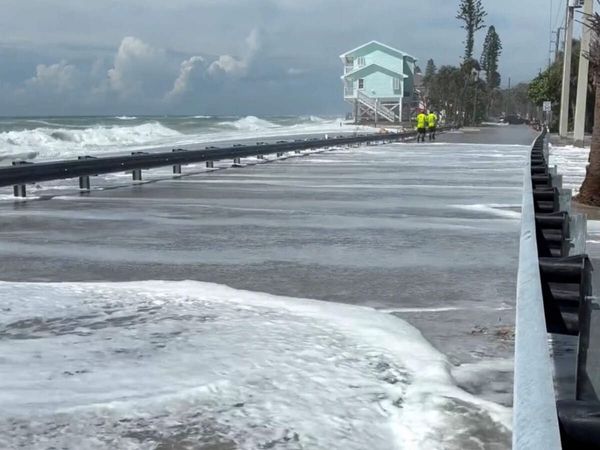
Orembe co-founded the biotech firm NovFeed before being selected by UNICEF Innovation as one of its young innovators addressing climate-related challenges. The basic material is leftover fruit and vegetables collected from schools, universities and local markets across the city, garbage that would otherwise simply rot. UNICEF Innovation included Orembe in its cohort of young innovators addressing climate-related challenges. Her company, NovFeed, uses bacterial fermentation to convert discarded vegetables into a protein ingredient for fish feed.

Making fish food out of garbage

The procedure involves adding a special blend of bacteria to the collected waste, and the microbes consume the material, reassembling its nutrients into a concentrated protein for farmed fish. Dar es Salaam produces thousands of tonnes of waste every day, a lot of it organic; thus, the raw material for this process is almost endless and almost free, an entirely different starting point than buying soybean meal from the other side of the planet. The resulting feed also floats instead of sinking, which can reduce feed losses when conventional pellets settle on the pond floor before fish consume them.

NovFeed’s process starts with organic waste collected mainly from schools, universities and markets in Dar es Salaam. The company separates useful organic material before fermentation, allowing its microbes to act as a biological factory that converts the waste into single-cell protein for fish feed. UNICEF says the main ingredients are agri-waste and bacterial cells, and that the resulting protein can replace traditional fishmeal and soybean. The process also avoids dependence on wild-caught fish as a protein source and turns organic waste into an input for aquaculture rather than leaving it to decompose. NovFeed was established in 2020, and the company has continued developing the technology with an emphasis on scaling the protein for fish-feed production.

More growth, more profits

The actual outcomes have been measured directly on farms and not merely in a laboratory. Fish that were fed the fermented feed reached market weight about forty per cent faster than fish fed conventional feed, and farmers that used the fermented feed reported a twenty-five per cent increase in their total profits. The approach also reduces reliance on fishmeal made from wild-caught fish, easing pressure on marine fish stocks that would otherwise be used as feed.

Recognition beyond the farm gate

The wider food and sustainability world has taken notice too. The project was later highlighted by the Food Planet Prize, while NovFeed went on to win a $1-million Milken-Motsepe Prize in AgriTech. What began as a solution to a single country’s feed issue has become a demonstration of something larger: that the garbage sitting in a market bin may be worth more to a fish farmer than the imported alternatives propping up the sector. The bacteria did the heavy job, but it needed a biologist prepared to see decaying fruit as an opportunity, not an issue, to make the notion work.

Sign up to read this article
Read news from 100's of titles, curated specifically for you.
Already a member? Sign in here
Related Stories
Top stories on inkl right now
One subscription that gives you access to news from hundreds of sites
Already a member? Sign in here
Our Picks
Fourteen days free
Download the app
One app. One membership.
100+ trusted global sources.