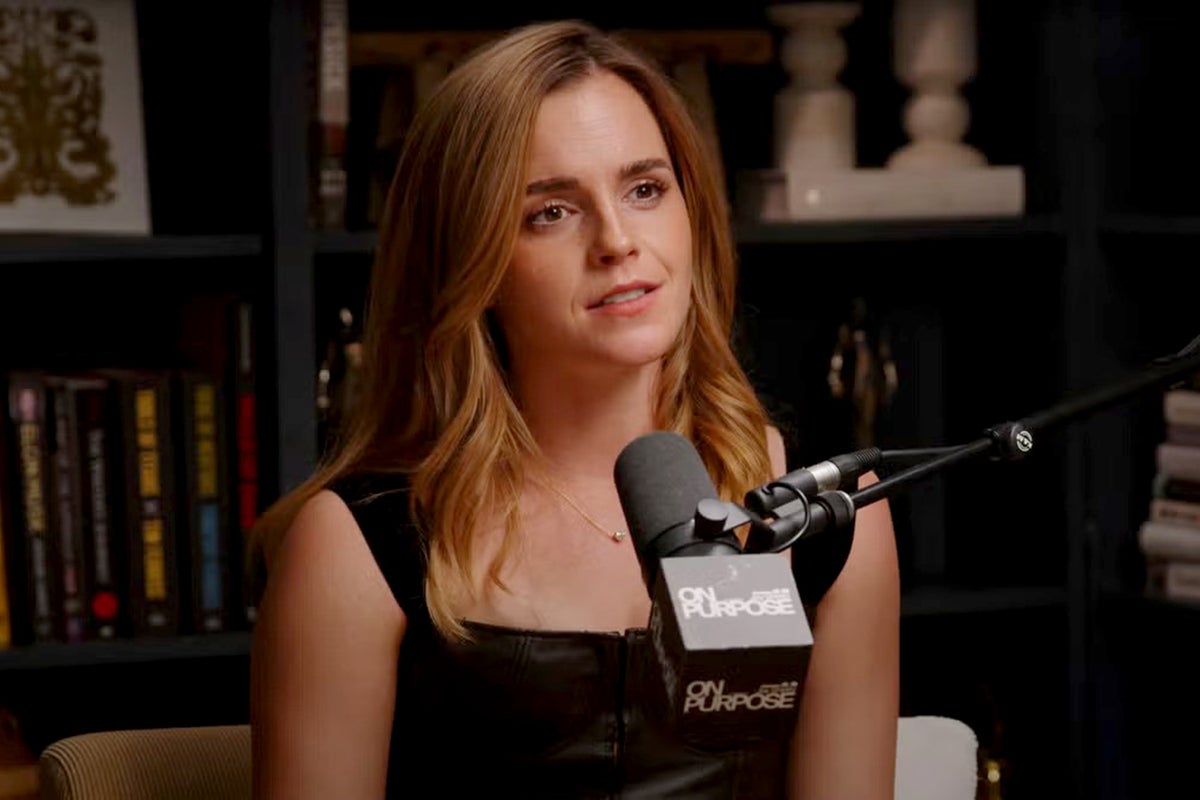
Somewhere far from the extended Hogwarts cinematic universe, Emma Watson has been living. Or perhaps more accurately: pausing; “self-partnering”; the kind of abstracted living that only the extremely famous – and extremely observed – can pull off well. Since that curious 2012–2014 transition period when she began edging out from under the shadow of Hermione Granger, Watson has been engaged in a slow, studious becoming. For a while, it seemed she was trying to prove she could be what everyone wanted: perfect. An idealised woman – earnest, intentional, and soothing, all of which seem to come naturally to her – but an activist too.
Being a woman in the public eye trying to do the right thing has meant that her appearances and statements have often been received with a friction that she herself seldom gives off. As she transitioned from child star to adult celebrity activist, she faced accusations of “white feminism”, questions about her name appearing in the Panama Papers, and demands that her activism be more pointed, more radical, more active. None of it ever entirely stuck. This may be because she comes across as poised, elegant, and relatively well-informed. Or it may be, perhaps, out of a collective sympathy for a woman who had such an unconventional childhood (or rather lacked one altogether, having spent it making and promoting the Harry Potter film franchise). Simultaneously, there was a public feeling that maybe she was just too nice, somehow too perfect. Watson, though, is – like all of us – imperfect, as an activist and as a human. What matters is that she seems to be owning that.