Get all your news in one place.
100's of premium titles.
One app.
Start reading
Tom’s Guide
Tom’s Guide
Technology
Scott Younker

Forget Galaxy S26 Ultra: Samsung's Galaxy S27 Ultra just tipped for highly anticipated battery upgrade

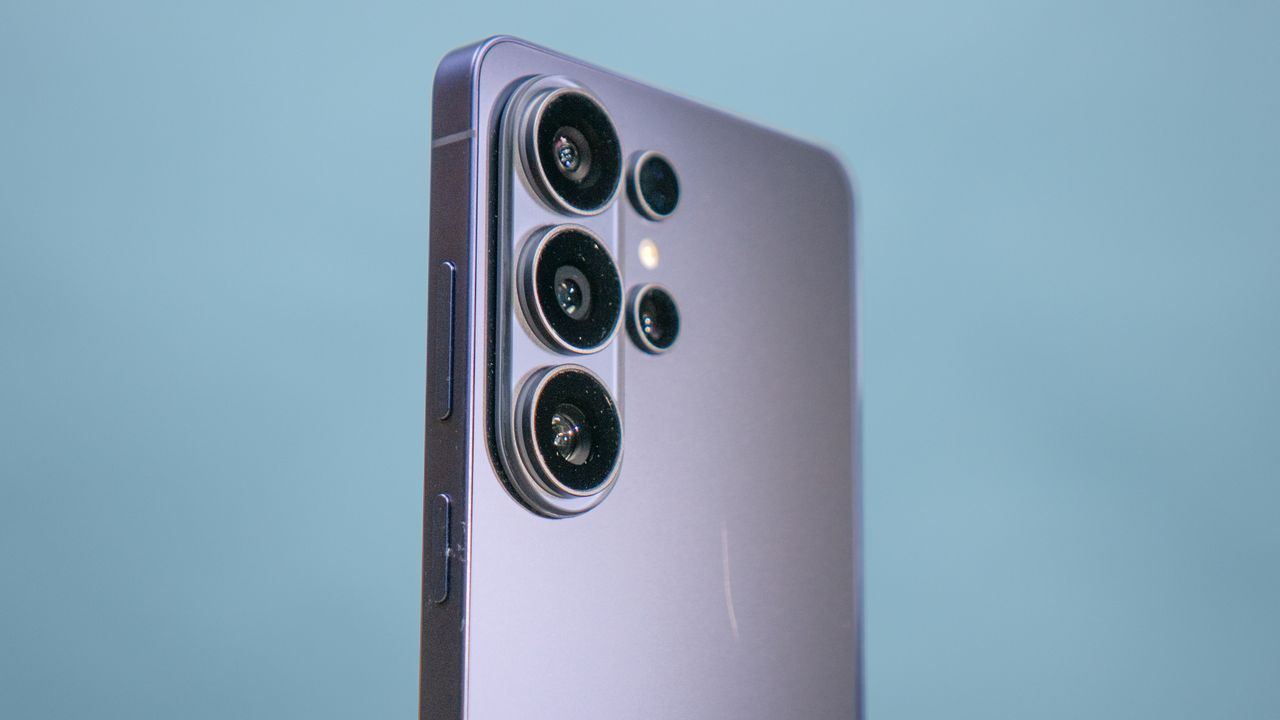
Samsung Galaxy S26 Ultra shown in hand.

Samsung has kept the same 5,000 mAh battery in its Galaxy S Ultra models for six years, but the Galaxy S27 Ultra could finally get a new kind of battery. A new leak claims Samsung is actively testing silicon-carbon batteries for its flagship phone.

The blog Schrodinger Intel posted that Samsung is targeting next year to try silicon-carbon batteries. It's a big change, even as Samsung has managed to eke out incremental battery life increases with the lithium-ion batteries it currently uses. Most of those upgrades are software-optimized, not physical.

In February, Sung-Hoon Moon, Samsung's executive VP and head of smartphone R&D, admitted that Samsung has been "a bit un-innovative on that front" when it comes to batteries. Moon did confirm that Samsung is working on the technology while stating the silicon-carbon hasn't passed the company's "very rigorous validation standards."

What are silicon-carbon batteries

(Image credit: Oppo)

Silicon-carbon batteries started to appear in Chinese phones in 2023. Honor promised the first phone featuring the battery at MWC 2023, though the battery life leap was smaller at the time. OnePlus has seemingly gone all-in on silicon-carbon batteries, announcing its glacier batteries in 2024 and using the new tech in most of its phones released in the last two years.

On a simple level, silicon-carbon batteries enable phone companies to cram more usable battery into the same amount of space. This means that a manufacturer could swap out a 5,000 mAh lithium-ion battery for a Si-C battery of the same physical size but featuring 10,000 mAh.

This means you should get hours more battery life. For example, we tested the OnePlus 15 in our lab.

The OnePlus 15 features a Si-C battery that lasted just over 25 hours on average. That's 11 hours more than the Galaxy S25 Ultra and just about nine hours more than the Galaxy S26 Ultra and the iPhone 17 Pro Max.

Schrodinger Intel claims Samsung is testing 12,000 mAh, 18,000 mAh, and 20,000 mAh in "real model designations." However, as TechRadar notes, Si-C batteries degrade faster than lithium-ion.

Notably, per the leak, the models Samsung is allegedly testing failed at 960 charging cycles (how often the battery is charged) while the company has a commercial benchmark of 1,500.

The silicon batteries also tend to expand more, which could make them more dangerous. Samsung has been overly cautious with batteries since the Galaxy Note 7 issue years ago.

It partially explains why Apple and Samsung would be more hesitant to sell Si-C phones.

Still, it appears, based on this leak and Moon's comments, that Samsung wants to catch up with Chinese makers and improve battery life.

More from Tom's Guide

Sign up to read this article
Read news from 100's of titles, curated specifically for you.
Already a member? Sign in here
Related Stories
Top stories on inkl right now
Our Picks
Fourteen days free
Download the app
One app. One membership.
100+ trusted global sources.