
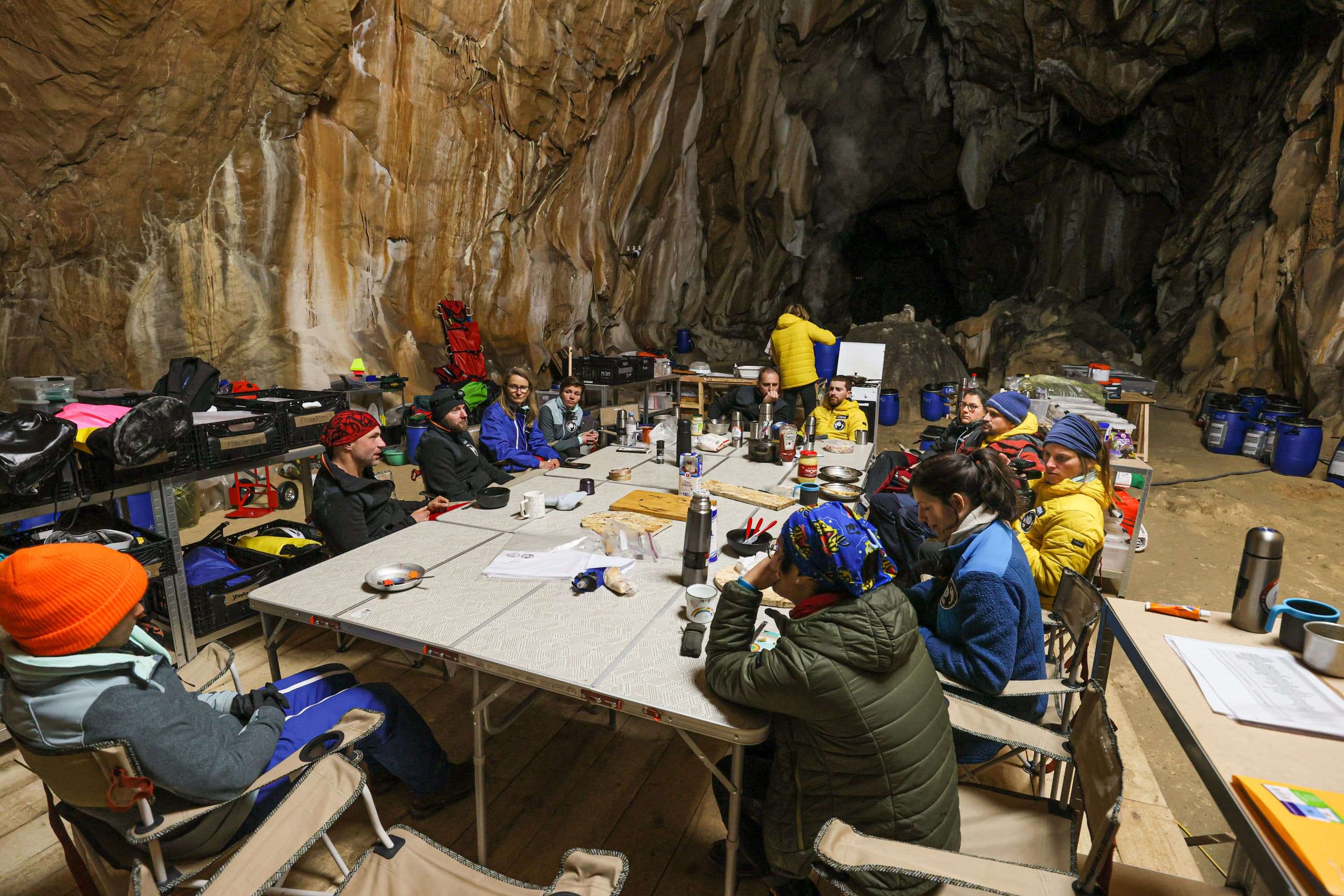
On March 14, 2021, fifteen volunteers, seven women and eight men aged between 27 and 50, entered the Lombrives cave in the French Pyrenees to begin a 40-day experiment with no clocks, no phones, no natural light and no contact with the outside world. Known as Deep Time, the project was led by French Swiss explorer Christian Clot through his nonprofit research group, the Human Adaptation Institute, and was designed to study how the human brain tracks time and how a group adapts psychologically and physiologically to prolonged isolation. When the volunteers finally emerged into daylight, most believed they had spent only about 30 days underground, having lost track of more than a week and a half of real time despite the experiment's rigorous scientific monitoring. Beyond its striking findings on time perception, the study provided researchers with a rare opportunity to examine how humans adapt to extreme isolation, generating insights that could become increasingly valuable as long-duration space missions and exploration of other extreme environments continue to advance. The Deep Time experiment highlights the remarkable flexibility of the human mind, demonstrating how our perception of time is shaped not by clocks but by the environmental cues and social rhythms that structure everyday life.
Get breaking news anytime, anywhere. Download the TOI app now!















