Egypt is pressing Europe to share more of the cost of hosting what Cairo says are millions of refugees and migrants, as the EU weighs its dependence on a country it sees as a crucial buffer against irregular migration across the Mediterranean.
The two sides are not short of bargaining chips over each other: Europe needs Egypt to keep irregular migration in check while Egypt needs European money to manage a refugee crisis it says is costing more than €8.5 billion a year, experts say.
“Egypt’s leverage has clearly increased with the EU because EU governments are under domestic pressure to reduce irregular migration,” Professor of Migration Studies and Director of the Migration Policy Centre at the Robert Schuman Centre Andrew Geddes told Euronews.
The issue has become more urgent as humanitarian agencies warn of widening funding gaps in Egypt, where the war in Sudan has added to a long-standing refugee and migrant population that also includes Syrians, Palestinians, South Sudanese, Eritreans, Ethiopians, Yemenis, Somalis and Iraqis.
"Arrivals of Syrian refugees meant that Egypt was seen as a credible host country. Sudanese displacement has led to renewed urgency and pressure and strengthened Egypt’s argument that it is facing ongoing and escalating burdens," Geddes explained.
Partnership despite criticism
In 2024, the EU and Egypt elevated their relationship to a Strategic and Comprehensive Partnership covering political relations, economic stability, trade and investment, migration and mobility, security, and people and skills.
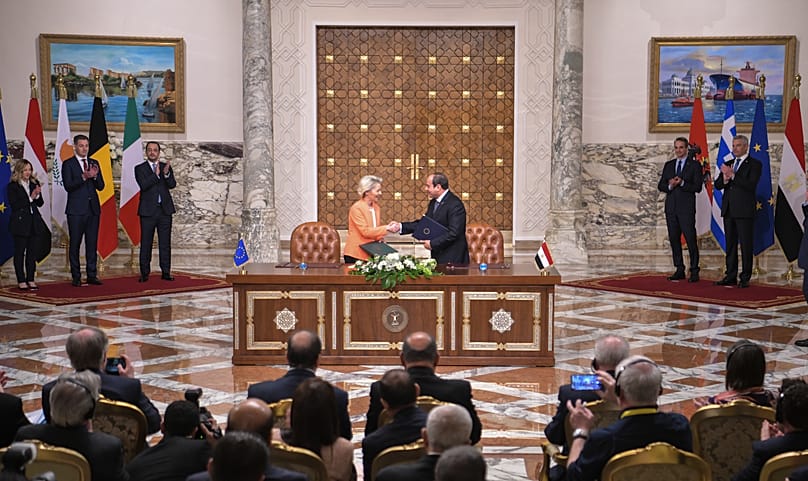
Brussels then announced a €7.4 billion financial package for Egypt for 2024-2027, including €5 billion in concessional loans, €1.8 billion in additional investments and €600 million in grants, with €200 million earmarked for migration management.
The European Commission has framed the package as part of a wider strategic partnership with Egypt covering economic stability, investment, migration, security and skills.
But the deal has been criticised by some MEPs and rights groups, who argue that the EU is expanding migration cooperation with Egypt without enough guarantees on human rights, asylum protections or accountability for alleged abuses.
Greens/EFA MEP Tineke Strik, a Dutch migration scholar and the European Parliament's external dimension of EU migration policy in 2024, said cooperation with President Abdel Fattah al-Sisi would result in "more violence against migrants, more repression, and more dissidents fleeing the country."
Mounir Satouri, a French MEP and the Parliament’s rapporteur for Egypt, criticised the broader regional approach at the time which also included a deal with Tunisia, stating, “These are not the private funds of (then-Commissioner for Neighbourhood and Enlargement Olivér) Várhelyi. These are European funds.”
Several MEPs also submitted formal parliamentary questions to the European Commission demanding justification for the disbursement of funds.
The Commission defended the deal as the vehicle for shared responsibility and advancing human rights rather than undermining them.
"Together, we will also work on our commitment to promote democracy and human rights," von der Leyen said at the signing ceremony in Cairo, in an indirect answer to critics who argued Brussels was rewarding an authoritarian government.
The 10 million question
Speaking in April at a ministerial meeting of African countries leading implementation of the Global Compact for Migration, Egyptian Foreign Minister Badr Abdelatty said his country hosts “more than 10 million migrants and guests on its territory, who live within the fabric of Egyptian society and not in isolated camps, and enjoy basic services without discrimination.”
In a February 2025 call with EU Commissioner for Internal Affairs and Migration Magnus Brunner, Egypt’s foreign ministry said Abdelatty pointed to “the modest size of international support received by Egypt and its lack of proportionality with the increasing burdens it bears.”
The ministry said Abdelatty also stressed “the importance of dealing with migration within a comprehensive framework based on linking it to development and addressing its root causes,” while pointing to what it called “the success of the Egyptian experience in combating irregular migration, especially stopping all boats heading to Europe from Egypt since September 2016.”
In April, Abdelatty also called for “regular migration pathways” with international partners, including training and legal migration opportunities for young people that meet labour-market needs in destination countries.
He also stressed the need to embed “burden-sharing, responsibility-sharing and international solidarity,” saying support should not be limited to short-term programmes but should include long-term structural funding that helps host countries keep providing services and supports social cohesion.
Prime Minister Mostafa Madbouly has also said Egypt hosts more than 10 million migrants, refugees and asylum seekers, adding that the cost of providing services to them — estimated to more than $10 billion (€8.5 billion) — is high.
The number of people Egypt says it hosts is much higher than UNHCR’s count of registered refugees and asylum seekers in the country.
UNHCR’s February operational update put the registered population in Egypt at almost 1.1 million, with women and children accounting for nearly three-quarters of the figure.
The difference partly comes from the different categories of foreign nationals in need. UNHCR figures cover registered refugees and asylum seekers — those formally recognised as needing protection and others still awaiting a decision on their status — while Egyptian officials refer more broadly to also include migrants, foreign nationals and undocumented residents living in the country.
“Discrepancies in numbers are very significant,” Geddes said. “For the authorities in Egypt, bigger numbers help the government emphasise the scale of the burden and justify policies.”
Why Egypt became a place of refuge
Egypt has become a major destination in part because of its geography and history. It shares a long border with Sudan and has long-standing social, family and economic ties with Sudanese communities.
As a country that sits at the intersection of both Africa and the Middle East, it has also received Syrians, Palestinians, Yemenis, Eritreans and others fleeing conflict or instability on the two continents.
For many people escaping war, Egypt offers relative stability, established communities, large cities where people can rent homes and seek informal work, and a lower cost of living than many other destinations.
But those same factors also mean refugees and migrants are absorbed into already crowded urban areas.
Unlike countries such as Jordan and Turkey, which have hosted large formal refugee camps, or Lebanon, which has hosted many Syrians in informal tented settlements, Egypt does not operate either.
In Egypt, refugees and migrants generally live in cities such as Cairo, Alexandria, Damietta, and Aswan, alongside Egyptian communities.
Egyptian officials often cite this as evidence that refugees and migrants are integrated into society and have access to basic services, but aid agencies say the model also places pressure on housing, schools, healthcare, and local services.
Egypt’s own economic crisis has deepened the pressure, especially in a country of more than 120 million people already struggling with high prices and strained public services.
Although Egypt can be cheaper than many countries in Europe or the Gulf, purchasing power has weakened for those earning Egyptian pounds.
The country has undergone repeated currency devaluations, high inflation and subsidy reforms under an IMF-backed programme, weakening the budgets of many Egyptians and refugees alike.
Annual urban inflation stood at 14.9% in April 2026, after 15.2% in March, according to Egypt’s official statistics agency CAPMAS.
A month earlier, national inflation had risen to 13.5%, driven by higher food and transport costs, with food and beverage prices up 5.2% month-on-month and transport costs up 8%.
Housing has also become a major pressure point, especially in Cairo — which has turned unexpectedly expensive for many newcomers.
Rents in Greater Cairo are estimated to have risen by 10% to 18% year-on-year in 2026, outpacing official inflation.
As of early 2026, the average monthly rent for a one-bedroom flat in Greater Cairo is approximately 27,000 Egyptian pounds — around €510.
Studio flats in outer districts start at around 10,000 Egyptian pounds a month, rising to 40,000 Egyptian pounds or more in central areas.
Egypt's minimum wage stands at 7,000 Egyptian pounds (€132) a month — meaning a worker on the minimum wage cannot cover the rent on even the most modest studio flat in Greater Cairo, let alone feed a family.
For refugee families, who typically lack work permits and depend on informal work or UNHCR cash assistance, the math is even starker.
UNHCR said the average amount of funding available per refugee in Egypt had fallen from around $11 (€9.4) per person per month in 2022 to less than $4 (€3.4) in 2025.
The agency said many refugee families were struggling to pay rent, buy food and cover medical expenses.
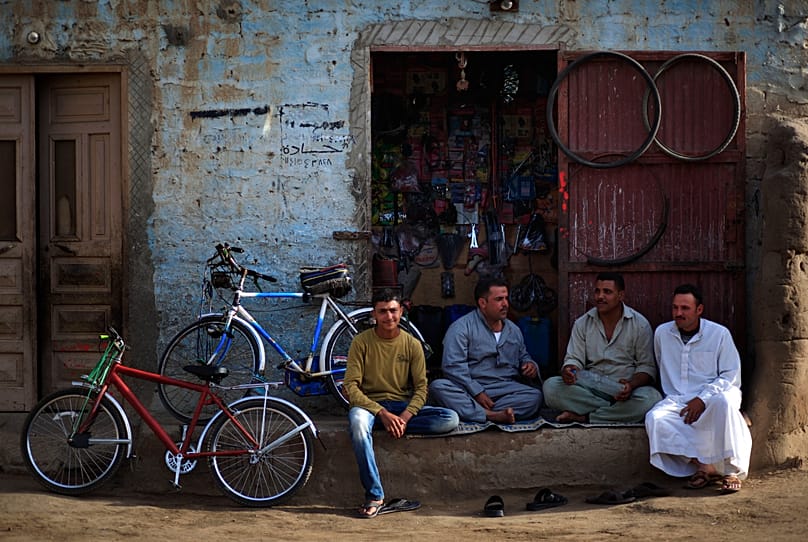
For many families, cash assistance is one of the few forms of support available.
Nawal, a Sudanese widow living in Cairo with six children, said in testimony published by UNHCR that she could only send three of her children to school.
“My eldest son left his education to care for his siblings while I work,” she said.
For Egypt, the shortfall also strengthens the argument that international partners should help carry more of the cost.
The pressure has also made the issue more sensitive inside Egypt. As living costs have risen, public debate has grown over the presence of refugees and migrants and the pressure they may place on housing, jobs and public services.
This is why Cairo believes that despite billions pledged, the external funds are simply not enough.
“There’s a bit of a divide on funding,” Geddes said. “The EU has increased funding levels but from the Egypt side they are not seen as sufficient given, for example, high costs of housing a large migrant and refugee population."
"It’s likely to remain an unsettled issue," he explained.
Sudan changed the equation
Egypt’s refugee pressures did not begin with the war in Sudan.
For years, Syrians were the largest registered refugee group in the country after many fled the Syrian civil war from 2011 onwards.
UNHCR says the number of Syrians registered in Egypt rose from 12,800 at the end of 2012 to more than 147,000 by the end of 2024.
Many Syrians have now lived in Egypt for more than a decade, building businesses, enrolling children in schools and becoming part of urban communities.
The war in Sudan, however, has sharply changed the scale of the issue.
Since fighting erupted in Sudan in April 2023 between the Sudanese Armed Forces and the paramilitary Rapid Support Forces, millions have been displaced inside and outside the country.
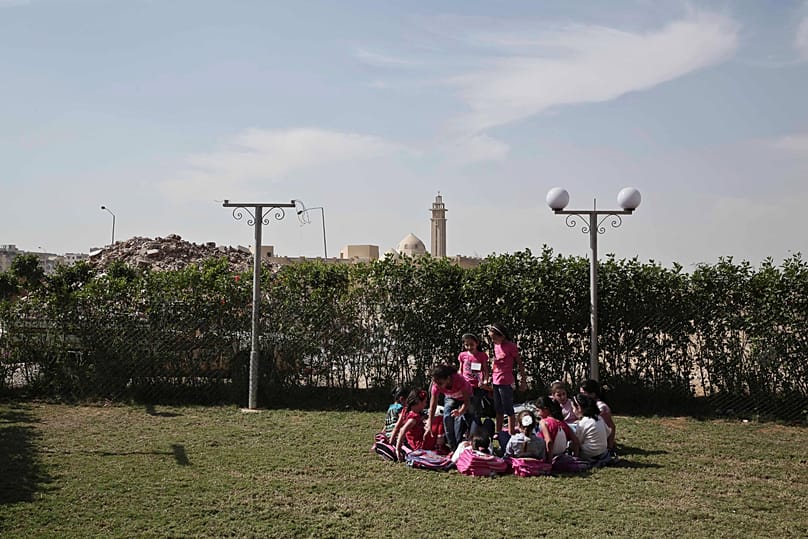
UNHCR said Egypt’s refugee and asylum-seeker numbers had tripled since the onset of the war, with Egypt becoming the largest host country for people fleeing Sudan, as well as one of the countries receiving the highest number of new asylum applications globally.
In February of this year, Sudanese nationals made up the largest group of refugees and asylum seekers, over 830,000.
The pressure on Egypt’s refugee system has been compounded by a sharp funding shortfall affecting UNHCR aid programmes.
In April, UNHCR warned that severe funding shortages could force the suspension of cash assistance for some of the most vulnerable refugee families in Egypt.
The agency said at least 20,000 refugee families, or around 87,000 people, could lose financial support unless urgent funding is secured.
More than half of those families had already seen assistance reduced or cut between January and March 2026, UNHCR said.
The agency said only around 2% of the funding needed for its 2026 cash assistance programme in Egypt had been secured.
“Without immediate and sustained funding, this vital lifeline is at risk of disappearing,” UNHCR said in its April statement.
During talks with el-Sisi earlier this year, Cyprus President Nikos Christodoulides said the European Union should share responsibility for hosting large refugee populations, according to an Egyptian presidency statement.
Rights concerns test the partnership
The EU-Egypt migration relationship has also drawn scrutiny from rights groups and UN experts.
In March, independent experts appointed by the UN Human Rights Council, including special rapporteurs covering the human rights of migrants, trafficking in persons, torture, racism and violence against women and girls, warned of what they described as an “intensifying campaign of deportations, arbitrary arrests and human rights violations” targeting refugees, asylum seekers and migrants in Egypt.
The experts said they had received reports of refugees being targeted in homes, workplaces and refugee-led service centres, particularly affecting Sudanese and Syrian nationals.
According to the experts, arrests and deportations increased from late 2025 onwards, with some deportations allegedly carried out without individual assessments of protection risks.
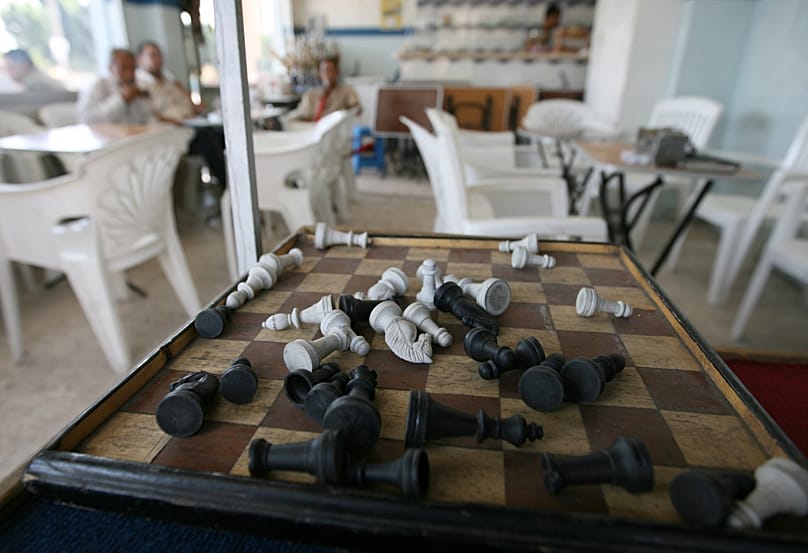
The same UN experts also raised concerns over Egypt’s asylum law, adopted in December 2024.
Rights groups say the law gives authorities broad powers to reject or revoke refugee status on grounds including national security, public order and failure to respect Egyptian “values and traditions”.
In a December 2025 reply to UN Special Procedures, Egypt said detention cases were “temporary precautionary measures” to verify identity and combat smuggling and trafficking networks. It also said that, in order to uphold the principle of non-refoulement, Egypt “does not return any person who is facing danger."
According to Geddes, migration is now part of a wider EU-Egypt relationship involving money, politics, trade, development and security.
"Migration is a key pillar of the EU–Egypt relationship and has shaped the financial packages, political engagement and diplomatic links associated with it," Geddes said.
"It is also relevant to note that migration is part of a wider strategic partnership involving trade, development and security concerns," he concluded.