Where the most earthquakes happen: The Pacific "Ring of Fire," where many tectonic plates meet
The biggest earthquake ever recorded: A magnitude 9.5 earthquake in Chile in 1960
The deadliest earthquake: An estimated magnitude 8 quake in central China in 1556
Number of earthquakes around the world each year: Around 500,000
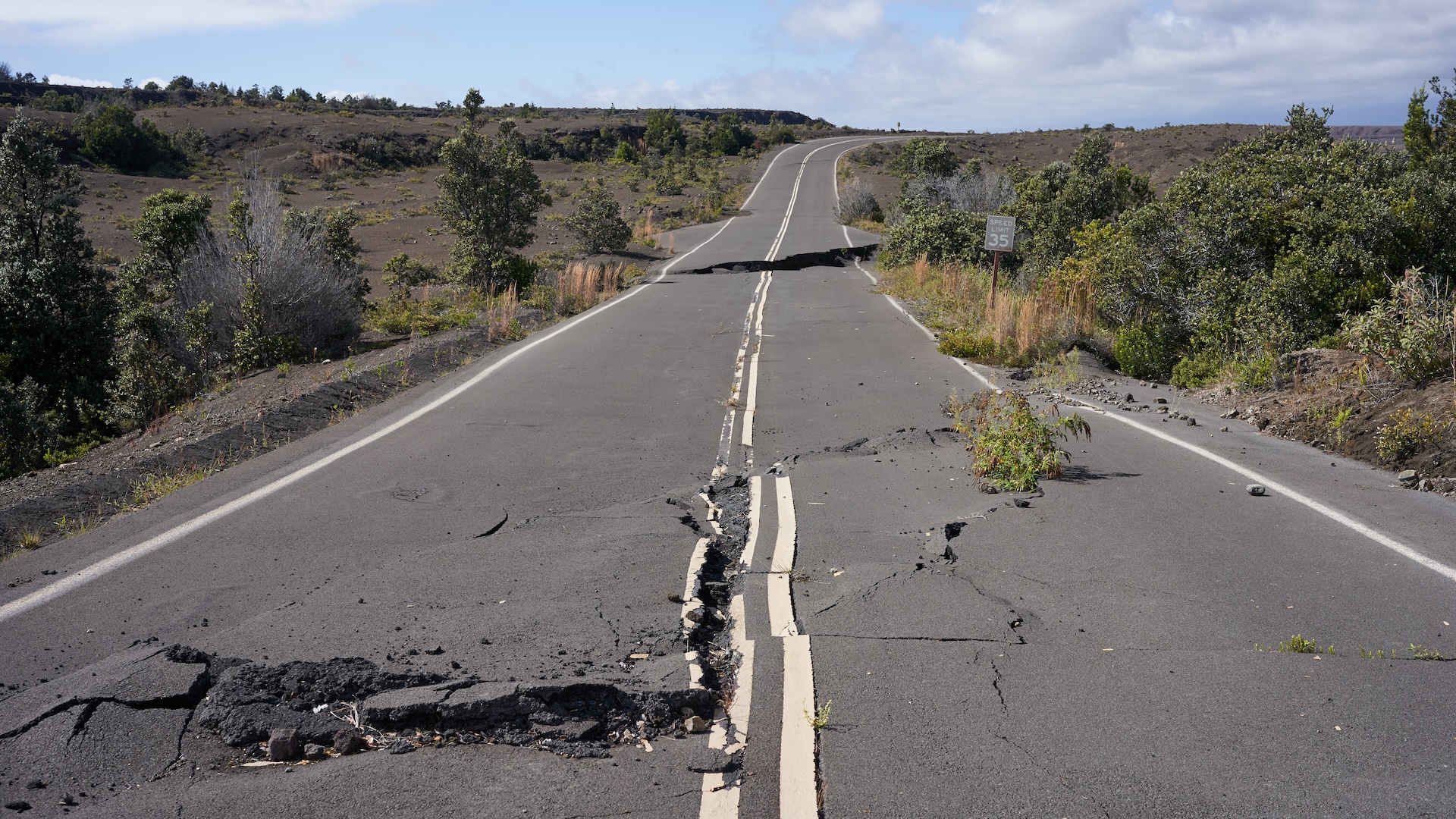
Earth's crust is the planet's outermost layer. It is made of solid rock and sits on top of another layer, called the mantle. The mantle flows and stretches like bubble gum, while the crust above it cracks like hard candy. When it does, it releases energy in a burst, which causes the shaking of an earthquake.
Earthquakes happen most often where tectonic plates meet. Tectonic plates are pieces of crust that fit together like puzzle pieces. Sometimes these plates slide alongside each other at what are called transform plate boundaries. Sometimes they pull apart at divergent boundaries, and sometimes they push together at convergent boundaries. When plates come together at convergent boundaries, they often slide under each other, which is called subduction. All of these movements can cause earthquakes. Earthquakes can build mountains or tear a continent apart. The places where pieces of crust move against each other are called fault lines, and scientists monitor fault lines to measure earthquakes. However, despite decades of trying, scientists still can't predict exactly when or where a quake will happen.