Get all your news in one place.
100's of premium titles.
One app.
Start reading
The Economic Times
The Economic Times
Piyush Shukla

Data center used 30 million gallons unnoticed — is America’s AI boom quietly pushing local water systems toward crisis?

The growing debate around data center water use has taken a dramatic turn in Georgia after an investigation revealed that a massive data center consumed nearly 30 million gallons of water without proper reporting or billing. The controversy has ignited wider concerns about how the rapid expansion of artificial intelligence infrastructure is reshaping local communities, public utilities, and environmental priorities across the United States.

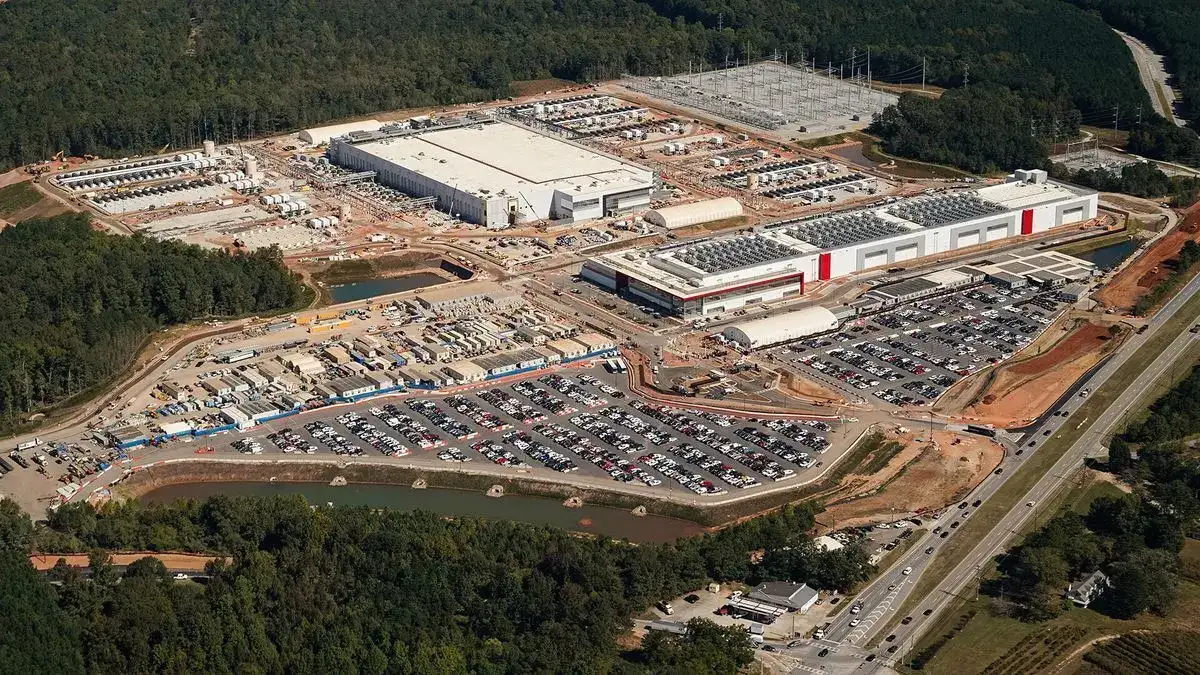
Residents in Fayetteville, Georgia, first noticed something unusual when household water pressure began dropping in neighborhoods near a large data center campus operated by Quality Technology Services. What initially appeared to be a routine utility issue soon uncovered a deeper problem involving industrial-scale water hookups that had allegedly operated outside normal monitoring systems for months.

The revelation arrives at a critical moment for the American technology industry. Demand for AI computing power has exploded as companies race to build larger server facilities capable of supporting machine learning, cloud storage, and advanced automation tools. Yet behind the promises of innovation and economic growth lies a less visible reality. Data centers require enormous quantities of electricity and water to cool servers that run continuously every hour of the day.

Data center water use becomes a growing environmental crisis in Georgia

The Fayetteville data center controversy has amplified concerns about how modern AI infrastructure affects already stressed water systems. According to county officials, investigators discovered two industrial-scale water connections serving the QTS campus. One hookup allegedly operated without notification to the utility department, while another reportedly remained outside the company’s billing account for an extended period.

County officials later estimated the company owed more than $147,000 for over 29 million gallons of water usage. While the company eventually paid the charges after being informed, many residents viewed the situation as evidence of weak oversight surrounding large-scale data center development.

The issue gained even more attention because Georgia has been battling drought conditions and wildfire threats. Earlier this year, state officials declared emergencies in several regions as dry weather intensified environmental pressures. Against that backdrop, the discovery of massive untracked industrial water consumption felt alarming to many local residents.

Water experts say the controversy reflects a broader challenge emerging across the country. Modern data centers rely heavily on cooling systems that prevent servers from overheating. Some facilities use closed-loop cooling technologies designed to recycle water efficiently. However, construction phases and temporary cooling operations can still consume substantial amounts of local water supplies.

Why AI data centers require enormous amounts of water and electricity

The rapid rise of artificial intelligence has dramatically increased demand for data center infrastructure worldwide. Every AI chatbot interaction, cloud computing request, streaming service, and machine-learning calculation depends on servers operating inside enormous warehouse-style facilities filled with high-performance computing equipment.

These servers generate intense heat. Without cooling systems, the equipment could fail within minutes. That is why data center water use has become one of the technology industry’s most controversial environmental issues.

Large facilities often circulate water through cooling towers to absorb and remove heat generated by thousands of servers operating simultaneously. Some centers use air cooling systems, but water-based cooling frequently remains more energy-efficient for massive operations supporting AI workloads.

The challenge is scale. A single hyperscale data center campus can span hundreds of acres and contain multiple buildings running nonstop. The Fayetteville campus reportedly covers more than 600 acres and may eventually expand to 16 separate buildings. That scale places extraordinary pressure on local utility infrastructure.

Yet critics argue that many of the jobs created are temporary construction roles rather than long-term employment opportunities. Meanwhile, the environmental burden on local water supplies and electricity grids can persist for decades.

How the Georgia data center controversy changed public understanding

One reason the story gained traction is because it transformed an abstract environmental concern into something tangible and personal. Water shortages and AI infrastructure often feel disconnected from daily life. But low household water pressure changed that equation for residents living near the facility.

The situation forced many people to reconsider what modern technological growth actually looks like on the ground level. Artificial intelligence is frequently discussed through the language of innovation, productivity, and economic opportunity. Far less attention is given to the physical systems supporting that digital world.

Every online interaction depends on real infrastructure consuming real resources. Data centers require land, cooling systems, electricity transmission networks, backup generators, and enormous quantities of water. Those demands can directly affect surrounding communities.

The Georgia incident also highlighted how transparency gaps can intensify public distrust. Residents reportedly discovered details about the missing water billing only after an open-records request exposed official correspondence between county authorities and the company.

Can communities control future data center water use?

As AI infrastructure expands nationwide, local governments are beginning to explore stronger oversight measures for data center water use and energy consumption. The Georgia case may accelerate those discussions significantly.

Some experts advocate mandatory public reporting requirements so residents can monitor industrial water and electricity usage more transparently. Others support stricter permitting standards requiring companies to prove that local infrastructure can sustain additional demand before projects receive approval.

Environmental groups also argue that penalties for unauthorized hookups or reporting failures should become more aggressive. They believe stronger enforcement could discourage future oversight breakdowns while improving public confidence in utility management systems.

Technology companies, meanwhile, continue emphasizing efficiency improvements. Many firms are investing in advanced cooling technologies designed to reduce water consumption and improve sustainability performance. Some facilities increasingly rely on recycled water systems or renewable energy sources to lower environmental impact.

FAQs:

Q1. Why did the Georgia data center water scandal trigger concerns about AI infrastructure and local water shortages?

The Georgia data center water scandal gained national attention after investigators revealed nearly 30 million gallons of water went unreported and unpaid during a severe drought period. Residents became frustrated because households were urged to conserve water while a massive AI-powered data center continued large-scale consumption. The controversy also exposed wider fears about how artificial intelligence infrastructure, cloud computing facilities, and hyperscale data centers may quietly strain local water systems without enough transparency or oversight.

Q2. How much water do AI data centers use and why are communities worried about future shortages?

AI data centers use enormous amounts of water because high-performance servers generate intense heat and require constant cooling to prevent shutdowns. As artificial intelligence demand rises, experts warn that hyperscale facilities could increase pressure on local water supplies, electricity grids, and public infrastructure in fast-growing regions.

Sign up to read this article
Read news from 100's of titles, curated specifically for you.
Already a member? Sign in here
Related Stories
Top stories on inkl right now
One subscription that gives you access to news from hundreds of sites
Already a member? Sign in here
Our Picks
Fourteen days free
Download the app
One app. One membership.
100+ trusted global sources.