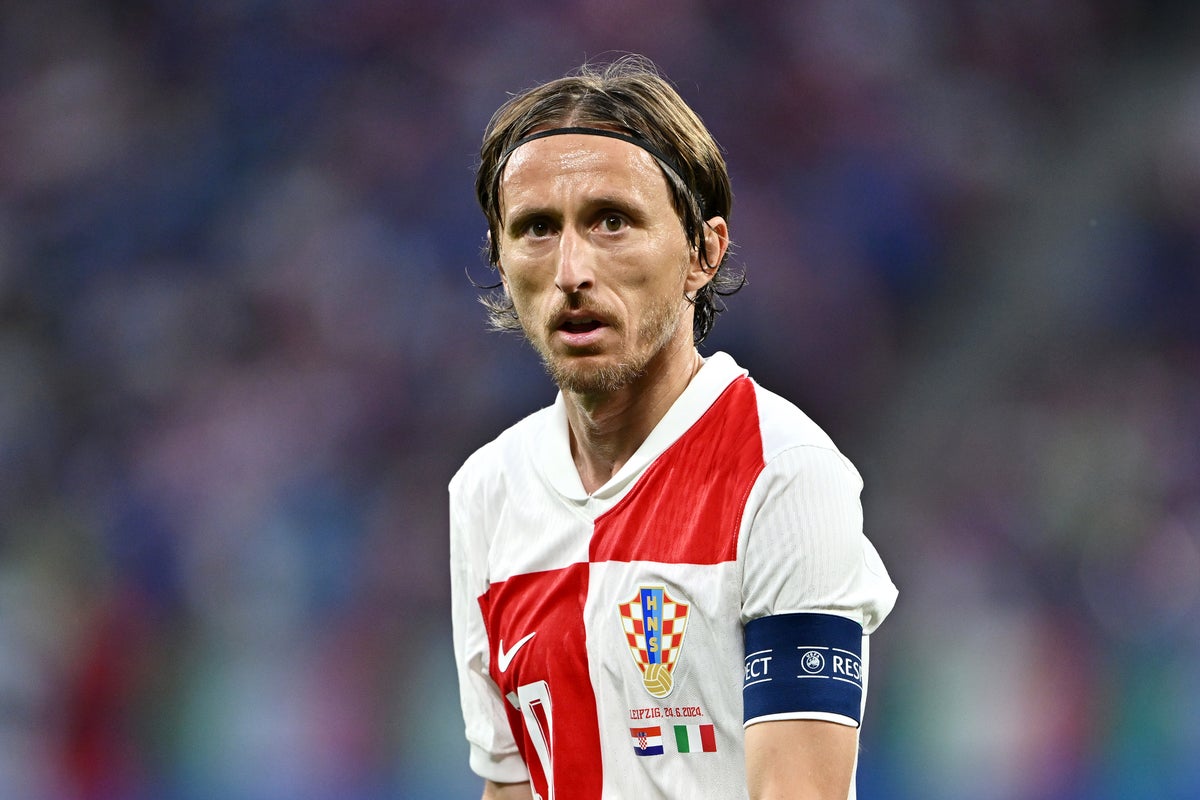
Luka Modric is accustomed to receiving individual accolades in the depths of disappointment. After the 2018 World Cup final, he learnt he had got the Golden Ball for the tournament. As it seemed Croatia had been ejected from Euro 2024 by the last kick of a game, a seminal victory turned into a seismic blow. Mattia Zaccagni’s 98th-minute goal had barely curled in when the final whistle blew; perhaps on a tournament career for Modric that dates back to the 2006 World Cup.
It is safe to assume it was of scant consolation that he was promptly named man of the match. He had a record to accompany an award; the oldest scorer ever in a European Championship – at least until Cristiano Ronaldo strikes – is Modric, three months away from his 39th birthday. His final contribution to the competition, however, may have come as his prize was announced: applauding the bank of Croatia fans in Leipzig. It may be premature to call it a valedictory salute; partly because there is still a combination of results that can send Croatia through, partly because it is dangerous to assume Modric will retire from international duty.