Get all your news in one place.
100's of premium titles.
One app.
Start reading
Medical Daily
Medical Daily
Joseph James

COVID Vaccination Averted an Estimated 4,307 Deaths in King County During the First Eight Months of Rollout

Vaccination against COVID-19 prevented an estimated 16,607 hospitalizations and 4,307 deaths in a single Washington county during the first eight months of the vaccine rollout, according to a modeling analysis published in BMC Public Health. Nearly three-quarters of the prevented deaths were among people aged 65 and older.

The word estimate is doing real work in that sentence. This is a counterfactual analysis, not a count of averted deaths observed by anyone. Researchers took what actually happened and modeled what would have happened had nobody been vaccinated. That method has known limits, and the authors name them.
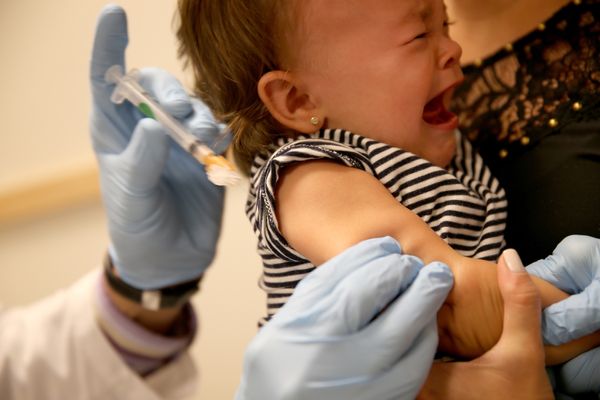
What makes the study unusual is its scale. Most published estimates of vaccine impact are national or global. This one was built by a local health department using its own surveillance records, which is why the result is worth attention for readers who live outside King County.


The Numbers a Local Health Department Produced

Researchers at Public Health Seattle and King County compared rates of COVID hospitalization and death among vaccinated and unvaccinated residents aged 12 and older from February through September 2021, a stretch that covered the arrival of the Alpha and Delta variants alongside the first vaccinations.

During that period, the county recorded 3,086 hospitalizations and 591 deaths attributed to COVID. The modeled estimate is that vaccination prevented an additional 16,607 hospitalizations and 4,307 deaths. Put another way, the researchers concluded hospitalizations would have been more than six times greater than observed, and deaths nearly eight times greater.

Coverage was high. By the end of September 2021, 1.61 million King County residents had completed a primary series, about 71 percent of the county's total population, compared with 51 percent nationwide. Among residents 65 and older, coverage reached 95 percent.

The benefit tracked that pattern. Vaccination was estimated to have prevented 8,314 hospitalizations and 3,125 deaths among people 65 and older, accounting for half of averted hospitalizations and close to three-quarters of averted deaths. The authors wrote that this level of vaccination "prevented a substantial number of hospitalizations and deaths due to COVID-19" among county residents 12 and older, according to the study published in BMC Public Health.


A Methodological Choice Worth Understanding

One decision separates this analysis from many earlier ones. The researchers distinguished hospitalizations caused by COVID from hospitalizations where a patient happened to test positive but was admitted for something else. Of 3,791 hospitalizations reviewed, 638 were classified as incidental.

That matters because, as the authors note, up to 26 percent of COVID hospitalizations may be misclassified, and roughly a third of infections produce no symptoms at all. Separating the two categories makes the underlying dataset more defensible, a key strength, the authors argue.

The main limitation is equally important and appears in the paper rather than buried in a footnote. The model assumes that vaccinated people would have experienced severe outcomes at the same rate as unvaccinated people had they not been vaccinated. That assumption cannot account for differences in health-seeking and infection-prevention behavior between the two groups, such as masking or physical distancing. If vaccinated residents were also more cautious in other ways, part of the estimated benefit belongs to those behaviors rather than to the vaccine.

This is a retrospective analysis of 2021 vaccines against 2021 variants. It does not measure the effectiveness of any current formulation, and it should not be read as one. Coverage from the Center for Infectious Disease Research and Policy noted the same framing. For readers interested in the current formulations, MedicalDaily has separately covered two studies on booster effectiveness from earlier this year.

The direction of the finding is consistent with earlier work using different methods. A county-scale national model published in PLOS One estimated that vaccination was associated with more than 120,000 fewer deaths and 700,000 fewer hospitalizations across the United States during the first six months of the campaign. That study was sponsored by Pfizer and included Pfizer employees among its authors, a disclosure the paper makes openly. Independent studies converging on a similar conclusion carry more weight than any single analysis, even if they share some structural assumptions.


The Practical Value Sits in the Method, Not the Headline

The authors suggest that other local health departments could run comparable analyses using their own surveillance data. That is the part with real consequences for readers.

County health departments make budget and program decisions with limited evidence about local impact. National estimates do not tell a health officer in Detroit, Phoenix, or Charlotte what happened in their own jurisdiction, and they carry little weight in a county council hearing. A replicable local method changes that conversation.

It also creates a comparison worth watching. King County's 71 percent primary series coverage was well above the national figure, and coverage among older adults was near universal. A county with much lower coverage running the same analysis would produce a very different number, and that contrast is where local accountability reporting usually begins.

For families, the age breakdown is the practical takeaway. Roughly three-quarters of the estimated averted deaths were among people 65 and older, in a county where 95 percent of that group completed a primary series. Adult children weighing whether to vaccinate an older parent are looking at the group where the modeled benefit was concentrated, not at a population-wide average that flattens the difference.

Nothing in this study changes current vaccination guidance, and no one should start or stop vaccination based on a retrospective model. Adults uncertain about current COVID vaccine recommendations, particularly those over 65 or with weakened immune systems, should ask a clinician or pharmacist what applies to them now rather than relying on 2021 data, especially as variant activity continues to shift across the country.

Several questions remain open. The analysis covers one county with unusually high coverage, so results are not automatically transferable. It does not measure protection against long COVID, reinfection, or outcomes after 2021. And no other health department has yet published a comparable local estimate, meaning the method's reliability across different settings remains untested. MedicalDaily will report if other jurisdictions publish similar analyses.


Key Questions Answered

What did the study find? COVID vaccination in King County, Washington, prevented an estimated 16,607 hospitalizations and 4,307 deaths among residents 12 and older between February and September 2021.

Is that a count or an estimate? An estimate produced by a model. Researchers compared observed outcomes with a modeled scenario in which nobody was vaccinated.

What is the biggest limitation? The model assumes vaccinated people would have had the same rate of severe outcomes as unvaccinated people. It cannot separate the vaccine's effect from differences in masking, distancing, or care-seeking.

Who benefited most? Adults 65 and older, who accounted for roughly three quarters of the estimated averted deaths. Vaccine coverage in that age group reached 95 percent in the county.

Does this say anything about today's COVID vaccines? No. It is a retrospective analysis of the initial rollout against the Alpha and Delta variants and does not evaluate any current formulation.

Why does one county matter to the rest of the country? The authors argue that local health departments can replicate the method using their own surveillance data, producing impact estimates specific to their jurisdiction rather than relying on national figures.

Should anyone change a vaccination decision based on this? No. Current recommendations have not changed. Adults with questions, particularly those over 65 or immunocompromised, should ask a clinician what applies to them now.

Sign up to read this article
Read news from 100's of titles, curated specifically for you.
Already a member? Sign in here
Related Stories
Top stories on inkl right now
One subscription that gives you access to news from hundreds of sites
Already a member? Sign in here
Our Picks
Fourteen days free
Download the app
One app. One membership.
100+ trusted global sources.