Get all your news in one place.
100's of premium titles.
One app.
Start reading
The Times of India
The Times of India
World
TOI World Desk

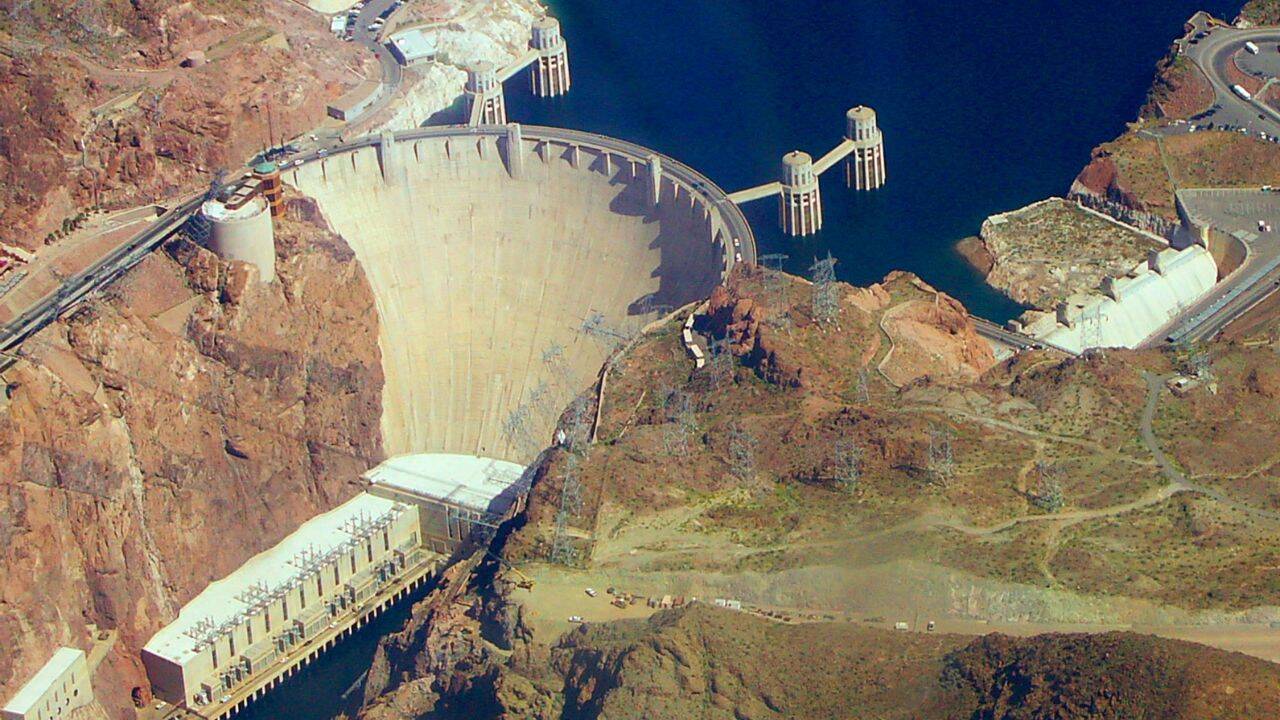
​Colorado river's Hoover Dam contains enough concrete to pave a standard highway from San Francisco to New York City, and the 90-year-old engineering marvel is still growing stronger

Standing in the brutal heat of the black canyon, Hoover Dam on the great Colorado river , was not just a construction project, it was a landmark example that redefined engineering. One of the most stunning aspects of this massive concrete structure is that it has never actually finished its physical transformation.

Get breaking news anytime, anywhere. Download the TOI app now!

Even today, decades after the construction was completed in 1935, the chemical reactions within its walls continue to evolve. This ongoing process of ‘curing’ means that the dam is still growing stronger with every passing year. To understand how such a marvel was achieved without the structure getting weak under the heat, we must look closely into the cooling techniques that saved the USA from a potential disaster.

Why does the Hoover Dam keep curing itself after 90 years

To understand why this Hoover dam is still changing, we have to look at its ingredients. Concrete is created by mixing cement, sand, stone, and water, but it does not simply ‘dry out’ like mud. Instead, it undergoes a chemical reaction where the cement and water bond to form a rock-like mass. This process generates an immense amount of internal heat, known to specialists as the ‘heat of hydration.’ Because the Hoover Dam is so thick, measuring 660 feet at its base, the heat present deep inside cannot escape to the surface easily.

In 1995, engineers took core samples from the dam to see how the material was holding up after 60 years of standing. They discovered that the concrete was not only in excellent condition but was also slowly gaining strength. This means that while the dam looks like a finished object, it is actually a maturing structure that is currently stronger than the day it was built.

How did engineers stop the dam from overheating

Government engineers calculated that the internal heat would have reached such high temperatures that the concrete would have taken over 125 years to cool down to the surrounding temperature. As it cooled so slowly and unevenly, the structure would have developed massive cracks, leading to a total collapse of the dam.

To prevent this, the Bureau of Reclamation designed the dam as an assembly of individual vertical columns. You can think of it like a giant ‘Lego’ set made of 215 massive blocks. Each block was poured in layers only five feet deep every 72 hours. This design allowed much of the heat to escape easily. However, even with these columns, the natural cooling was still too slow for the construction schedule, requiring a more active approach to ‘chill’ the concrete.

The massive ‘refrigerator’ to cool the Hoover dam

To speed up the cooling process, engineers embedded 582 miles of one-inch steel pipes throughout the concrete as it was being poured. They then built a refrigeration plant on the canyon floor that could produce 1,000 tonnes of ice every 24 hours. This plant circulated ice-cold water through the steel pipes to remove heat from the concrete.

Once a section of concrete reached its target temperature and finished its initial shrinking, the pipes were filled with a thin cement mixture called grout. This sealed the entire structure into one solid piece of stone. Without this innovative cooling system, the dam would still be very hot today.

Sign up to read this article
Read news from 100's of titles, curated specifically for you.
Already a member? Sign in here
Related Stories
Top stories on inkl right now
Our Picks
Fourteen days free
Download the app
One app. One membership.
100+ trusted global sources.